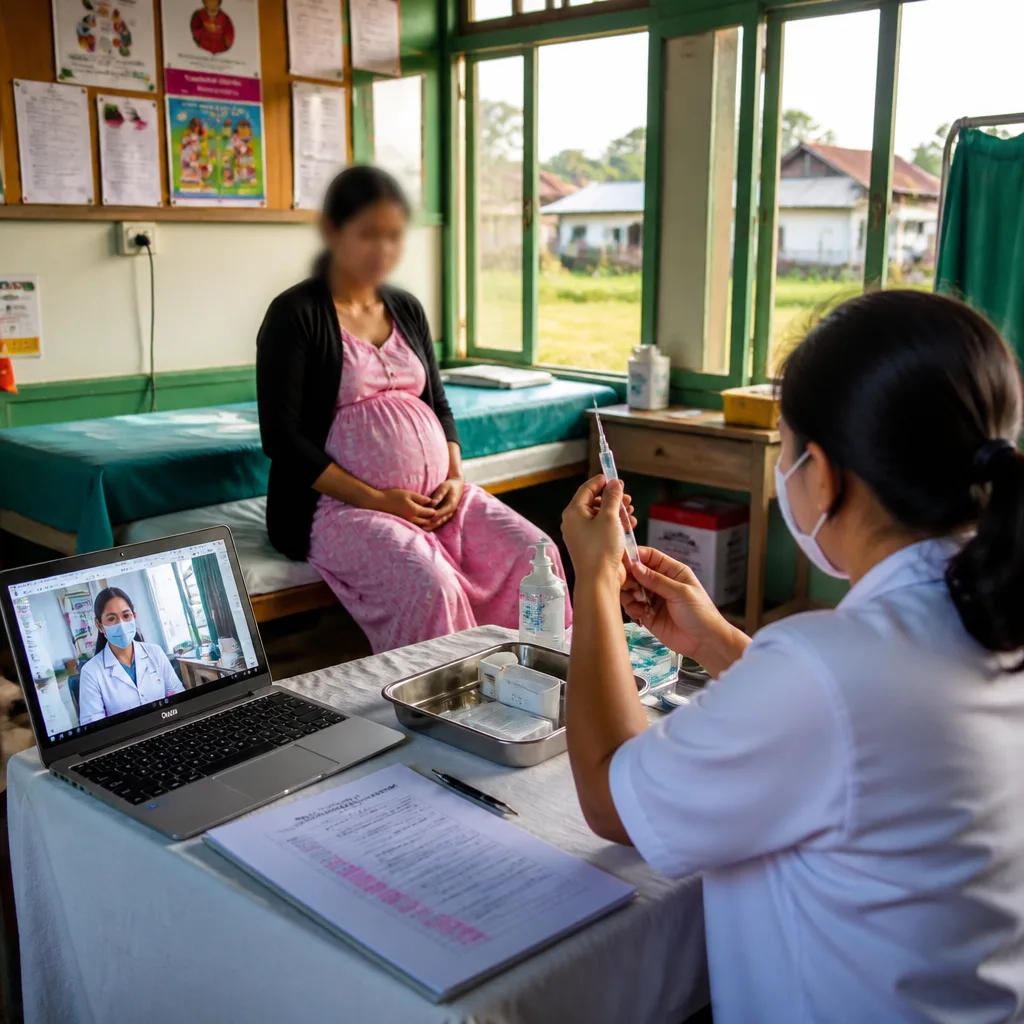
A telemedicine-enabled primary health centre (PHC) in a remote part of Manipur identified syphilis in a 25-year-old woman during routine antenatal screening and immediately began treatment to prevent transmission to the foetus, Apollo TeleHealth said on Friday.
Early detection through digitally backed screening
The woman, from Miran village, attended an antenatal visit at an Apollo TeleHealth-supported PHC where standard pregnancy screening picked up serological evidence of syphilis. The positive laboratory result was reviewed and validated via Apollo TeleHealth's digital quality assurance workflow before the clinical team initiated management.
Following confirmation, the patient received the first dose of the recommended weekly Benzathine Penicillin injections. Her husband also tested positive and was started on treatment to prevent reinfection. An obstetric ultrasound has been advised because the woman could not recollect her last menstrual period; repeat serological testing is planned after completion of therapy to assess treatment response. She will remain under follow-up at the e-PHC.
Public health implications
Congenital syphilis remains a preventable yet serious cause of adverse pregnancy outcomes. According to the information provided by Apollo TeleHealth, untreated maternal infection may lead to miscarriage, stillbirth, premature birth, neonatal death or lifelong physical and developmental disabilities in survivors.
The intervention in Manipur underscores how integrating digital support into frontline primary care can strengthen screening, expedite confirmatory diagnostics and enable prompt initiation of treatment in hard-to-reach settings — measures that align with global and national guidance on preventing mother-to-child transmission of sexually transmitted infections.
Programme reach and operational details
The telehealth initiative operates in four rural PHCs in the state — Borobekra, Henglep, Senvon and Thanlon — and, according to the provider, has achieved the following cumulative outputs:
- More than 6,000 patients served
- Over 10,000 teleconsultations facilitated
- About 1,500 antenatal care visits supported
| Metric | Reported figure |
|---|---|
| Patients served | 6,000+ |
| Teleconsultations | 10,000+ |
| Antenatal visits | 1,500+ |
Clinical pathway followed
The sequence of actions taken at the PHC illustrates a clear clinical pathway for managing antenatal syphilis in peripheral settings:
- Routine antenatal serological screening at the PHC
- Digital validation of laboratory findings through the telehealth quality-assurance system
- Counselling and referral for confirmatory testing where required
- Initiation of guideline-recommended Benzathine Penicillin therapy
- Testing and treatment of the partner to prevent reinfection
- Follow-up serology and obstetric imaging to monitor response and gestational dating
Such steps reflect best-practice approaches advocated by international agencies and national guidelines for prevention of congenital infections: early detection in pregnancy, prompt treatment with penicillin where indicated, partner management and follow-up to ensure cure.
Officials from the Manipur government and Apollo TeleHealth provided the operational details; the project is described as a collaboration between Apollo TeleHealth and the state health authorities. The digitally enabled PHCs include on-site doctors, nurses, pharmacists and laboratory technicians to support integrated care delivery.
While the reported case demonstrates the potential of telemedicine to bridge gaps in rural primary health services, clinicians and public health experts routinely caution that maintaining laboratory quality, uninterrupted drug supply (notably Benzathine Penicillin) and reliable referral pathways remain critical to preventing congenital syphilis at scale.
Readers are reminded that this account is reportorial and not a substitute for professional medical advice. Persons with concerns about sexually transmitted infections or pregnancy should consult a qualified clinician or their local health authority for individual evaluation and treatment.
Information in this article is based on details provided by Apollo TeleHealth and related programme reporting.