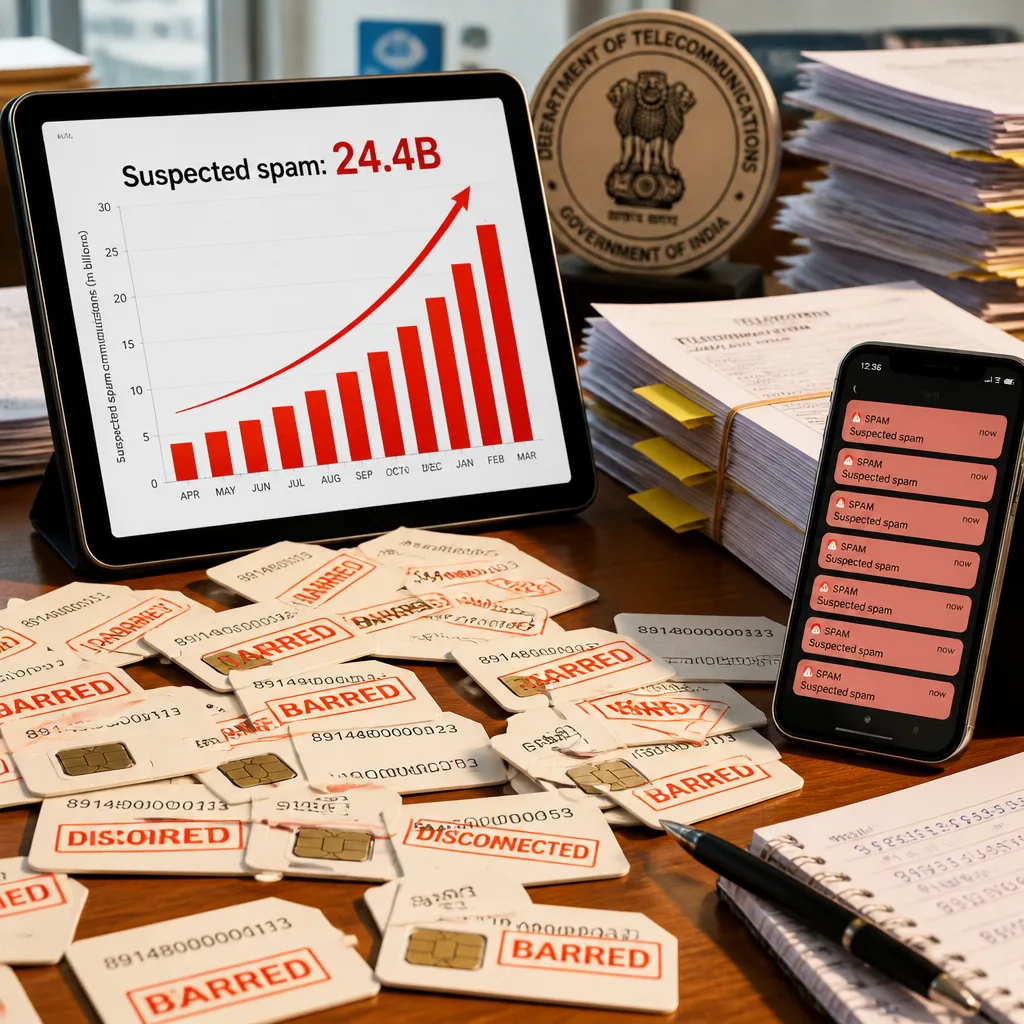
New Delhi: Telecom operators flagged 24.4 billion calls and messages as suspected spam in the April–June quarter, while enforcement action was taken against more than 1.8 lakh telecom resources, the Telecom Regulatory Authority of India (Trai) said, underscoring both progress and continuing challenges in curbing unsolicited commercial communications.
AI flagging scales up but complaints remain high
Trai said that operators have deployed AI-based systems which identified 22.9 billion incoming calls and 1.4 billion SMS as suspected spam during the quarter — roughly 266 million communications a day. The AI systems analyse calling patterns and other signals to flag suspicious traffic, and operators have begun sending warnings to entities identified as likely spammers, the regulator reported.
Despite this enhanced detection, consumer grievance volumes climbed. Trai received 10.8 lakh unsolicited commercial communication (UCC) complaints during the quarter, of which 5.5 lakh were deemed actionable. The quarterly complaint total was nearly 40% higher than the average quarterly level seen in 2025, when almost 31 lakh complaints were logged for the full year.
"Nearly 89% of complaints in the latest quarter — 9.6 lakh — were filed through Trai’s DND app," the regulator said.
Enforcement stepped up
Action against offending resources increased markedly. During the quarter, Trai said operators barred 1.3 lakh telecom resources for 15 days for first-time violations, while another 46,786 resources were disconnected for a year for repeated breaches. The regulator also blacklisted 263 senders and blocked 2,873 SMS headers.
Trai highlighted growing adoption of its DND (Do Not Disturb) app as a channel for consumers to report unsolicited calls and messages. Cumulative downloads of the DND app rose to 33.1 lakh by June from nearly 28 lakh at the end of 2025, indicating wider use of the regulator’s complaint mechanism.
What the numbers mean for consumers and businesses
The scale of AI-flagged traffic shows operators are investing in automated detection to protect subscribers and to meet regulatory expectations. However, rising complaint volumes suggest detection and enforcement have not yet translated into a visible reduction in consumer harm. For businesses reliant on telemarketing or bulk messaging, the sharpening of AI detection and faster regulatory penalties raise compliance risks and the need to re-evaluate outreach practices.
- Scale: 24.4 billion suspected spam communications flagged in a single quarter.
- Detection: AI systems identified 22.9 billion calls and 1.4 billion SMS as suspected spam.
- Enforcement: Over 1.8 lakh telecom resources penalised via temporary bars or year-long disconnections.
| Metric | April–June quarter |
|---|---|
| Suspected spam (calls + messages) | 24.4 billion |
| AI-identified calls | 22.9 billion |
| AI-identified SMS | 1.4 billion |
| UCC complaints received | 10.8 lakh |
| Actionable complaints | 5.5 lakh |
| Resources barred (15 days) | 1.3 lakh |
| Resources disconnected (1 year) | 46,786 |
| DND app downloads (cumulative) | 33.1 lakh |
For consumers, the practical takeaways are to continue using the DND app and to report unsolicited contacts promptly; the rising downloads indicate many are doing so. For corporates, especially regulated entities and legitimate marketers, the environment now demands stricter process controls, better customer consent management and close liaison with telecom partners to avoid being misidentified as spam sources.
Trai's figures illustrate the complex nature of India's spam problem: improved detection and tougher sanctions coexist with persistent consumer complaints. The regulator's data suggests the next phase will hinge on how effectively AI-based filtering, faster takedowns and preventive measures translate into fewer unwanted calls and messages reaching subscribers.
(Reporting based on data released by the Telecom Regulatory Authority of India.)