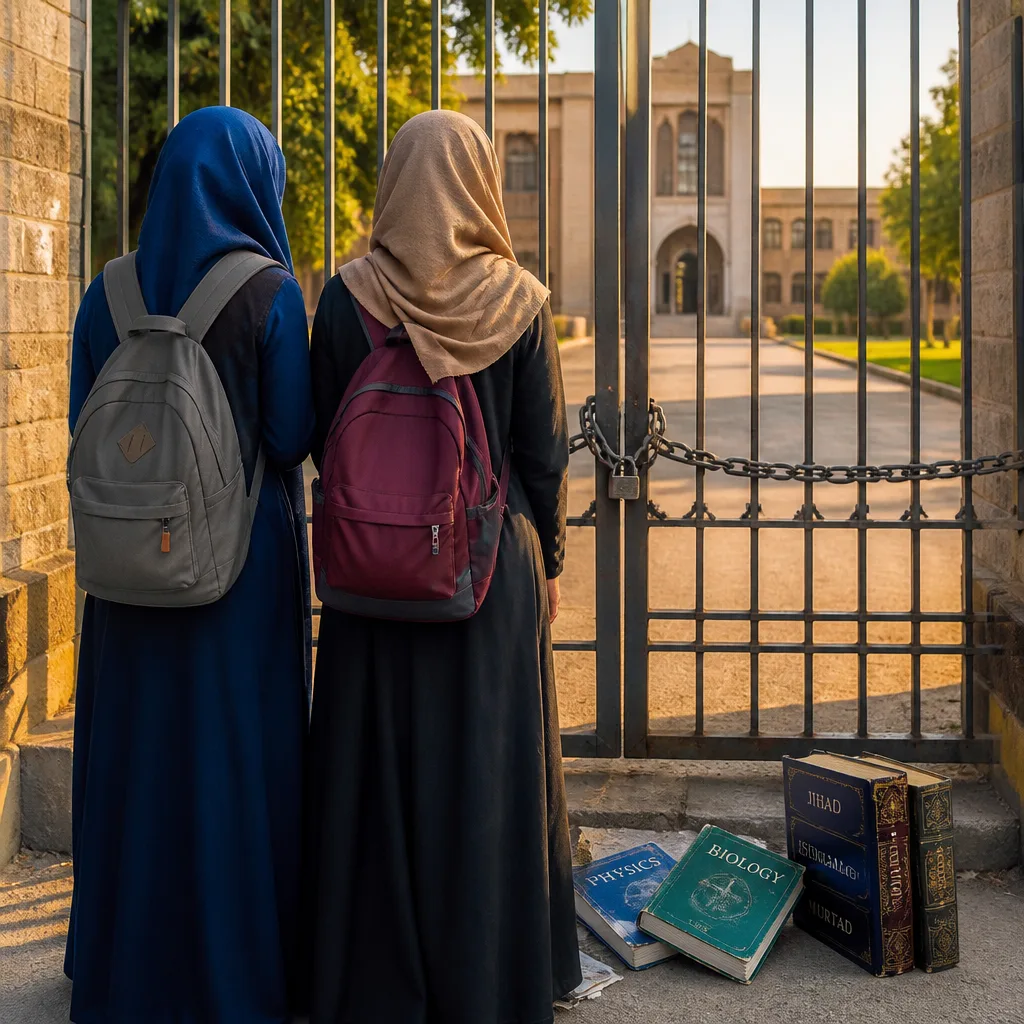
Since the Taliban regained control in August 2021, Afghanistan’s school curriculum has been substantially rewritten, with educators reporting the removal of subjects such as physics and biology and the insertion of material that praises religious struggle and denigrates perceived ‘‘infidel’’ enemies, according to a recent report. At the same time, the Taliban continue to bar girls from higher education, leaving more than two million young women without access to university-level studies.
Curriculum changes, new vocabulary
Parents and teachers describe an incremental but decisive revision of textbooks and classroom instruction. The changes began appearing soon after the takeover and have accelerated over the past five years, sources say. Traditional historical figures associated with modernising reforms have been removed from classroom discussion, while terminology and passages that praise militant ideas have been added to reading and vocabulary sections for young pupils.
"They stopped teaching about leaders like Amanullah Khan who were part of the history books… They told us that these people didn’t do anything good for Afghanistan, so we don’t need to teach our kids about them," a parent said of the changes.
Parents also pointed to new vocabulary lessons that include words such as "jihad" (religious struggle), "ishghalgar" (invaders) and "murtad" (apostates), which critics say normalise the language of conflict and foster a hostile view of outside actors.
- Curriculum revisions began immediately after the Taliban takeover in August 2021.
- Textbook content now reportedly includes praise for Taliban leaders and language that frames certain foreign actors as "invaders".
- More than two million women and girls are affected by the ban on higher education.
Impact on subjects and pedagogy
Teachers say that subjects long considered core to modern schooling — including parts of the natural sciences and liberal history — have been reduced or omitted. Observers warn that removing science subjects such as physics and biology from formal instruction will narrow students’ future academic and career prospects and reduce exposure to critical thinking and empirical inquiry.
Traditional religious schools, or madrassas, which already operated in parallel with formal education, have been brought closer into the mainstream of state policy through curriculum alignment and the promotion of religiously oriented content. Educators and parents quoted in the report say that this alignment is intended to shape young minds for conformity to the ruling order.
Consequences for girls and society
The prohibition on girls attending universities leaves a significant generation without access to higher education and its economic and social opportunities. Analysts and rights advocates have warned that depriving millions of young women of tertiary education compounds existing gender inequities and will have long-term effects on Afghanistan’s workforce, public health, and civic life.
Parents in provinces such as Kandahar reported that their daughters were no longer permitted to continue schooling beyond certain levels, while younger children — boys and some girls at primary level in select areas — continue to attend classes that now carry revised content.
Responses and wider concerns
Educators, parents and activists interviewed in the report expressed alarm that teaching materials now include passages that praise violence or legitimate it as a virtue. They argue that such content risks normalising extremism among impressionable children who have lived through decades of conflict.
The overhaul also raises questions about international engagement and humanitarian assistance. Aid groups and international donors face complex decisions on how to support basic education while opposing policies that discriminate against girls or promote violent ideologies.
| Element | Reported change |
|---|---|
| Science subjects | Reduced or removed in revised curricula |
| Historical figures | Some modernising leaders removed from books |
| New vocabulary | Includes terms such as "jihad", "ishghalgar", "murtad" |
| Higher education access | Girls barred; >2 million affected |
For anxious parents and students, the unfolding changes underscore the fragility of educational access and content in conflict-affected settings. Policymakers and education actors outside Afghanistan face difficult choices in responding: whether to press for retention of a secular, science-based curriculum as part of conditional aid; to support alternative schooling programmes for girls; or to focus solely on humanitarian relief that keeps children in basic schooling without endorsing curriculum choices.
As the situation develops, students, parents and education professionals will need clear, trustworthy information on what is being taught, where girls can safely pursue learning, and what alternatives exist for science and civic education. Authorities and aid agencies should prioritise transparency on curricula and ensure that basic education preserves the skills and knowledge young people need for employment and civic participation.