Union minister inaugurates new phase of Surat groundwater recharge work
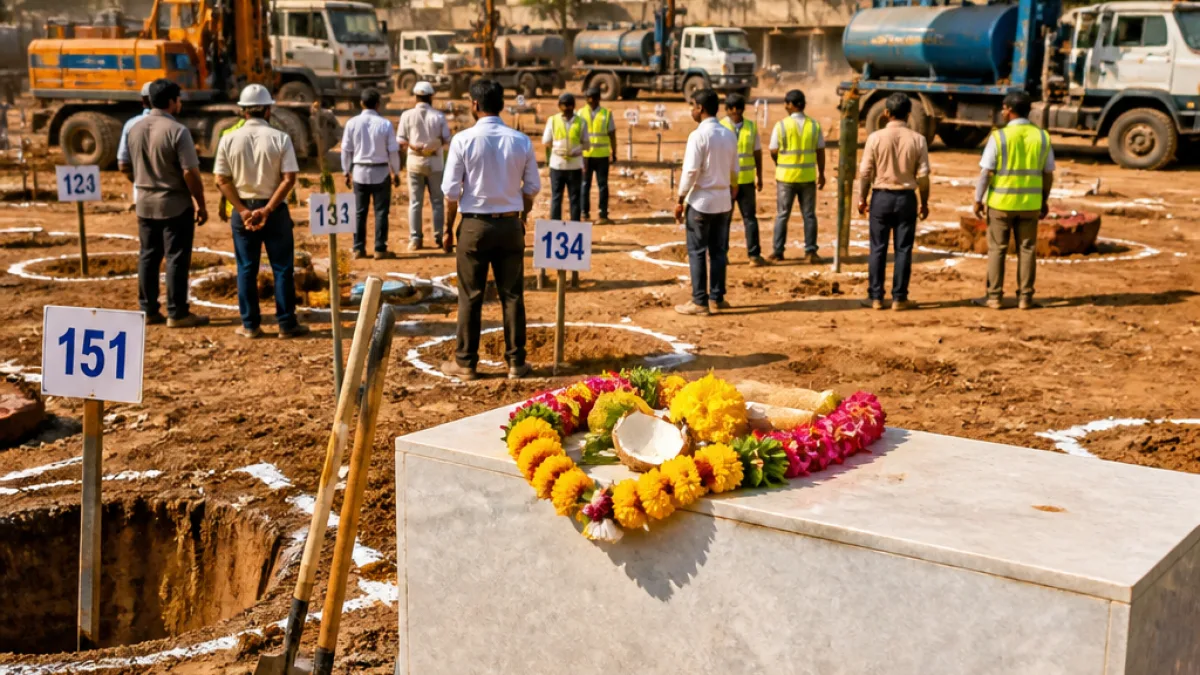
Surat — Union Jal Shakti Minister C.R. Patil on Friday laid the foundation stone for groundwater recharge borewell works at 151 locations in Bamroli–Vinayak Nagar under the Udhna zone, officials said. The scheme, to be executed by the Surat Municipal Corporation (SMC), carries an estimated cost of ₹2.04 crore and is part of the national Catch the Rain campaign.
According to the municipal plan, the new borewells will add to existing recharge infrastructure in the city and are being promoted to raise groundwater levels, improve water quality and reduce surface water run-off that contributes to flooding and waterlogging in low-lying areas near creeks.
- Number of new borewells: 151 in Bamroli–Vinayak Nagar (Udhna zone)
- Project cost: ₹2.04 crore
- City-wide plan: 10,969 groundwater recharge systems prepared under the SMC programme
“Capturing rainwater and recharging groundwater at the place where it falls is the need of the hour,” Patil said, adding that the initiative helps repay the debt owed to Mother Earth for extracting groundwater.
Scale and context: Surat’s place in the national water-conservation push
Patil cited national figures for the Catch the Rain campaign, saying more than 1.55 crore water-conservation structures have been created across the country, enabling annual groundwater recharge of over 12 billion cubic metres (BCM). In Surat, the SMC has already constructed more than 6,000 recharge structures — a combination of borewell recharge systems and recharge pits — during earlier phases of the programme.
The municipal corporation has prepared 12 different designs for recharge structures to suit varying local conditions. Officials intend the new works in Bamroli–Vinayak Nagar to target areas where rainwater presently runs off into drains or creeks instead of percolating into the subsoil.
Administrative objectives and measurable targets
SMC documents reviewed by city engineers indicate the recharge measures are being justified on multiple counts: enhancing groundwater tables to reduce reliance on surface sources such as the Tapi river, improving groundwater quality, and mitigating urban flooding and waterlogging in monsoon months by promoting in-situ percolation of rainwater.
Surat’s concerted push has yielded recognitions at state and national levels. The city currently ranks first in Gujarat and sixth in India for water-conservation efforts, and it has received the Jal Sanchay Jan Bhagidari award, according to the release accompanying the foundation-laying event.
| Metric | Figure |
|---|---|
| New borewells laid foundation for | 151 |
| Project cost | ₹2.04 crore |
| Surat: existing recharge structures | More than 6,000 |
| SMC planned recharge systems | 10,969 |
| National Catch the Rain structures | 1.55 crore |
| Estimated annual recharge (national) | Over 12 BCM |
City planners say the multiplication of recharge nodes — pits, percolation wells and borewell recharge structures — is intended to decentralise rainwater capture so that more precipitation soaks into the local aquifers rather than being channelled away. Officials also highlighted the multiple designs prepared by SMC to account for soil type, built density and proximity to creek channels.
While the release did not provide an explicit timeline for completion of the 151 borewells, municipal engineers have indicated earlier phases of work progressed in a phased manner across wards depending on site readiness and monsoon windows. The larger SMC plan for 10,969 systems will be executed over multiple years, the statement said.
For Surat — a major industrial and commercial hub in South Gujarat — stabilising groundwater has direct implications for textile and diamond-processing units that draw both from municipal supply and private borewells. Improved groundwater tables could reduce pressure on the Tapi supply line in dry months and lower operational risks for water-intensive small and medium enterprises in the city’s industrial belts.
The foundation-laying event underlines the continuing policy emphasis on rainwater harvesting and in-situ recharge across urban India, with Surat positioned as an example of municipal-level scale-up in Gujarat.