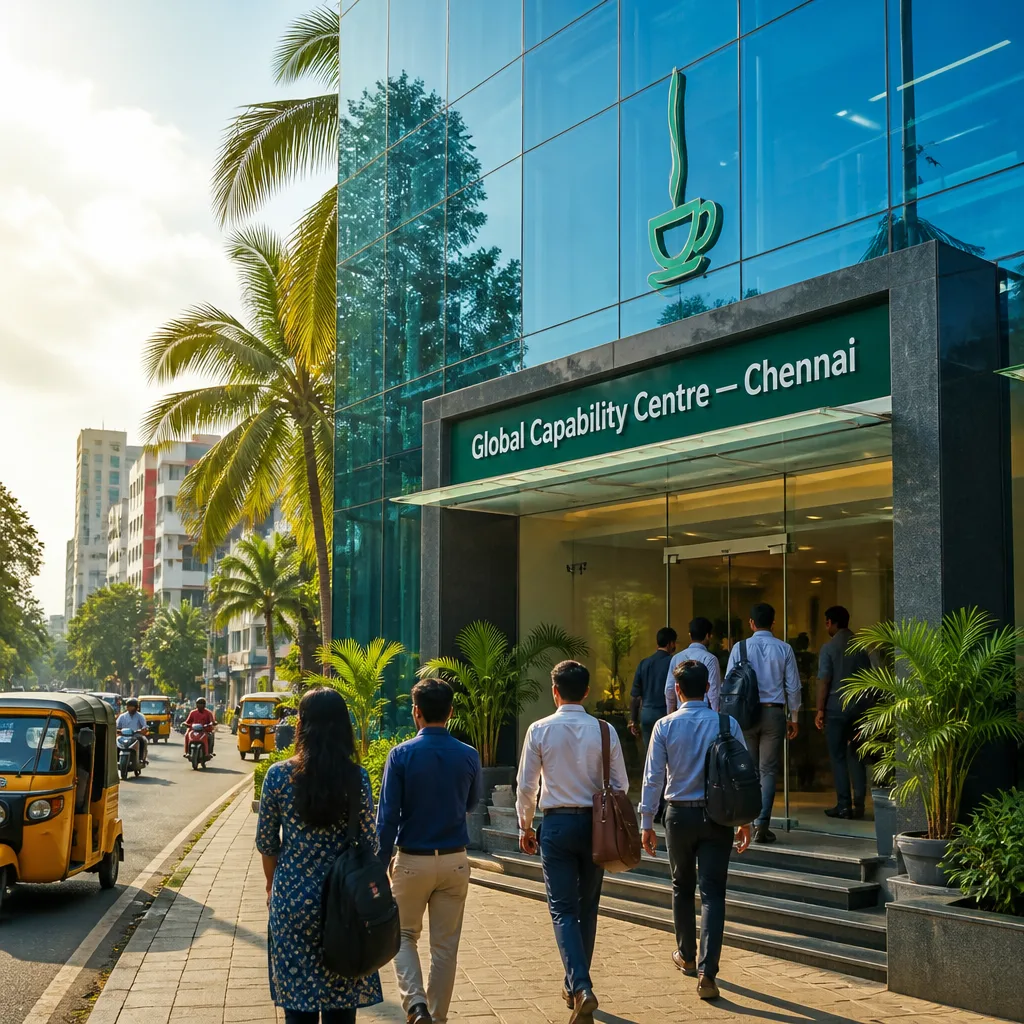
Starbucks has signed an agreement with the Tamil Nadu government to establish a Global Capability Centre (GCC) in Chennai, the company and the state said, with the centre expected to employ about 800 technology professionals.
What the Chennai hub will do
Starbucks Chief Technology Officer Anand Varadarajan said in a blog post that the new centre will have a global remit and will allow the company to "bring more third‑party work in‑house", signalling a move to internalise more software development and technology operations that previously may have been outsourced to external vendors.
The Tamil Nadu government provided initial details of the pact but did not disclose the investment amount. Starbucks operates around 500 cafés in India through a joint venture with Tata Consumer Products.
Why Chennai?
Chennai already hosts technology and capability centres for global financial and technology firms including Citi, Barclays and American Express. State officials and the company pointed to Chennai's talent pool, infrastructure and lower staff attrition as factors in the decision.
Recent data cited by the state and industry reports underline the growth of GCCs in India:
- India is home to more than 2,100 GCCs, employing about 2.36 million people, according to a 2026 Nasscom‑Zinnov report.
- Those centres generate nearly $100 billion in revenue, reflecting a shift from back‑office tasks to higher‑value work such as software engineering, finance and research.
| Metric | Figure |
|---|---|
| Number of GCCs in India | 2,100+ |
| Employees in GCCs | 2.36 million |
| Revenue generated | ~$100 billion |
Implications for Indian tech workforce
The Starbucks move is part of a continuing wave of multinational firms expanding engineering and technology operations in India. For local tech professionals, GCCs increasingly offer opportunities beyond routine support roles: companies are now assigning higher‑value responsibilities such as product engineering, data science and platform development to India teams.
Benefits for the workforce include more direct exposure to global product roadmaps, potential for skill development in cloud, machine learning and digital payments, and stable full‑time roles instead of contract or vendor engagements. At the same time, shifting work in‑house can reduce opportunities for third‑party vendors who previously supplied these services.
"The Chennai site will bring more third‑party development in‑house," Anand Varadarajan said in his blog post.
For Chennai, the appointment reinforces the city's role as a major GCC hub. Industry observers say that as GCCs move up the value chain, cities that offer deep technical talent and reliable infrastructure stand to gain most from sustained foreign investment.
Context: GCCs and India’s tech export story
GCCs have evolved from cost centres to strategic delivery arms for global firms. The Nasscom‑Zinnov snapshot reflects how these centres now contribute substantially to India's technology exports and services revenue. Earlier this year, other multinational companies notified similar investments in Chennai, indicating a clustering effect where one major hire attracts others.
For policymakers, the challenge is to ensure that growth translates into broad‑based employment and skill enhancement across the ecosystem. This includes expanding specialised training, improving campus‑to‑corporate transition programmes and upgrading physical and digital infrastructure so Indian cities can continue to compete for such global mandates.
Starbucks did not disclose the financial value of the investment in the state announcement. The company’s global technology operations have been expanding as firms across sectors look to control their digital roadmaps more directly.
As multinational companies scale up in India, the country’s GCC landscape is set to remain a crucial component of global technology delivery and product development strategies.