Leh: A severe cold wave has swept across the Union Territory of Ladakh, with minimum temperatures plunging well below freezing, the India Meteorological Department (IMD) said. Border localities recorded the lowest readings, while the capital and other population centres also experienced a marked drop in overnight mercury levels.
Sharp fall in night temperatures
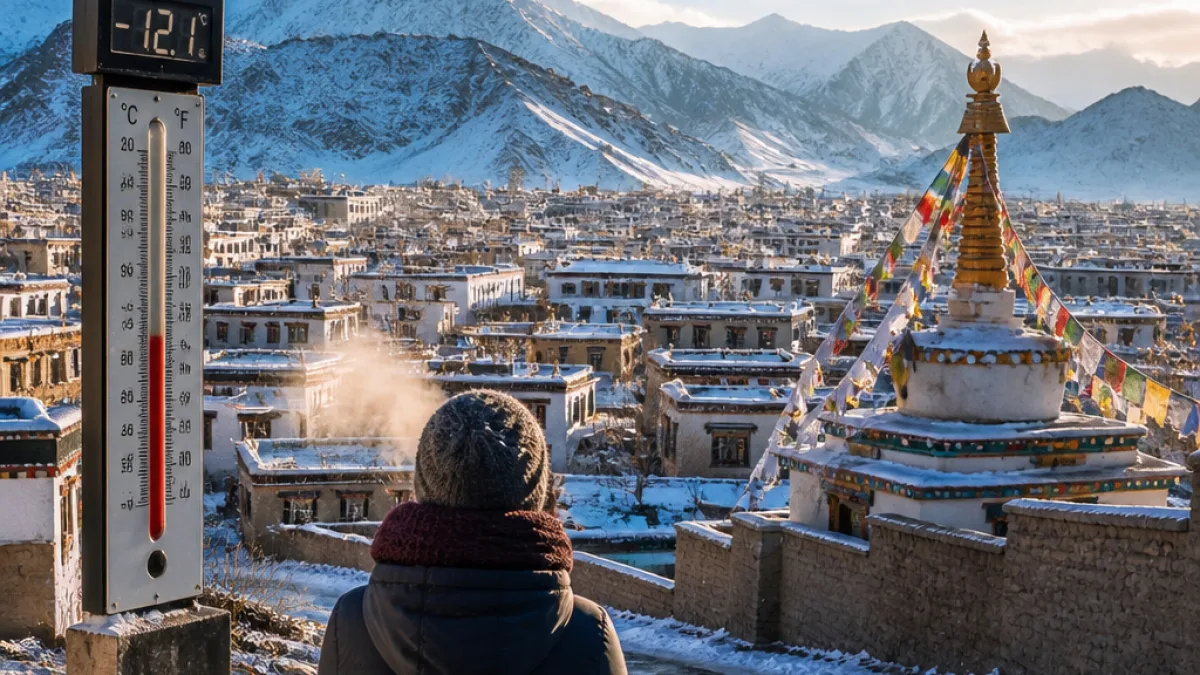
Nyoma, located on the India-China border, recorded the coldest temperature in Ladakh at −20.3°C, according to IMD figures. Tangtse, another border area, logged a minimum of −15.2°C. The territorial capital Leh saw a low of −12.6°C, while Kargil recorded −12.0°C.
| Location | Minimum temperature |
|---|---|
| Nyoma | −20.3°C |
| Tangtse | −15.2°C |
| Leh | −12.6°C |
| Kargil | −12.0°C |
The IMD's regional office in Leh said the territory experienced a colder spell through December compared with the same period last year. The average minimum temperature in Leh for December so far has been −10.1°C, about one degree lower than last December's average of −9.3°C.
"Ladakh experienced a colder season until the 24th of this month as compared to 2023," Sonam Lotus, Director of the India Meteorological Department in Leh, said.
Forecast and likely impacts
The IMD has forecast partly cloudy conditions for the coming day for Ladakh. Local officials and weather forecasters cautioned that cold-wave conditions can aggravate risks to vulnerable groups, increase demand on power and heating supplies, and affect transport on high-altitude road links.
Authorities have previously warned that prolonged extreme cold can strain water and sanitation systems, increase the risk of frostbite and hypothermia among unprotected populations, and create hazards for livestock and nomadic herding communities that are prominent in the region.
Public advisories and precautions
Given the continuing cold, residents and visitors are advised to take practical precautions to reduce risk. Key measures recommended by local health and disaster management authorities include:
- Dress in layers and use insulated, windproof outer clothing when outdoors.
- Keep infants, the elderly and those with chronic illnesses in warm, well-heated environments.
- Limit outdoor exposure during the coldest hours (pre-dawn and early morning).
- Ensure pipes are insulated to prevent freezing; keep a slow drip from faucets where necessary.
- Secure adequate fodder and shelter for livestock; check on nomadic herding groups in remote areas.
- Carry emergency supplies and warm clothing in vehicles; check tyres and antifreeze levels before travel on high-altitude roads.
Health officials remind people to seek prompt medical attention if symptoms of hypothermia — such as shivering, confusion, slurred speech or drowsiness — appear.
Local services and preparedness
Power and municipal services in Leh and Kargil have contingency plans for peak demand during cold spells, including measures to manage distribution and emergency heating centres where warranted. Road maintenance crews typically monitor passes and key link roads for ice and frost; travellers are advised to follow official travel advisories and allow extra time for journeys.
Tourists visiting Ladakh at this time should check weather updates and local advisories before setting out, carry appropriate cold-weather gear and inform accommodation providers of travel plans. Visitors should be aware that common services can be limited at higher altitudes during severe cold.
The IMD will continue to monitor conditions and issue updates as required. Residents can follow official IMD channels and local administration notifications for the latest warnings and guidance.