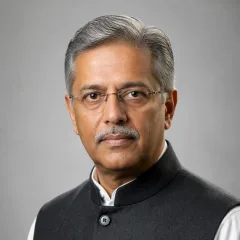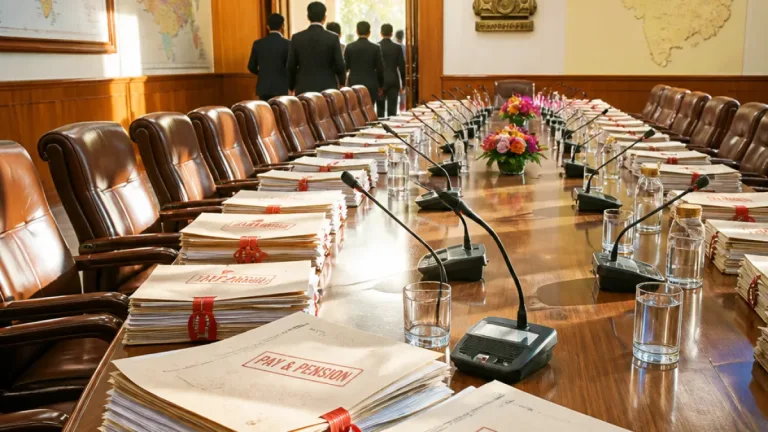
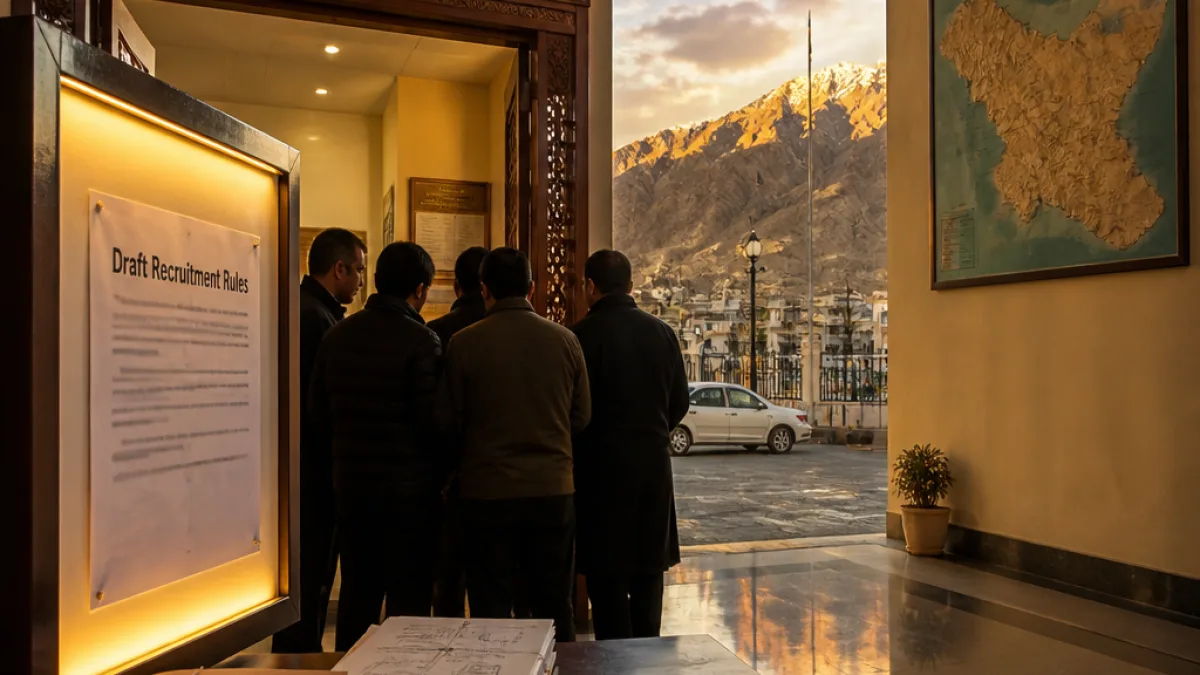
Leh, 15 September 2026: Lieutenant Governor Vinai Kumar Saxena has approved draft Recruitment Rules for 129 Junior Scale posts spanning 15 departments of the Union Territory administration, officials said on Tuesday. The move follows a recent amendment by the Ministry of Home Affairs that expanded the L-G's rule-making powers for certain Group 'B' Gazetted services.
What the draft rules propose
According to an official statement, the draft framework lays out eligibility and a pathway for government employees serving in feeder cadres to advance to Junior Scale positions after completing the prescribed qualifying service. The administration said the rules aim to provide a predictable career structure, enable promotions from within and permit direct recruitment where needed.
For several services, the draft adopts a mixed recruitment pattern — 50 per cent direct recruitment and 50 per cent promotion — to balance fresh intake with upward mobility for existing staff. The Recruitment Rules are proposed for posts in 15 departments and services including General Administration, Cooperative, Employment, Excise and Taxation, Consumer Affairs and Public Distribution, Handicrafts and Handlooms, Industries and Commerce, Information, Labour, Rural Development, Revenue, Social Welfare, Tourism and Transport.
"Strong and efficient institutions are essential for delivering responsive and effective governance. These Recruitment Rules will provide deserving officers in the feeder cadres a clear and structured pathway for career progression, while direct recruitment will bring fresh talent into the administration," Saxena said.
Context: change in central authorisation
Officials said the development comes after the Ministry of Home Affairs issued an amendment on 9 September 2026 that empowered the Lieutenant Governor of Ladakh to frame Recruitment Rules for Group 'B' Gazetted services and posts. The amendment explicitly covers posts forming part of a common cadre, such as those associated with the Jammu and Kashmir Administrative Service (JKAS), which previously lay outside the L-G's rule-making remit.
By acquiring the authority to draft recruitment and promotion rules for these Group 'B' posts, the UT administration expects to align staffing arrangements with its administrative priorities and local conditions.
Officials outline expected benefits
Administration sources said the rules are intended to enhance institutional capacity and make governance more responsive through a combination of internal promotions and merit-based direct recruitment. Officials highlighted two broad benefits:
- Career progression: Staff in feeder cadres would have a transparent pathway to Junior Scale positions on completion of qualifying service.
- Targeted recruitment: Direct hires would allow the administration to bring specialised skills and fresh talent into critical functions.
Departments covered
The draft rules have been framed to apply across the following departments and services:
| Department / Service |
|---|
| General Administration Department |
| Cooperative |
| Employment |
| Excise and Taxation |
| Consumer Affairs & Public Distribution |
| Handicrafts and Handlooms |
| Industries and Commerce |
| Information |
| Labour |
| Rural Development |
| Revenue |
| Social Welfare |
| Tourism |
| Transport |
Process and next steps
The draft rules have been cleared in principle by the L-G and will be circulated for statutory consultations as required. Officials indicated that the framework provides for both promotion quotas and direct recruitment where operational needs justify fresh hires. Specifics on service rules, reservations, age criteria and the qualifying period for promotion will be detailed in the final rules once consultations conclude.
Departmental functionaries will need to identify feeder cadres and propose timelines for implementing promotion and recruitment cycles under the new rules. The administration has not fixed a public timeline for finalisation and notification of the Recruitment Rules.
Reactions and implications
Observers said the change could strengthen local administrative capacity by giving the UT government clearer authority to manage middle-level bureaucratic cadres. However, implementation will depend on the clarity of promotion criteria, the pace of recruitment drives and the handling of any inter-departmental or cadre-specific disputes.
Officials maintained the objective of the exercise is twofold: to create a predictable career ladder for in-service personnel and to allow targeted induction of talent through direct recruitment, thereby improving the delivery of public services in the Union Territory.