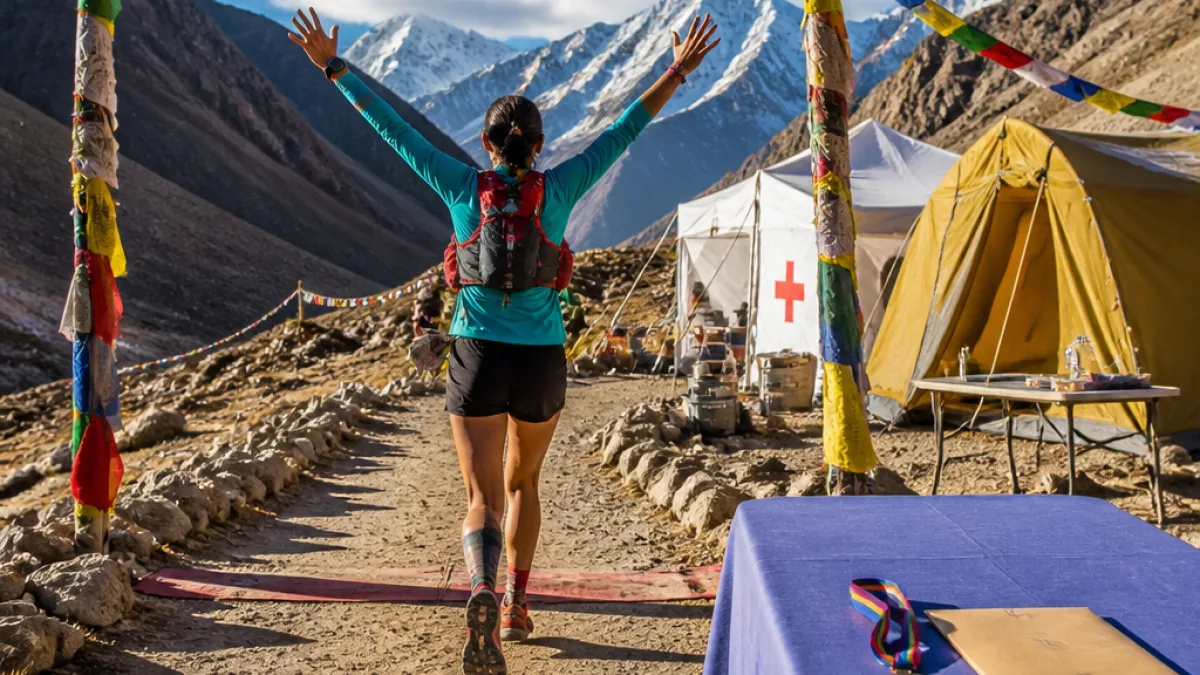
Local terrain and altitude added to challenge in Leh‑Stok Markha Valley
Dakahi Kyndait, a runner from Mukhaialong in East Jaintia Hills, Meghalaya, won the women's category in the World Championship 100K Ladakh – Trail to Heaven, which was staged in the Leh‑Stok Markha Valley from August 6 to 8. The victory formed part of the One Hundred Ultra Endurance Trail World Championship series that includes events such as the Costa Rica 200 and the Cro Trail.
The competition unfolded over demanding alpine terrain. Organisers described significant altitude variation along the course, with general elevations around 3,500 metres and sections that climbed to approximately 5,000 metres. The 100‑kilometre category itself has in previous editions used a route of 111.41 km and reached a maximum recorded altitude of 4,633 metres, testing athletes' endurance and acclimatisation.
Finishers and format of the event
This year's 100K attracted a limited field typical of high‑altitude ultramarathons. In the last staging of the event there were 30 finishers in the 100K, and competitors faced prolonged exposure to thin air and steep ascents and descents. Where present, athletes had to pace across stretches of barren high‑altitude plateaus and technical mountain trails.
| Item | Detail |
|---|---|
| Event | World Championship 100K Ladakh – Trail to Heaven |
| Venue | Leh‑Stok Markha Valley, Ladakh |
| Dates | 6–8 August |
| Winner (women) | Dakahi Kyndait (Mukhaialong, East Jaintia Hills, Meghalaya) |
| Prize (women's category) | $500 |
| Typical route length | 111.41 km |
| Max altitude (previous editions) | 4,633 m |
Significance for Ladakh and the ultra‑trail circuit
The Ladakh race is part of a growing calendar of ultra‑endurance trail events that take place at extreme altitude worldwide. By hosting a round of the One Hundred Ultra Endurance Trail World Championship, Ladakh has positioned itself among venues that test competitors with rarefied air and rugged high‑mountain landscapes. Organisers and local stakeholders see such events as both a sporting challenge and an opportunity to raise the region's profile for specialised adventure tourism, though they also bring logistical and safety demands associated with high‑altitude racing.
Race conditions and athlete demands
Competitors in the 100K category contend with extended climbs and descents, exposed mountain passes and the physiological stresses of operating above 3,000 metres. In previous editions, athletes started on routes that climbed to more than 4,600 metres and completed courses that required more than a day of continuous effort — organisers noted examples where finish times and cut‑offs stretched over multi‑hour periods.
- Altitude: Sections of the course reach around 5,000 metres.
- Distance: The 100K category has been run on routes exceeding 111 km in earlier years.
- Endurance test: Races can require more than 24 hours of sustained activity for those at the limit.
The women's champion from Meghalaya collected a prize of $500 for her category. The event continues to draw athletes from across India and abroad who specialise in ultra‑trail disciplines, where adaptation to high altitude and technical trail skills are decisive.
Outlook and local considerations
For Leh and surrounding communities, such events have both sporting and economic implications. While they bring visitors and media attention, they also require careful planning in terms of medical support, route management and environmental safeguards on fragile alpine ecosystems. Future editions are likely to continue drawing specialist runners while prompting discussion among local authorities and organisers on balancing adventure sport promotion with safety and sustainability.
Details on full placements, men's category results and participant nationalities were not published in the material received. Event organisers typically release comprehensive results and timing lists after each edition; interested readers and competitors should consult the official race communiqués for complete lists and technical reports.