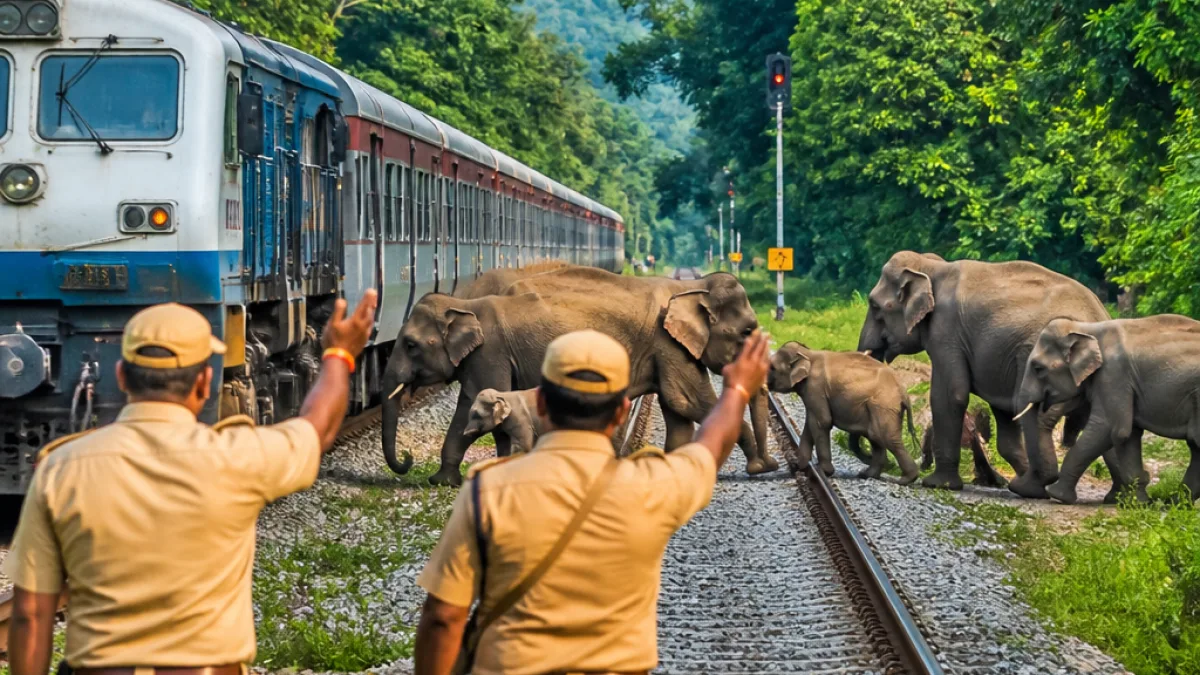
A Down Rajdhani Express was temporarily brought to a halt on Wednesday morning in Assam's Hojai district to allow a herd of wild elephants to cross the railway tracks safely, railway and forest officials said. The incident occurred near the Hawaipur stretch, where forest personnel noticed the animals attempting to cross as the train approached.
Coordination between forest staff and railway control averts potential danger
According to officials, a member of the Assam Forest Department first sighted the herd near the tracks. Prompt communication with the loco pilot and the Lumding Railway Control Room led to an immediate slowdown and stop of the train so the animals could complete their crossing without disturbance.
After the herd had moved across and the line was clear, the Rajdhani resumed its journey. Authorities described the response as measured and timely, preventing any injury to the elephants and avoiding risk to passengers.
"An unexpected halt allowed the adorable giants to cross safely," Assam Forest Minister Jayanta Malla Baruah said while sharing the video of the incident on social media.
Why such interventions matter in Assam
Assam is home to significant elephant populations and numerous forested corridors that intersect with roads and railway lines. Trains are a recurrent hazard in these areas, where fragmented habitats force elephants and other wildlife to cross human infrastructure during their seasonal movements and dispersal.
Local forest departments and the Northeast Frontier Railway have in recent years implemented measures such as watch posts, speed restrictions, signalling protocols and coordination mechanisms to reduce collisions. Incidents like Wednesday’s highlight both the continuing risks and the role of on-ground vigilance.
Practical details of the occurrence
| Item | Detail |
|---|---|
| Train | Down Rajdhani Express |
| Location | Hawaipur area, Hojai district, Assam |
| Authorities involved | Assam Forest Department; Lumding Railway Control Room; loco pilot |
The episode was captured on video, which was circulated on social media by the state forest minister. In the clip, elephants are seen crossing the track while railway personnel keep the train stationary, allowing the animals to pass unhurried.
Responses and broader context
Officials said the swift action of forest staff and railway control averted a potentially dangerous situation. Such measured responses can be critical: collisions with trains result not only in animal fatalities but can also derail services, cause passenger injuries and strain local conservation efforts.
- Immediate vigilance: forest watchers and patrolling staff remain the first line of defence in many sections of Assam.
- Railway coordination: control rooms and loco pilots act on alerts to reduce speed or stop trains when wildlife is sighted.
- Public awareness: sharing of such incidents aims to underline the need for continued cooperation between departments and communities.
While this incident concluded without harm, it underscores the ongoing challenge of managing human infrastructure where it intersects with wildlife movement. Conservationists and transport authorities have repeatedly called for comprehensive measures — including improved fencing where appropriate, speed regulation in identified corridors, and real-time alert systems — to prevent train-animal collisions across the northeast.
For passengers and local residents, officials advise adherence to instructions from train staff and reporting of any wildlife sightings near tracks to railway control rooms or the forest department hotline. Continued coordination, they say, remains vital to protect both human lives and Assam's biodiversity.
The Hojai episode is the latest example of how timely local action can prevent tragedy when wildlife and modern transport networks intersect in the region.