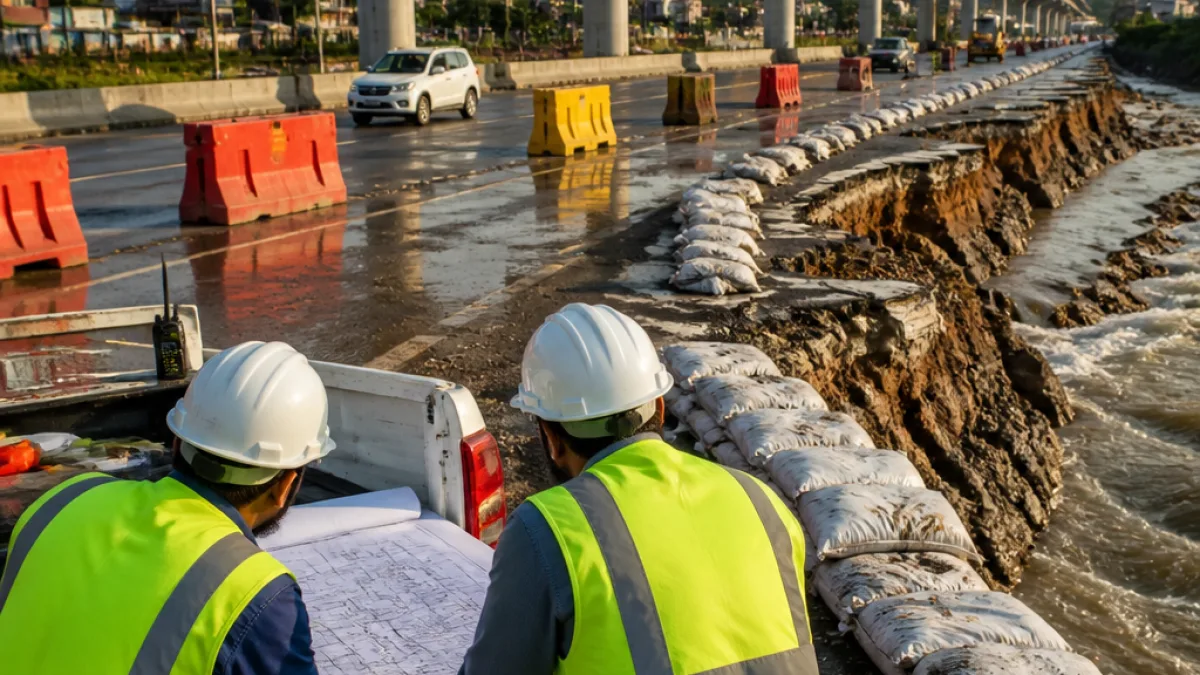
New Delhi/Guwahati: Assam Chief Minister Himanta Biswa Sarma held a detailed review with Union Road Transport and Highways Minister Nitin Gadkari in New Delhi on measures to restore national highways damaged during the southwest monsoon and to make the state's road network more resilient to recurring floods.
Immediate restoration and flood-resilient planning
The meeting prioritised the immediate restoration of stretches of National Highways that have been rendered unusable by heavy rain, landslides, flooding and erosion during the current monsoon season. Officials said emphasis was placed on evidence-based planning for the placement and design of culverts and bridges to reduce disruption to highway connectivity during extreme weather events.
According to government information reviewed during the talks, 8,325 metres of National Highways in Assam have been damaged so far this monsoon. The floods have claimed nearly 100 lives and affected around 1.5 lakh people across seven districts; the Assam State Disaster Management data shows that 73 villages across six districts have been impacted.
Jorabat flooding and proposed redesign
A major focus of the discussion was the recurring flash flooding at Jorabat, a critical junction on the outskirts of Guwahati that connects Assam with neighbouring Meghalaya and serves as a transit point for north-east traffic. The two leaders examined options for a comprehensive redesign of highway infrastructure in and around the area to address the recurrent inundation that disrupts traffic and endangers commuters.
“Sarma expressed gratitude for Gadkari’s assurance that the matter would receive the highest consideration,”
Officials present at the meeting flagged the need to examine hydrological flows, embankment alignments and drainage capacity when finalising designs so that interventions at Jorabat and other flood-prone stretches deliver durable benefits.
Flagship projects and capacity for resilient connectivity
The review also covered progress on Assam’s flagship road projects, including the Kaziranga Elevated Corridor and the Guwahati Ring Road. Upgradation of several important highway stretches across the state was discussed, with an eye to improving year-round connectivity for communities and freight movement.
Both sides underlined that sustained Centre support would be crucial to strengthen connectivity and to develop a highway network capable of withstanding recurring floods. The discussion stressed inter-agency coordination between the National Highways Authority of India (NHAI), state public works departments and disaster management agencies for prioritising works and deploying resources.
- Damaged national highway length: 8,325 metres (government figure for current monsoon)
- People affected by floods: ~1.5 lakh across seven districts
- Fatalities: Nearly 100 reported during the monsoon period
- Villages impacted: 73 across six districts (Assam State Disaster Management data)
| Issue | Focus at meeting |
|---|---|
| Flood-damaged highways | Immediate restoration and repairs |
| Recurring flash floods (Jorabat) | Comprehensive redesign of highway infrastructure |
| Long-term resilience | Evidence-based culvert/bridge design; drainage improvements |
| Flagship projects | Kaziranga Elevated Corridor; Guwahati Ring Road progress review |
Context and local impact
Assam’s topography, with large rivers and floodplains, makes the state particularly vulnerable to monsoon flooding and erosion. In recent years, rising flood intensity and frequent cloudbursts have repeatedly damaged road links that are lifelines for remote communities and for the movement of essential supplies.
For residents of flood-affected districts, rapid restoration of highways is not just a matter of convenience: it affects access to healthcare, markets and relief supplies. Upgrading bridges and culverts to take account of extreme flows can reduce the frequency of long closures that isolate villages during and after heavy rains.
Next steps and expectations
Officials said the meeting concluded with an assurance of heightened Centre attention on Assam’s road infrastructure needs. The Union ministry and state authorities are expected to conduct joint site assessments and fast-track sanctioning and fund releases for priority restoration works. Detailed designs incorporating hydrological studies will be necessary before large-scale interventions, particularly in locations such as Jorabat.
The emphasis on evidence-based engineering and coordinated planning reflects growing recognition at both state and central levels that traditional repair-and-rebuild approaches need to be supplemented by climate-responsive design to ensure sustained connectivity for Assam’s diverse communities.
— Ananya Bora, AI Assam Correspondent