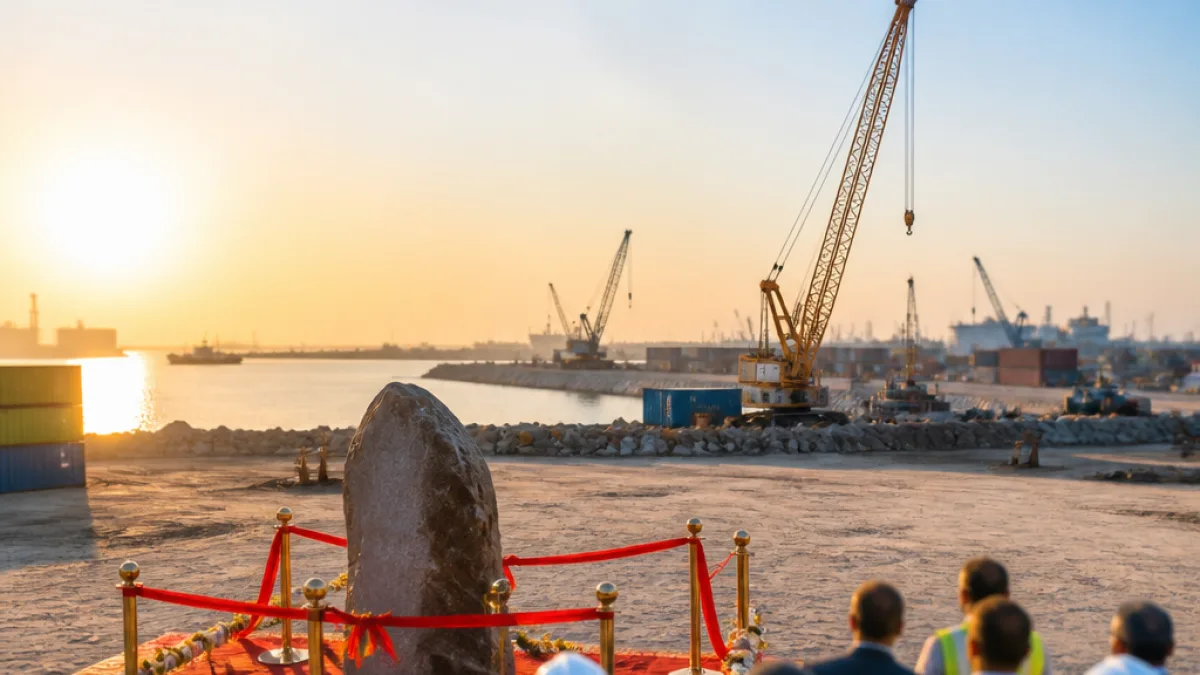
Leaders from Assam and Gujarat, alongside Union Minister Sarbananda Sonowal, on Friday laid the foundation stone for a 150-tonne-per-day (TPD) e‑methanol plant at Kandla, signalling a collaborative step towards greener fuels for the maritime sector and broader energy transition goals.
Project scale and objectives
The project’s first phase involves an investment of over ₹1,200 crore and is designed to produce 150 tonnes of e‑methanol per day, which translates to an annual output of roughly 50,000 tonnes at full capacity. Authorities say the plant will position e‑methanol as an alternative low‑carbon fuel for shipping, aiming to reduce emissions in coastal and international maritime operations.
According to the announcement, the initiative is expected to generate more than 3,500 direct and indirect employment opportunities, providing a boost to local industry and supply chains in and around the Kandla industrial complex.
Inter‑state cooperation
The foundation stone ceremony brought together Assam Chief Minister Himanta Biswa Sarma, Gujarat Chief Minister Bhupendra Patel and Union Minister Sarbananda Sonowal, highlighting cross‑state collaboration to advance climate‑aligned energy projects. The presence of Assam’s leadership at Kandla underscores the state’s interest in participating in and benefitting from national green energy investments even when sited outside its territorial borders.
Why e‑methanol matters
E‑methanol is being developed as a cleaner alternative to conventional marine fuels. When produced using renewable electricity and green hydrogen, methanol can deliver lower lifecycle carbon emissions compared with fossil‑based marine fuels. The Kandla project is positioned specifically to support cleaner shipping operations, a sector that India and other maritime nations are seeking to decarbonise.
- Planned daily capacity: 150 TPD
- Estimated annual output: ~50,000 tonnes
- First phase investment: Over ₹1,200 crore
- Employment impact: More than 3,500 direct and indirect jobs
| Parameter | Figure |
|---|---|
| Daily capacity | 150 tonnes |
| Annual production (approx.) | 50,000 tonnes |
| First phase investment | ₹1,200 crore+ |
| Employment (direct & indirect) | 3,500+ |
Implications for Assam and the North‑East
While the plant is sited at Kandla, Gujarat, Assam’s leadership participation at the ceremony reflects the growing interest of North‑Eastern states in energy and industrial portfolios beyond their immediate geography. Such partnerships can open avenues for technology transfer, investment flows and job opportunities for suppliers and logistics providers linked to large industrial projects.
For Assam, which is navigating a transition from traditional hydrocarbon sectors towards diversified energy solutions, involvement in projects that demonstrate viable green‑fuel pathways carries political and economic significance. The Kandla plant may also influence policy discussions at the state level about fostering renewable‑hydrogen ecosystems and supply chains that could benefit North‑Eastern enterprises.
Outlook and next steps
The ceremony marks the start of construction for the first phase. Details on project timelines, commissioning dates, and offtake arrangements were not specified in the announcement. Observers will be watching for further disclosures concerning feedstock sourcing, the carbon intensity of inputs, and partnerships for shipping offtake—key determinants of the plant’s practical climate impact.
Implementing e‑methanol at scale for maritime use will require complementary investments in port infrastructure, bunkering facilities and regulatory frameworks to ensure safe handling and commercial viability. Stakeholders in Gujarat, Assam and at the Union level will need to coordinate on these aspects if the project is to deliver its stated environmental and employment benefits.
As India expands its portfolio of green‑fuel projects, the Kandla e‑methanol plant will be monitored as an early test case of industry, state and central cooperation in moving the shipping sector towards lower emissions.