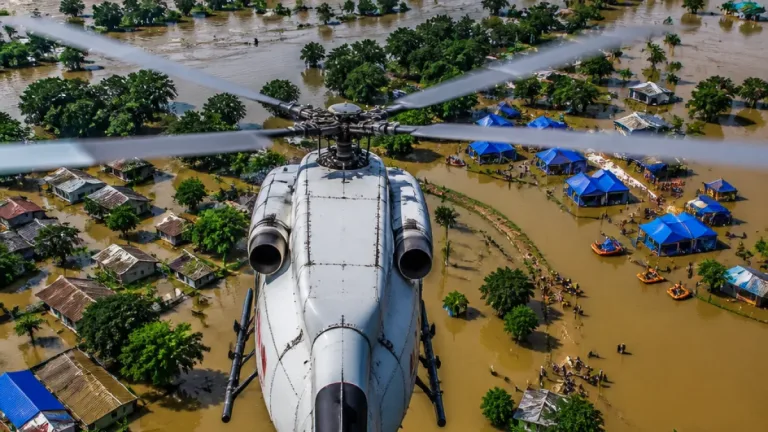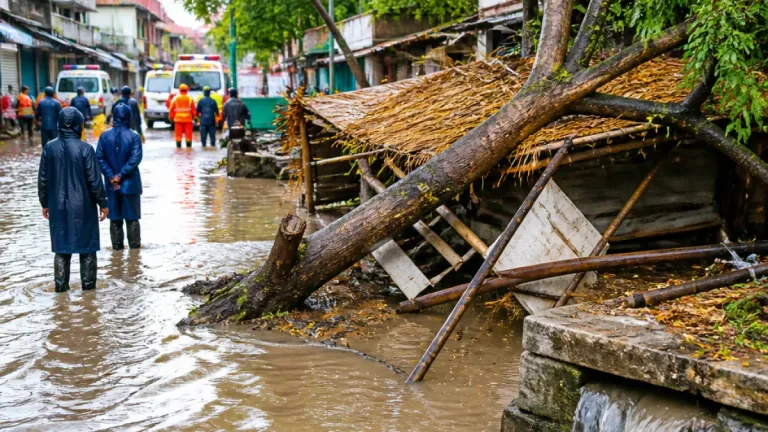
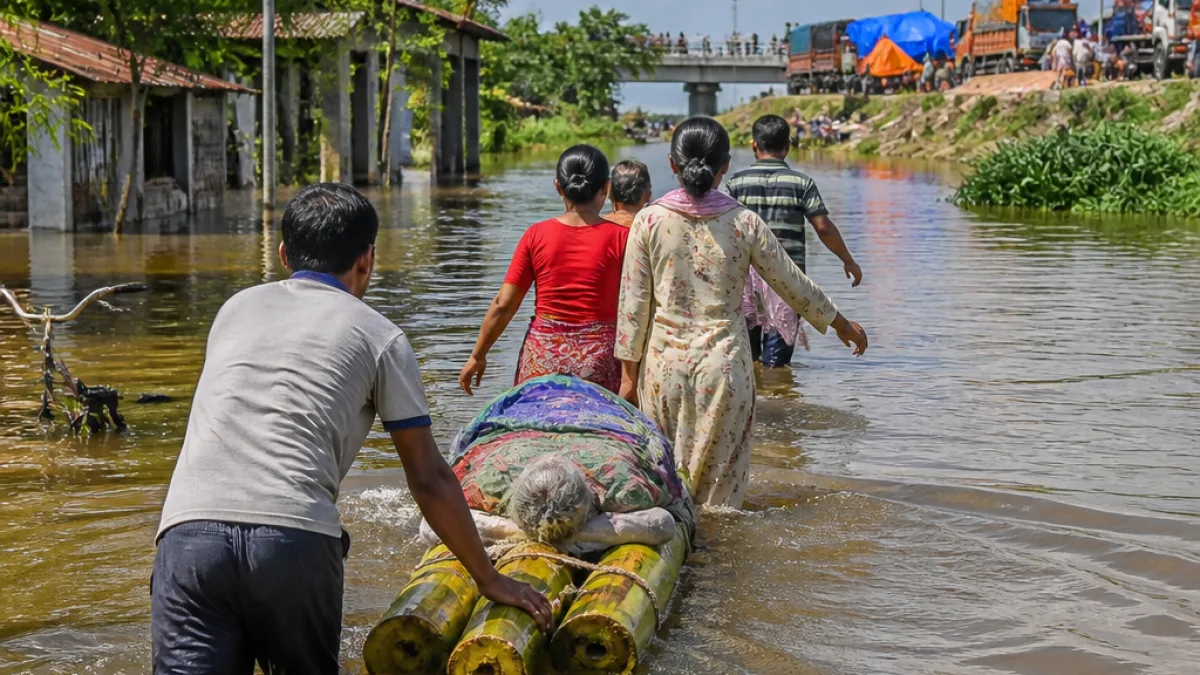
CHARING / SIVASAGAR, Assam: A 97-year-old woman was evacuated on a makeshift raft made from banana trunks after floodwaters surged through Charing village in Sivasagar district, officials reported, underscoring how this year's monsoon inundations have struck areas that rarely saw such waterlogging before.
Family improvises rescue as official help was not immediately available
Bornali Baruah and her husband are among those who had to improvise when floodwaters rose quickly late on 19 July, the report said. Lokada Duarah, the couple's elder family member, was almost bedridden and unable to walk. With no boat, no rescue team and no neighbour in a position to help, they placed her on a raft fashioned from banana trunks and waded through strong currents to reach a relief shelter on a national highway.
"Everyone was trying to save themselves," Baruah said.
The family said the water outside their house reached three to four feet while the interior eventually rose to about five feet, leaving their single-storey, eight-room house submerged. Baruah, 40, who had lived in Charing all her life, told reporters that this was the first flood of this magnitude in her locality since living memory — a stark indicator of the floods' unusual reach into inland and historically non-flooding pockets of Upper Assam.
Scale of impact across Assam
Local and national reports put this season's toll and impact in stark terms:
- Death toll: 100 reported.
- Most-affected areas: 10 districts and 456 villages (in the earlier, local tally); overall impact across 25 districts.
- People affected: about 140,000 people in the worst-hit zones (local figure); nearly 1.2 million across 25 districts (overall figure).
- Houses damaged: more than 19,000.
- Relief camps: 52 camps set up in some districts; overall 252 relief camps sheltering more than 75,000 people.
These figures were included in the reporting and reflect compiled counts as the situation evolved. District administrations and state agencies have been mobilising relief efforts, but residents in remote or suddenly inundated villages described early gaps in immediate rescue access.
| Metric | Figure (reported) |
|---|---|
| Death toll | 100 |
| Districts affected (overall) | 25 |
| People affected (overall) | Nearly 1.2 million |
| Houses damaged | More than 19,000 |
| People in relief camps | More than 75,000 in 252 camps |
Why areas that seldom flooded were hit
Residents in parts of Upper Assam reported inundation in villages that historically did not flood, pointing to either unusually high river levels, changes in drainage, or shifts in rainfall patterns. The immediate effect is greater vulnerability: households without boats, elderly residents or those with restricted mobility face heightened risk during sudden surges. In Charing, the absence of an immediate formal rescue prompted the family to rely on local knowledge and available materials to move an infirm elder to safety.
District administrations have been setting up relief camps on higher ground such as national highways, and state agencies are engaged in evacuations, distribution of dry rations and arrangements for temporary shelter. However, access challenges remain where roads and bridges are submerged or where currents are strong.
Practical information for residents and responders
- Prioritise evacuating elderly, pregnant women and those with disabilities to designated relief centres on higher ground.
- Use sturdy makeshift flotation only as a last resort; avoid fast currents and seek local assistance where available.
- Follow advisories issued by district administrations, National Disaster Response Force (NDRF) teams and the State Disaster Management Authority.
The human stories emerging from Sivasagar and neighbouring districts serve as reminders of how floods intersect with age, mobility and infrastructure gaps. The counts of affected people and damaged houses provide a scale for relief planning, while ill-prepared residents in newly inundated pockets underscore the need for targeted rescue capacity and longer-term adaptation measures.
Reporting by AFP, as carried in the regional coverage, provided the figures and first-hand family account cited in this dispatch.