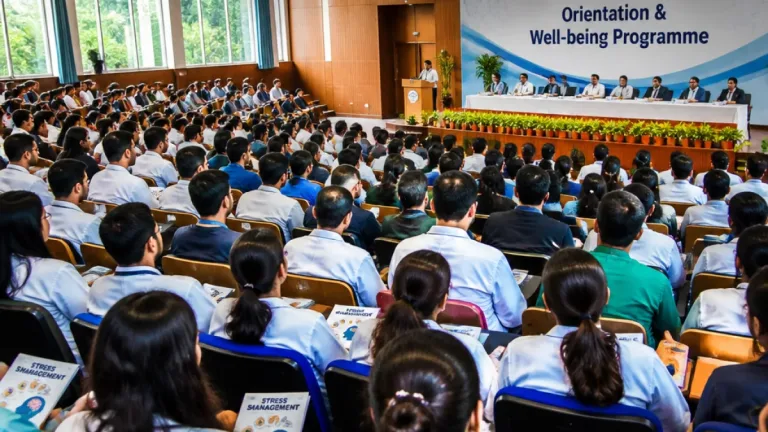

Chandigarh: The Punjab education department has ordered that a 20-minute daily mental health period continue in government middle, high and senior secondary schools across the state until 31 August, according to a letter issued by the State Council of Educational Research and Training (SCERT) on August 8. The sessions form part of the state’s Mission Samarth mindfulness initiative and have been integrated into the regular timetable rather than treated as an extra activity.
Timetable changes and conduct
Under the revised schedule, schools are required to schedule the 20-minute session as the first period of the day. To accommodate this slot without lengthening the school day, the directive reduces five minutes from each of the final three periods.
| Component | Change |
|---|---|
| Designated session | 20 minutes as first period |
| Adjustment | -5 minutes from each of last three periods |
| Coverage | Government middle, high and senior secondary schools in Punjab |
Activities, supervision and materials
The programme is structured to help pupils handle classroom and academic stress, sharpen concentration and support learning. Daily activities include breathing exercises, guided reflection, affirmations and gratitude practices. Teachers have been provided with activity sheets and a mindfulness booklet that outlines a 12-step process to be followed during the sessions.
Implementation responsibilities rest with class in-charges, who will conduct the exercises under the oversight of school heads. SCERT has directed district education officers and school principals to ensure adherence to the guidelines and has flagged the matter as "most urgent" in its communication.
- Objective: Integrate stress management and concentration exercises into daily routine.
- Duration: Extended to 31 August; previously scheduled to end in May.
- Monitoring: School heads to supervise regular conduct as per prescribed steps.
Context and implications
Mindfulness and simple mental health exercises in schools have gained traction as low-cost, scalable approaches to reduce stress and improve classroom attention. By making the practice part of the formal timetable, Punjab seeks to normalise these activities and ensure consistent delivery across government institutions without adding to total school hours.
Embedding such sessions into the first period may influence classroom routines and lesson planning. The five-minute reduction from each of the last three periods is intended to be a neutral measure so that instructional time across the day remains balanced. School administrations will need to monitor whether pedagogical outcomes and curricular coverage are affected, and whether teachers receive adequate support to deliver the programme effectively.
Experts and national public health bodies such as the Indian Council of Medical Research (ICMR) and the World Health Organization (WHO) have highlighted the importance of early-school mental health interventions, particularly in reducing anxiety and improving attention among adolescents. While this directive is a state-level policy, its approach aligns with broader recommendations to integrate mental health promotion into school settings.
Parents and guardians who have concerns about a child’s mental health should consult a qualified medical practitioner or mental health professional for personalised advice. WE NEWS content is not a substitute for professional medical guidance.
SCERT’s extension instructs educational administrators to ensure compliance through district-level oversight. The continued roll-out under Mission Samarth will run through August, after which authorities may review implementation and outcomes before deciding on any further action.