
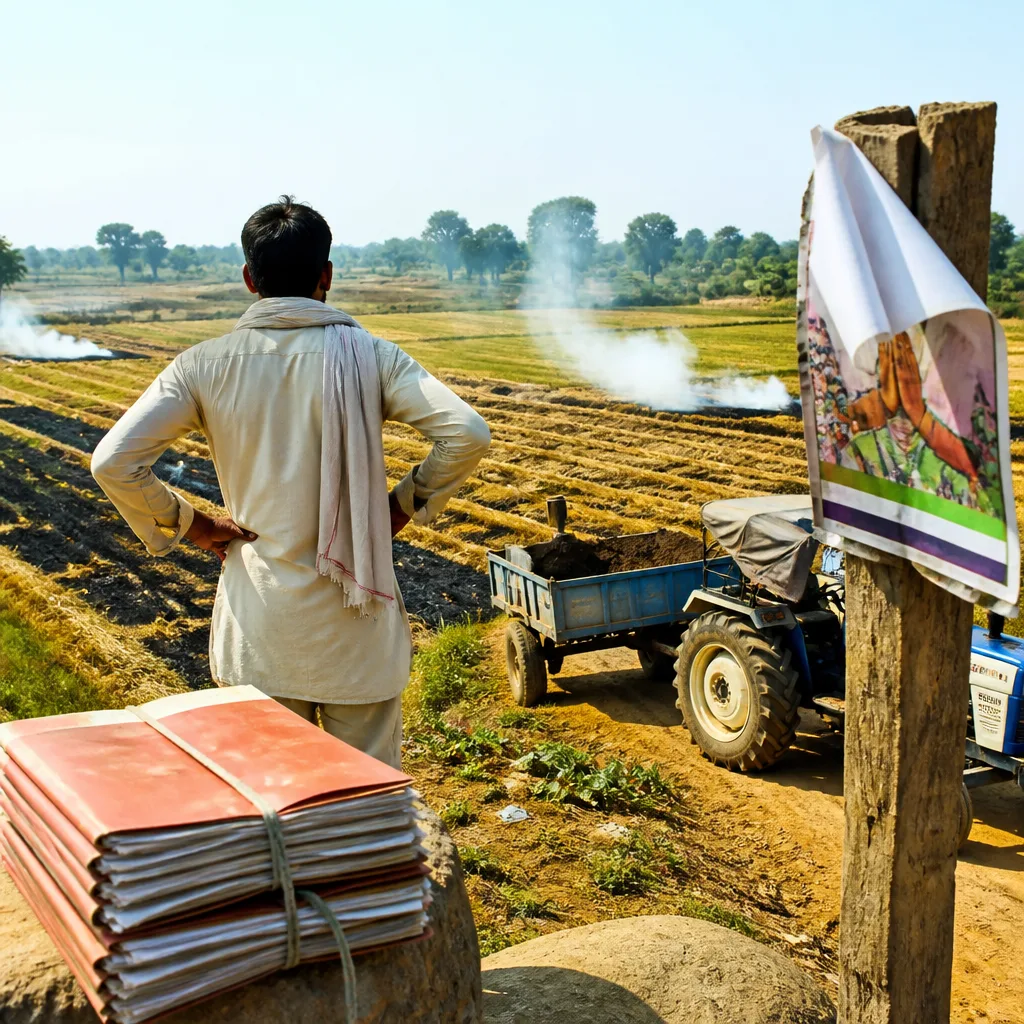
Ahead of the 2027 Assembly election, Punjab is entering the usual six- to eight-week window when farmers clear paddy residue for the rabi crop, a period that has repeatedly generated conflict between agricultural communities and the administration. A recent report said official monitoring and enforcement patterns are likely to follow familiar electoral-year rhythms, with authorities less inclined to pursue punitive action despite satellite detection of field fires.
Fewer recorded fires, persistent burning
Satellite imagery continues to detect stubble burning, but state-level figures circulated by the administration and the Indian Agricultural Research Institute (IARI) show a marked decline in registered incidents over the past three years. The data indicate 36,663 farm fires in 2023, 10,909 in 2024 and 5,114 in 2025 — an overall fall of about 86 per cent from the 2023 peak.
Between 2021 and 2025, the report said, stubble burning incidents fell by approximately 92.83 per cent, a change attributed to intensified monitoring, satellite tracking and greater adoption of in‑situ residue management equipment. The steepest single‑year reduction came in 2024, when incidents dropped by about 70.25 per cent.
| Year | Recorded farm fires |
|---|---|
| 2023 | 36,663 |
| 2024 | 10,909 |
| 2025 | 5,114 |
Enforcement and politics
Despite the decline in reported incidents, the report cautioned that the cycle of burning remains active on the ground. Farmers often choose to burn residues during pre‑dawn hours or at night to avoid detection, while organised farm unions have in some cases staged deliberate burning in front of officials to protest enforcement methods. There have also been confrontations involving media crews, which at times were compelled to delete visual footage, the report added.
Enforcement mechanisms have themselves become politically charged. State authorities have used a mix of criminal First Information Reports under Section 223 of the Bharatiya Nyaya Sanhita, environmental compensation penalties and administrative measures such as "red entries" in land records to deter burning. The use of these tools accelerated in recent years and helped drive down recorded incidents, but their deployment has also fuelled resentment among sections of the farming community.
- Monitoring: Enhanced satellite tracking and on‑ground verification have raised detection capacity.
- Penalties: FIRs, environmental fines and land‑record annotations have been used as deterrents.
- Political restraint: Election years often see reduced use of punitive measures to avoid alienating voters.
2026 season and electoral implications
Monitoring for the 2026 season opened on 15 September; the initial days produced relatively few confirmed cases, mainly from districts such as Tarn Taran and Ferozepur. Analysts tracking the cycle told the report that enforcement choices this autumn are likely to reflect electoral calculations, with administrations reluctant to pursue large‑scale challans or arrests that could provoke farmer unrest ahead of the 2027 polls.
The tension between environmental compliance and electoral politics creates dilemmas for policymakers. On one hand, robust enforcement and incentives for alternative practices can deliver sustained reductions in air pollution and public health harm. On the other, aggressive penal action in an election year risks intensifying protests and alienating rural voters, particularly given the short window farmers have to prepare land for the rabi sowing.
Past years have seen a mix of outcomes: while stricter measures and subsidised machinery distribution contributed to the fall in incidents, episodes of direct confrontation between farmers and officials indicate that compliance is uneven and contingent on on‑the‑ground resources and political will.
As the state navigates the coming weeks, official strategy and the balance between persuasion, incentives and punitive measures will be closely watched in the national capital and among civil‑society stakeholders concerned with air quality and rural livelihoods.













