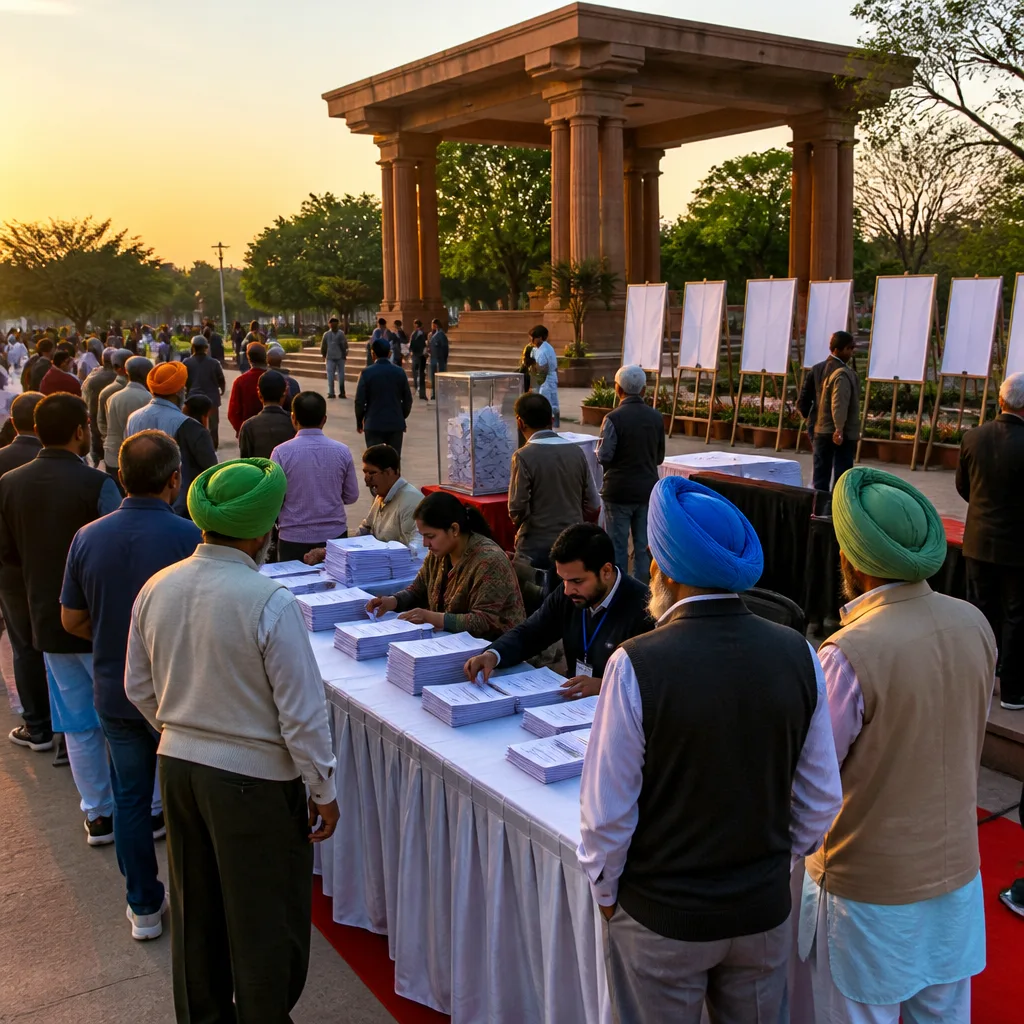
More than 13,000 ballots were cast by members of the Sikh diaspora in Indianapolis on August 16 in a non‑binding referendum organised by Sikhs for Justice (SFJ) to measure support for a separate Khalistan state in India’s Punjab, the group said.
What took place in Indianapolis
The vote was held at Richard G. Lugar Plaza and is part of a wider, multi‑city effort by SFJ across North America and elsewhere. SFJ, described in reporting as an international advocacy and secessionist organisation, says the referendum is a democratic campaign for an independent homeland for Sikhs in north‑west India.
Gurpatwant Singh Pannun, SFJ’s general counsel, said the ballots from Indianapolis will be counted when the overall referendum concludes. He told reporting that the process is expected to continue for the next two to three years as votes are gathered from multiple locations.
“Sikhs are facing existential threats and the only way to survive is to have an independent homeland,”
The movement staged visible public outreach in advance of the Indianapolis vote, including a car rally featuring bright yellow Khalistan flags and billboards in the city, reporting said. Prior votes have reportedly taken place in San Francisco, Seattle and Washington, D.C. The next scheduled vote is in Edmonton, Alberta, in October.
Claims and counter‑claims
SFJ has accused successive Indian governments of what it characterised as long‑running discrimination and targeted harms against Sikhs in Punjab. The group’s allegations, as summarised in reporting, include claims of ethnic cleansing, economic marginalisation, a weaponised drugs strategy targeting Sikh youth, policies that drove farmer deaths and emigration, and preferential treatment for non‑local labourers.
The Indian government has rejected SFJ’s characterisations, according to the reporting. The Indianapolis coverage noted that Indian diplomatic representation in Washington, D.C., had been approached for comment.
- Date and venue: 16 August, Richard G. Lugar Plaza, Indianapolis.
- Ballots cast: More than 13,000 in Indianapolis alone.
- Organiser: Sikhs for Justice; Gurpatwant Singh Pannun named as general counsel.
- Timeframe: SFJ expects the global process to continue two to three years.
- Other cities involved: San Francisco, Seattle, Washington, D.C.; next vote Edmonton in October.
Context and possible implications
The referendum is non‑binding but politically sensitive. SFJ’s campaign for a separate Khalistan challenges the integrity of India’s territorial sovereignty, while the group frames its actions as a democratic expression by diaspora communities. Such activities abroad have in the past led to diplomatic discomfort between India and host countries when they prompt local political mobilisation or public demonstrations.
Indian authorities have historically treated Khalistan separatism as a security concern and have rejected allegations by secessionist groups. The Indianapolis vote adds to a string of diaspora‑organised events that have attracted attention in several North American cities and may shape dialogue between Indian diplomatic missions and local jurisdictions where the diaspora is active.
| Item | Detail |
|---|---|
| Organiser | Sikhs for Justice (SFJ) |
| Lead spokesperson | Gurpatwant Singh Pannun, SFJ general counsel |
| Indian government response | Rejected SFJ’s allegations (as reported) |
Reporting noted that Indianapolis is among an expanding number of locations hosting the referendum. SFJ said it will tally votes once the multi‑city process is complete. The wider political consequences will depend on the turnout and reactions from both host governments and Indian diplomatic channels as the campaign progresses.