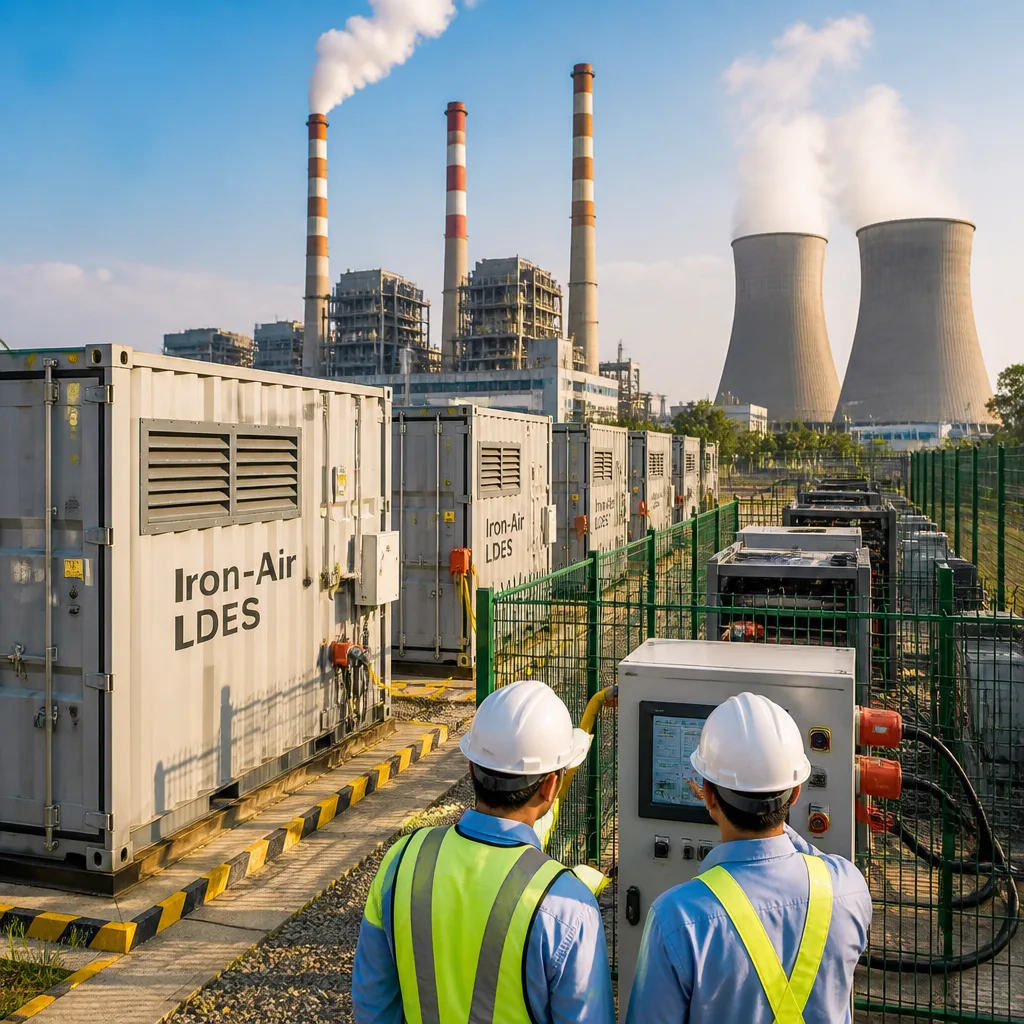
A pilot project to evaluate an indigenous iron‑air long‑duration energy storage (LDES) system will be carried out at the NTPC Simhadri Thermal Power Station, officials said. The Atal Incubation Centre — Anna University (AIC‑AU) will implement the scheme through technology partner Meine Electric to test the battery under real utility conditions.
Purpose and expected outcomes
The exercise aims to collect operational and technical data on the battery’s performance and reliability when connected to a working power plant. Project organisers expect the results to indicate whether the technology can help provide 24×7 clean energy, smooth renewable variability and enhance grid flexibility — all key challenges as India increases variable renewable capacity.
What the system offers
Meine Electric has promoted a proprietary Fast Charge Long Discharge (FCLD) iron‑air solution. According to the company, the configuration supports about six hours of charging and 18 hours of discharge, a profile intended to shift energy from periods of surplus renewable generation to long periods of demand.
- Technology partner: Meine Electric (developer of iron‑air LDES)
- Implementer: Atal Incubation Centre — Anna University
- Host site: NTPC Simhadri Thermal Power Station
- Validation: Independent verification by Customised Energy Solutions, according to project documents
The pilot will include system development, integration and performance monitoring activities overseen by Meine Electric, the report said. Findings are expected to inform further refinement and potential commercial scale deployment of indigenous storage options in India.
"We are honoured that our indigenous Iron‑Air Battery technology has been selected for implementation under this pilot project planned at NTPC Simhadri Thermal Power Station," said Priyansh Mohan, Co‑Founder & CEO of Meine Electric.
Kishore Kumar S, CEO of AIC — Anna Incubator, described the pilot as a step toward scalable long‑duration storage that addresses significant national challenges in the energy transition.
Why iron‑air LDES matters for India
Long‑duration storage refers to systems able to discharge energy for many hours — typically more than eight — providing services different from short‑duration batteries like lithium‑ion. Iron‑air batteries use iron as the active material and cycle between oxidised and reduced states, promising potentially lower material costs and greater raw‑material availability compared with some alternatives. The pilot will test these claims under utility operating conditions.
For grid operators, LDES can:
- store large amounts of renewable energy generated during low‑demand hours;
- deliver electricity across extended evening or multi‑day dry periods;
- provide stability services that reduce reliance on fossil generators for flexibility.
| Feature | Reported specification |
|---|---|
| Charge time | ~6 hours |
| Discharge time | ~18 hours |
| Independent validation | Customised Energy Solutions |
While the pilot’s stated charge/discharge profile looks promising for firming renewables and providing overnight supply, actual performance metrics such as round‑trip efficiency, cycle life, degradation rates, cost per megawatt‑hour and site footprint will determine commercial viability. The project will generate the operational evidence needed to evaluate these aspects.
Industry observers say demonstration projects at utility scale are vital because laboratory results do not always translate to long‑term, real‑world operation. If this pilot confirms technical adequacy and cost competitiveness, it could accelerate deployment of Indian‑developed LDES solutions and reduce dependence on imported technologies.
The pilot also underlines a growing focus on diversifying storage approaches beyond lithium‑ion, particularly for applications requiring many hours of discharge. Data from Simhadri will inform policymakers, utilities and investors weighing storage options as India expands renewable capacity and seeks ways to maintain grid reliability.
Project partners say the results will guide subsequent technology development and potential commercial roll‑out, but no timeline for completion or commercial deployment was released in the announcement.