Agartala, Aug 13: A previously undocumented species of cascade frog has been identified from the Jampui Hills in Tripura and formally named Amolops ammachi in tribute to the late Malayali social worker and philanthropist Padmini Varkey, researchers reported.
Discovery and publication
The new species is one of three Amolops (cascade frog) species reported by a team led by Professor S D Biju of Delhi University. The findings are published in the Bulletin of the Museum of Comparative Zoology, a scientific journal issued by Harvard University.
According to the report, the discovery followed over 15 years of field exploration across mountainous areas of seven north-eastern states. The three additions to the genus Amolops expand knowledge of the region’s amphibian diversity, which scientists say is part of the wider Himalayan biodiversity hotspot.
About Amolops ammachi
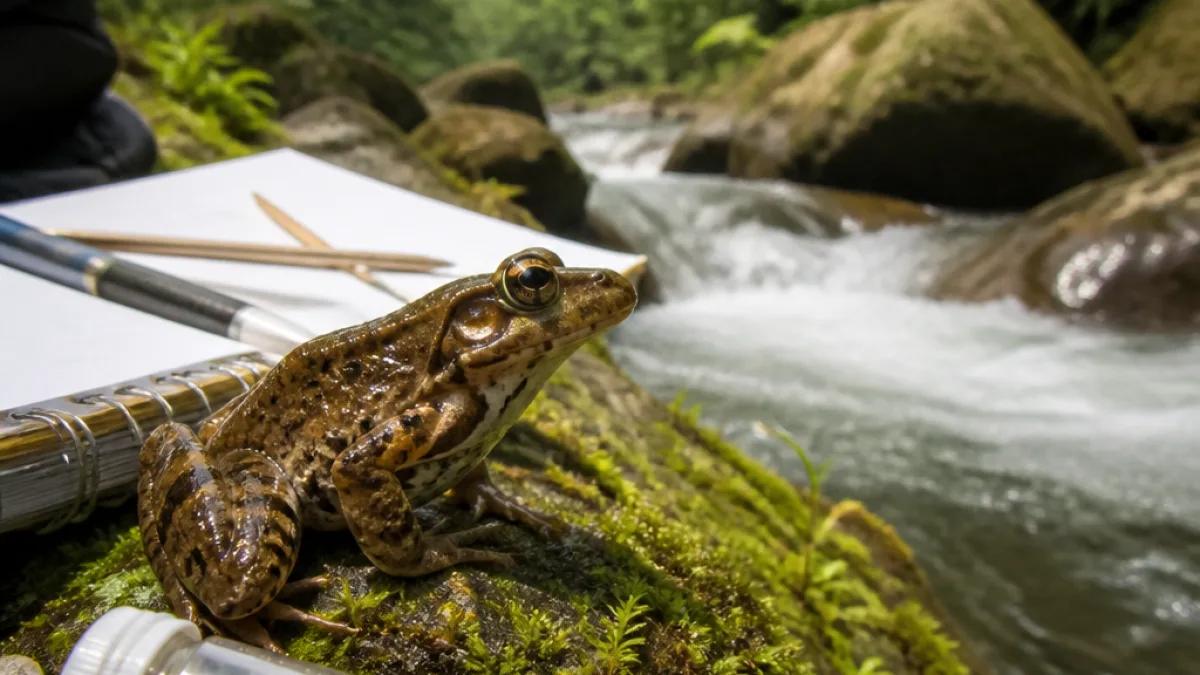
Researchers describe Amolops ammachi as a medium-sized cascade frog, measuring about 80 mm in length. Its dorsal colouring is reported as light brown with prominent olive-green reticulations, details that helped distinguish it from closely related species found elsewhere in the region.
“It has been named in honour of the late Padmini Varkey, renowned for her social and philanthropic work,” Professor S D Biju said in the published report.
Why the name matters
The specific epithet honours Padmini Varkey, popularly known as ‘Ammachi’. The naming recognises her work in social service and philanthropy, the report noted. Varkey had been active in health services and voluntary work and was associated with progressive movements; she later helped establish several organisations focused on women’s welfare and palliative care.
Regional context and conservation implications
Northeast India, including Tripura, is recognised by conservationists as part of a global biodiversity hotspot. The discovery of new amphibian species underlines the rich but still incompletely known fauna of the area and points to the conservation value of montane stream habitats where cascade frogs occur.
Amphibians are sensitive indicators of environmental change because of their permeable skin and life cycles that link aquatic and terrestrial systems. Documenting species diversity is a first step towards assessing their conservation status and any threats they may face from habitat loss, pollution or climate change.
Other new species reported
The study also describes two additional new Amolops species from other parts of the northeast. The team named one species Amolops sendenyu after Sendenyu village in Nagaland, where it was found, and another Amolops bella from West Bengal.
| Species | Common name | Location reported |
|---|---|---|
| Amolops ammachi | Ammachi’s Cascade Frog | Jampui Hills, Tripura |
| Amolops sendenyu | Sendenyu Cascade Frog | Sendenyu village, Nagaland |
| Amolops bella | Beautiful Cascade Frog | West Bengal |
Fieldwork and long-term effort
The paper highlights that the new records came after extensive fieldwork spanning more than a decade. Such sustained surveys are necessary in the region because of its complex topography, variable climate and the cryptic nature of many amphibian species, which may be active only in specialised stream habitats.
Local researchers and field biologists have increasingly documented previously unknown species in recent years, emphasising the role of systematic surveys in guiding conservation priorities. The formal description in a peer-reviewed journal is required before a species name is widely accepted and used in conservation assessments.
What next
- Taxonomic description published in an international journal establishes the species for scientific and conservation use.
- Further surveys in Tripura’s highland streams will be needed to establish distribution, population size and threats.
- Conservationists may use the findings to prioritise habitat protection and monitoring of amphibian health indicators.
The discovery of Amolops ammachi underscores the biological richness of Tripura’s hills and the continuing need for field-based biodiversity research across northeast India.