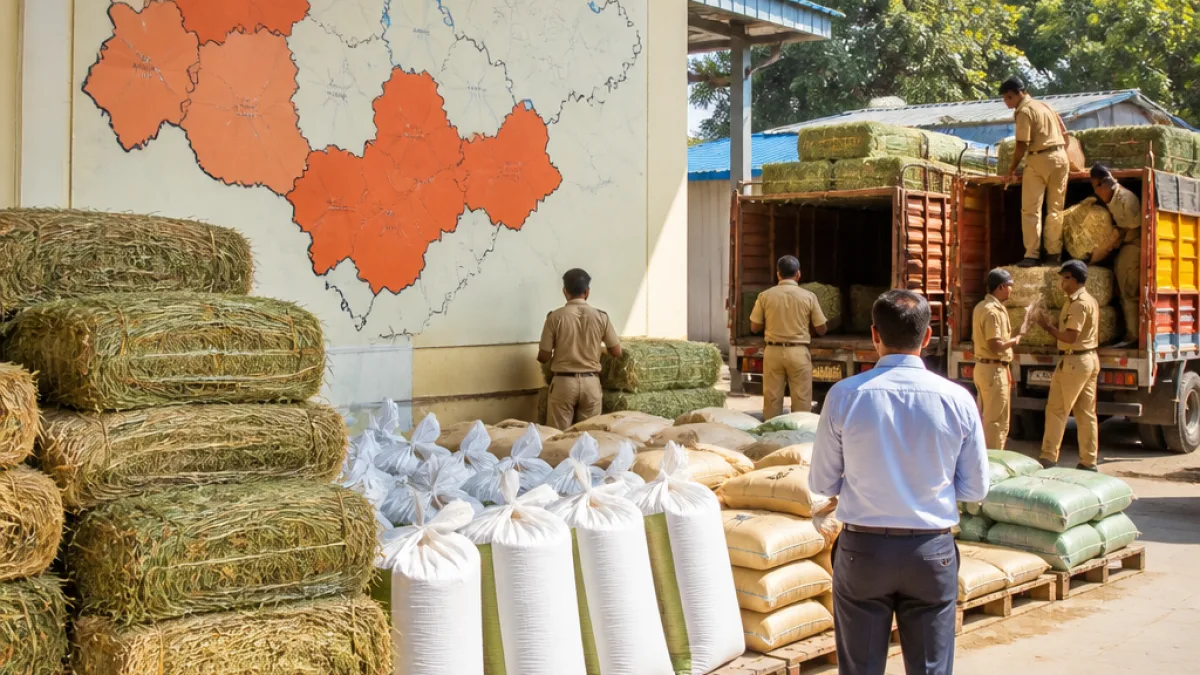
Mysuru: Officials have moved to avert a livestock feed crisis after eight taluks in Mysuru district were declared drought-hit following deficient kharif rainfall, stocking fodder sufficient for about 37 weeks and restricting interstate movement of fodder, according to local animal husbandry sources reported by The Times of India.
Shortfall in sowing, crop losses intensify pressure on fodder supply
The deputy director of animal husbandry and veterinary sciences in Mysuru, Siddaramu, told The Times of India that the department had already procured and staged fodder adequate for the next 37 weeks and had sought to limit inbound and outbound interstate transfers of feed to prioritise district needs. The administration has also sought emergency inputs from higher authorities: a request was made for 186 tonnes of fodder seed to be distributed to farmers ahead of the rabi season beginning in October.
District agrarian indicators show the scale of the challenge. Sowing was completed on just 56 per cent of the targeted 3.8 lakh hectares this season, while officials have recorded crop loss affecting lands described in the report as 1,43,408 lakh hectares—a figure cited in the source. The agriculture department has recommended release of ₹122 crore under National Disaster Response Fund guidelines to compensate affected cultivators.
- Fodder preparedness: Enough stockpiled for approximately 37 weeks (about six months).
- Seed request: 186 tonnes of fodder seed sought for rabi season distribution.
- Proposals: Plan submitted to open 26 fodder banks and a goshalā in every taluk.
Proposals and relief arrangements
The deputy director has submitted a proposal to authorities to establish 26 fodder banks and to set up a goshalā in each taluk, with potential sites identified at prominent hobli headquarters. The intention is to provide both emergency feed stocks and shelter options: farmers who have run out of fodder would be able to leave livestock at goshalas once they are operational, the report said.
“Farmers who have not stocked enough fodder can leave their livestock in a goshala once it opens in the district,” the deputy director was quoted as saying.
The district’s livestock census stands at nearly 9.5 lakh animals, underscoring the scale of feed required. To complement official measures, the Karnataka Milk Federation (KMF) has distributed fodder seeds to milk producers across the district and hopes to produce about 4.8 lakh metric tonnes of green fodder, which it estimates could sustain milking cattle for the next six months.
| Item | Figure |
|---|---|
| Taluks declared drought-hit | 8 |
| Fodder stock duration | 37 weeks (approx.) |
| Fodder seed requested | 186 tonnes |
| Livestock population (district) | 9.5 lakh |
| Projected green fodder by KMF | 4.8 lakh tonnes |
| Compensation recommended | ₹122 crore |
Voices from farming groups and local impact
Local farmer leaders warned that the situation could deteriorate once rains cease. Attahalli Devaraj, district vice-president of the Karnataka Rajya Raitha Sangha, urged the state government to expedite opening fodder banks and goshalas, arguing farmers already face difficulties in arranging feed due to drought, pest damage to maize, declining paddy cultivation and shrinking natural fodder sources.
Officials highlighted that the fall in water levels at reservoirs, notably Krishna Raja Sagar (KRS) and Kabini, after releases to Tamil Nadu has compounded the problem by failing to recharge smaller lakes and ponds that rural communities rely on. The combined effects — reduced sown area, pest impact and lower water availability — have driven the animal husbandry department’s push for stockpiling and for centralised relief infrastructure.
For Mysuru district residents, the immediate consequences are twofold: pressure on smallholder incomes where dairying contributes to livelihoods, and heightened logistical and financial strain if additional feed or shelter arrangements prove insufficient or delayed. The department’s proposals, seed distributions by KMF and the request for central funds aim to blunt those impacts ahead of the rabi season, but the effectiveness will depend on rapid disbursal of supplies and coordination across taluk administrations.
Reporting in The Times of India provided the details cited in this dispatch.