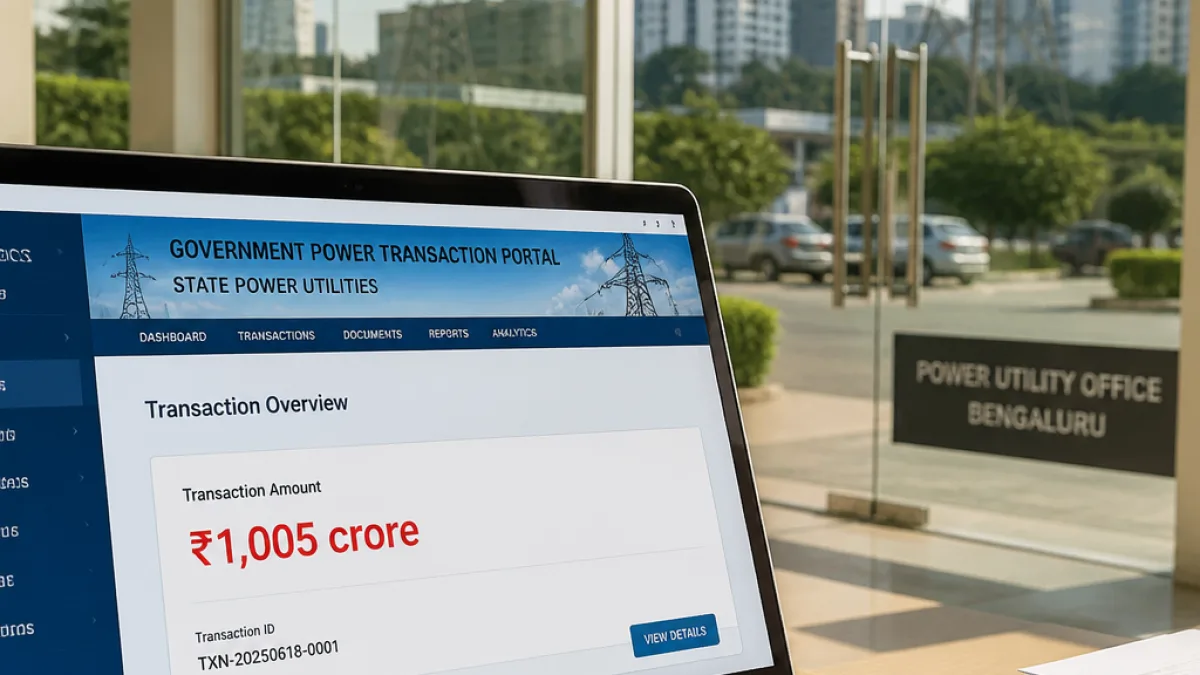
Bengaluru: The Supreme Court on Monday dismissed a batch of petitions by Karnataka electricity distribution companies seeking a stay on invoices totalling ₹1,005 crore that Adani Power uploaded on a government portal monitoring power purchase transactions and payment arrears.
Top court refuses to disturb Aptel order
A bench led by Justice P.S. Narasimha refused to interfere with an order of the Appellate Tribunal for Electricity (Aptel) that had declined to stay the invoices, and left intact the Central Electricity Regulatory Commission's (CERC) direction that the discoms pay the full amount claimed by Adani Power within 45 days.
The Supreme Court asked Aptel to pronounce its final order in the matter within three months, signalling an expedited disposal of the appeal in the regulatory forum.
Regulatory background and claims
In 2023, the CERC held that Karnataka discoms were liable to pay the carrying cost — the financing cost on differential amounts — along with late payment surcharge (LPS). The commission ordered repayment to be made in six instalments, with an entitlement to LPS if instalments were not met.
Subsequently, Adani Power moved the commission, alleging non-compliance by the discoms. The company uploaded the contested invoices on the government portal that tracks power purchase transactions and outstanding payments, prompting the litigation before Aptel and then the Supreme Court.
Discoms' arguments rejected
In their appeal, the Karnataka distribution companies, led by the Power Company of Karnataka, contended that there were no dues to be paid and described the CERC order as "perverse". They argued that Aptel erred in refusing to stay the CERC directive without considering the merits of their challenge.
The discoms warned that any curtailment or regulation of power supply — even from third-party generators — over alleged non-payment of disputed dues would cause “grave prejudice, irreparable harm and serious hardship” to both the utilities and their consumers. They said the state-owned companies would be left with no option but to pay the sum under protest to avert disruption in supply.
Financial and consumer impact
The discoms cautioned that meeting the ₹1,005 crore claim would strain their finances and impair their ability to meet other legitimate obligations unless the order was reversed. They said the burden could translate into operational difficulties and, in a worst-case scenario, the risk of curtailment of power purchased from third-party producers.
- Amount in dispute: ₹1,005 crore (invoices uploaded by Adani Power)
- CERC ruling (2023): Discoms liable for carrying cost and LPS; payment in six instalments
- Immediate directive: Payment to be made in 45 days per CERC; no stay from Aptel or Supreme Court
- Next procedural step: Aptel to pronounce final order within three months as directed by the Supreme Court
What authorities have said
The Supreme Court bench declined to grant relief to the discoms, effectively upholding the appellate tribunal's earlier view and the CERC direction for payment. The top court's order left the dispute to be finally resolved by Aptel within the time frame set by the bench.
| Entity | Action / Direction |
|---|---|
| CERC (2023) | Held discoms liable for carrying cost and LPS; ordered repayment in six instalments |
| Adani Power | Uploaded invoices totalling ₹1,005 crore on government power portal; sought recovery |
| Aptel | Declined to stay CERC order (earlier); now directed to give final order within three months |
| Supreme Court | Refused to interfere; asked Aptel to finalise within three months |
Context for Karnataka consumers
The dispute underscores the tension between regulatory rulings, power producers and distribution utilities nationwide. For Karnataka consumers, the immediate risk flagged by the discoms is potential disruption in third-party supply arrangements if non-payment issues lead to curtailment. In practice, the utilities have argued they may have to pay under protest to avoid any interruption while pursuing legal remedies.
With Aptel now directed to conclude the matter within a set timeline, the focus will shift to the tribunal's final view on the merits of the dispute and whether any refunds or reversals follow a prospective adverse order. Until then, the CERC direction to clear the claimed amount within 45 days remains operative.
Reporting from the state capital indicates officials and the utilities will be monitoring the tribunal timetable closely, given the potential fiscal implications for the power sector in Karnataka.