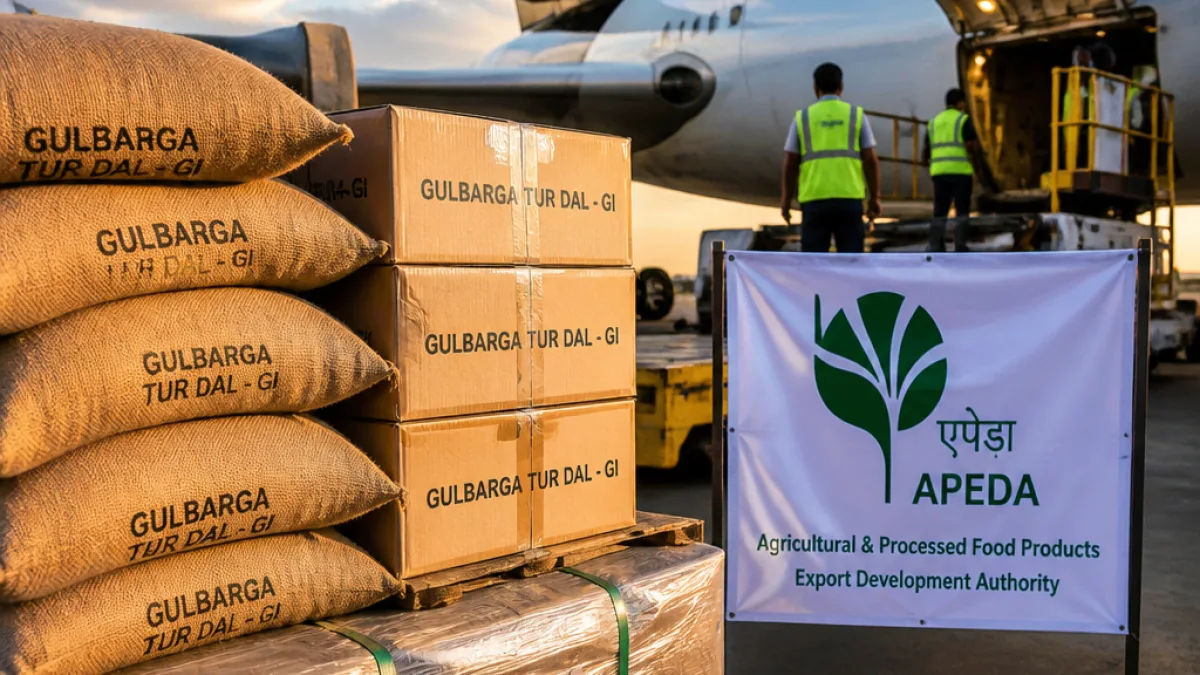
GI status and export milestone for a Kalaburagi speciality
Gulbarga Tur Dal, the pigeon pea split (tur dal) associated with the Kalaburagi region of Karnataka, has received renewed attention after the Agricultural and Processed Food Products Export Development Authority (APEDA) set in motion an export consignment to the Maldives. The consignment comprises 1 metric tonne of the product, which carries Geographical Indication registration awarded in 2019.
APEDA "flagged off a shipment of 1 metric tonne of Geographical Indication (GI)-tagged Gulbarga Tur Dal to the Maldives."
The GI tag recognises the distinct taste and quality attributed to tur dal grown in the Kalaburagi area. For local growers and traders, the export movement is significant: it underlines market recognition beyond domestic buyers and can influence price realisations during the marketing season.
What makes Gulbarga Tur Dal distinct
The product profile emphasises sensory quality and agronomic fit to the semi-arid environment of the region. Key agronomic and nutritional highlights reported are:
- GI registration: 2019, tying the product identity to the Kalaburagi region.
- Climatic requirements: optimum annual rainfall around 600–650 mm; moist conditions required for the initial eight weeks followed by drier weather during flowering and pod development.
- Temperature range: 26–30°C in the rainy season and 17–22°C in the post-rainy season (November–March).
- Soil preference: adaptable to varied soils but best on sandy loam or loam; sensitive to low radiation during pod development.
- Nutrition: low glycaemic index and a source of B-vitamins and minerals including thiamine, riboflavin, niacin, vitamin B6, folate, vitamin A, calcium, zinc, iron and magnesium.
Crop health threats and implications for growers
Farmers are advised to remain vigilant against several diseases that affect pigeon pea varieties. The principal diseases noted are:
- Wilt
- Sterility mosaic disease
- Phytophthora blight
- Alternaria blight
- Powdery mildew
These ailments can reduce yields and quality, particularly if climatic conditions — such as extended cloudiness during flowering — impede pod formation. Given the sensitivity of the crop to radiation during pod development, prolonged cloudy spells during monsoon may materially affect productivity and hence the supply available for both domestic markets and exporters.
Regional production and market context
Nationally, tur dal is a major pulse crop and an important source of dietary protein. While Gulbarga Tur Dal carries a geographical identity, other major producing states for pigeon pea and tur dal include Uttar Pradesh, Madhya Pradesh, West Bengal, Bihar and Jharkhand. The APEDA-mediated export marks an attempt to position the GI-labelled Gulbarga product on international shelves, starting with the Maldives.
| Parameter | Detail |
|---|---|
| GI registration year | 2019 |
| Recent export consignment | 1 metric tonne to the Maldives (flagged off by APEDA) |
| Recommended annual rainfall | 600–650 mm |
| Temperature range | 26–30°C (rainy); 17–22°C (post-rainy) |
Local agricultural extension, seed suppliers and traders will need to coordinate to leverage the GI identity for better price realisation while ensuring crop health management. The export dispatch could incentivise growers to preserve varietal purity and adopt recommended cultivation practices to meet quality standards demanded by overseas buyers.
Outlook for farmers and traders in Kalaburagi
For growers in and around Gulbarga (Kalaburagi), the APEDA movement is a practical demonstration that the region’s agricultural produce can access niche export markets. It also places responsibility on stakeholders — farmers, farmer-producer organisations, processors and local agri-offices — to maintain post-harvest quality, meet traceability expectations and guard against disease outbreaks that would undermine both yield and quality.
As domestic pulse markets remain sensitive to production and supply shifts, GI recognition combined with export channels can offer price support for Gulbarga tur dal. Continued attention to agronomic calendars, disease surveillance and adherence to quality norms will determine whether this export becomes a recurring opportunity for Kalaburagi’s agriculture sector.