NEW DELHI: Prime Minister Narendra Modi said on Saturday that India’s decades‑long Maoist insurgency was “breathing its last” but warned the country now faced a different kind of danger from those who adhere to the movement’s ideology.
New phase of threat, says PM at Red Fort
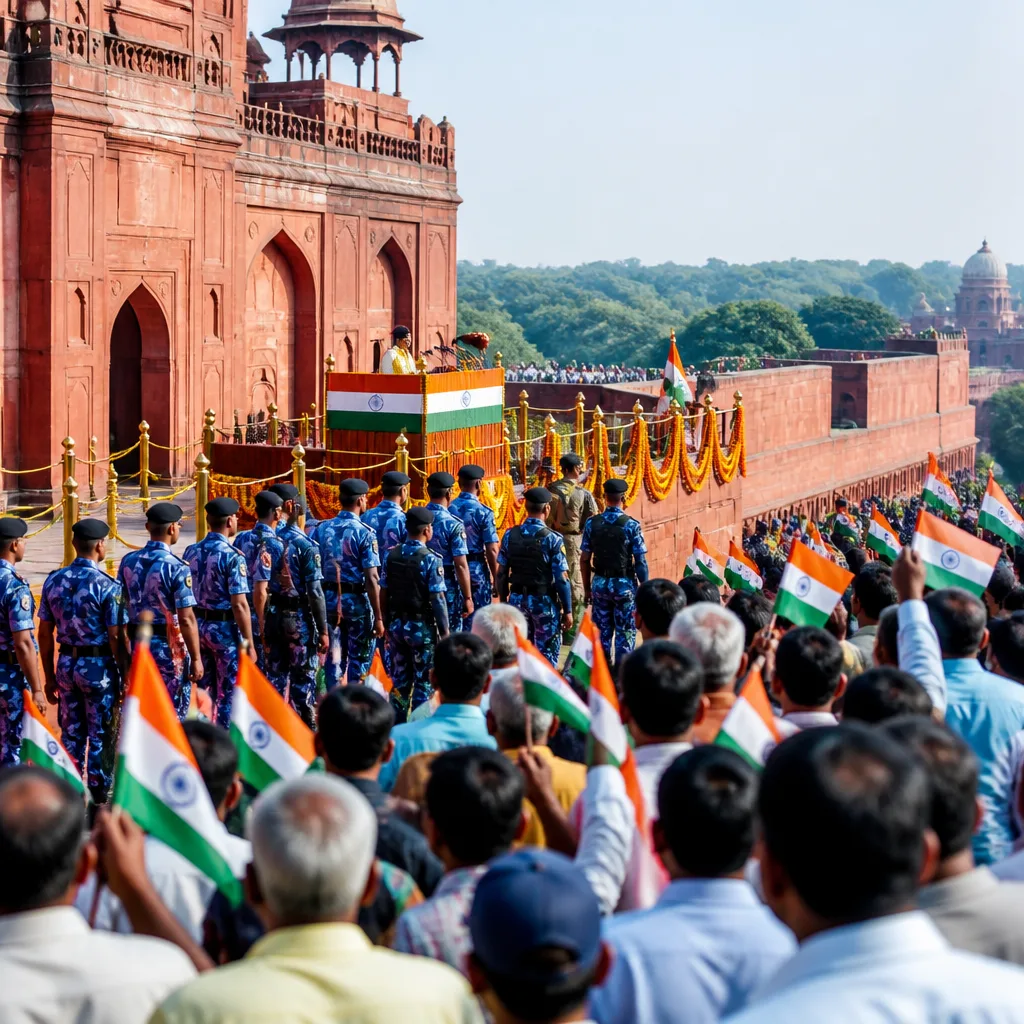
Speaking from the ramparts of the 17th‑century Red Fort on India’s 79th Independence Day, Modi said security operations had succeeded in reducing the presence of armed Naxalites in forested areas, but cautioned that “dimagi Naxals” — a term he used for people aligned with the ideology — posed a continuing risk.
“We have succeeded in getting rid of armed Naxals in the jungles, but ‘dimagi Naxals’ (intellectual Naxals) are looking for opportunities to create violence and unrest,” Modi said, according to a report by the Associated Press.
“They have to be identified and isolated,” he added, the report said. The Prime Minister did not provide operational details in the speech about how those identified as ideological sympathisers would be addressed.
Context and recent developments
The Naxalite or Maoist movement once challenged state authority across large parts of central and eastern India and was for years described by authorities as the country’s most serious internal security threat. Decades of security operations and development initiatives have reduced the scale of armed activity, a shift Modi underscored in his address.
The speech also touched on economic and skill development measures, with the Prime Minister unveiling a series of initiatives aimed at boosting self‑reliance across sectors ranging from defence to agriculture, and emphasising outreach to young people.
According to the Associated Press, Modi highlighted programmes targeted at youth, including AI skills training and free online coaching. The emphasis on young Indians comes against the backdrop of a recent youth‑led protest movement — identified in media reports as the Cockroach Janta Party — that helped prompt the resignation of the Union Education Minister, Dharmendra Pradhan.
- Security: Modi said armed Maoists were being eliminated from jungle strongholds.
- Ideological threat: He warned of “dimagi Naxals” seeking to foment unrest.
- Youth and skills: Announced focus on AI training and free online coaching to engage younger citizens.
Policy signals and potential consequences
Modi’s remarks signal a shift in narrative from combating a physical insurgency to confronting ideas seen as enabling unrest. That framing could influence how law enforcement and security agencies prioritise resources between kinetic counter‑insurgency operations and surveillance or counter‑radicalisation efforts.
Emphasising youth initiatives and skilling measures also reads as a political outreach to younger voters, at a time when recent street protests led by youth groups have gained attention nationally. The Prime Minister’s mention of AI training and online coaching — as reported by the Associated Press — aligns with wider government pushes to expand digital and technical education, but the speech did not include detailed roll‑out plans or funding figures for those programmes.
| Focus area | Measures mentioned (as reported) |
|---|---|
| Defence | Measures aimed at boosting self‑reliance |
| Agriculture | Measures aimed at boosting self‑reliance |
| Youth | AI skills training; free online coaching |
Modi’s characterisation of a continuing ideological threat, and the associated language, is likely to be watched closely by opposition parties, civil society and rights groups for any policy or legislative responses that follow. The speech did not detail new laws or specific enforcement mechanisms to counter “dimagi Naxals”, leaving implementation questions open.
The remarks on the Maoist insurgency came at a ceremonial national moment and were reported by the Associated Press. The Government of India is yet to issue a detailed follow‑up explaining how it will differentiate between armed militants, ideological supporters and ordinary political dissenters in its security and civic responses.
Observers will monitor whether the new emphasis on ideological opposition translates into administrative directives, changes in policing strategy or intensified academic and online surveillance, and how those moves intersect with ongoing efforts to skill and engage India’s young population.