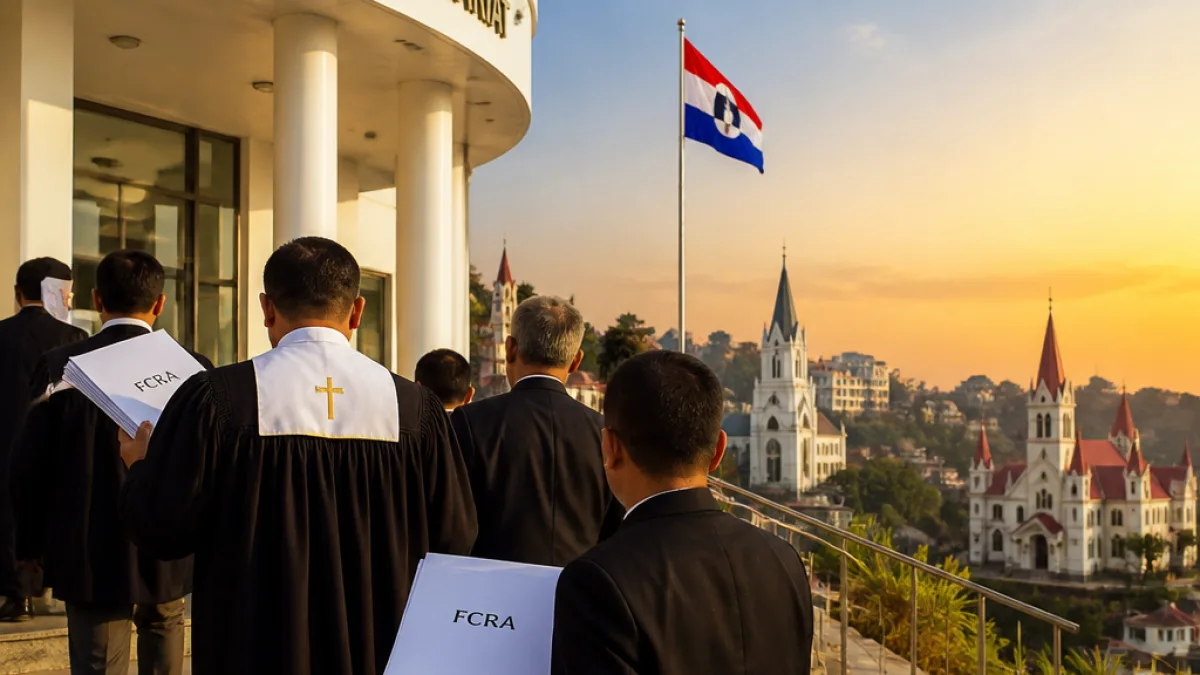
Aizawl/New Delhi: Mizoram Chief Minister Lalduhoma and several prominent Christian bodies have asked the Union government to refer the Foreign Contribution (Regulation) Amendment Bill, 2026 to a Joint Parliamentary Committee (JPC) for detailed examination before Parliament takes up the measure for debate, officials said on Sunday.
Requests cite operational concerns for faith-based organisations
The appeal comes amid wider unease among faith-based groups and regional leaders over recent changes to rules governing foreign funding. In June, the Centre notified amended FCRA rules that require non-governmental organisations to select from a pre-defined list of permissible purposes and areas of operation when receiving foreign contributions. While those rules list a range of faith-based activities, they explicitly exclude proselytisation from several categories eligible for registration under the FCRA.
In Parliament, the FCRA Amendment Bill, 2026 was introduced in the Lok Sabha on 25 March and is expected to be taken up for discussion during the final week of the ongoing Monsoon session, according to parliamentary schedules.
The Catholic Bishops’ Conference of India (CBCI), which represents a substantial section of the country’s Catholic hierarchy, urged the Centre to withdraw the proposed legislation and the rules notified on 22 June. The CBCI said the changes posed practical difficulties for grassroots charitable entities, both faith-based and secular, while affirming support for financial transparency and national security measures.
“As long-standing partners in nation-building through education, healthcare, and humanitarian service, irrespective of caste and creed, the CBCI respectfully appeals to the Government of India to reconsider and roll back the legislation,” said Most Rev. Anil Joseph Thomas Couto, Archbishop of Delhi and Secretary General of the CBCI, in a video appeal.
Speaking on behalf of the Christian community, Archbishop Couto emphasised the Church’s contribution to social welfare and warned that certain provisions in the proposed law would create operational challenges for legitimate charitable organisations.
Regional leader seeks structured, parliamentary scrutiny
Chief Minister Lalduhoma joined calls for a JPC referral, arguing that the proposed changes warrant a thorough and structured review with inputs from civil society and faith groups. The JPC route would allow detailed hearings, examination of submissions and amendments before the bill proceeds in either House.
Requests for JPC consideration have emerged from multiple quarters since the new rules were notified in June, and the current appeal aligns with similar demands from other Christian groups and some regional representatives who say the narrowing of permissible purposes could constrain longstanding welfare activities.
Timeline and immediate implications
| Date | Event |
|---|---|
| 25 March 2026 | FCRA Amendment Bill, 2026 introduced in Lok Sabha |
| 22 June 2026 | Centre notifies amended FCRA rules restricting permissible purposes |
| Aug 2026 | Mizoram CM and Christian bodies urge referral to a JPC |
Referral to a JPC would likely delay parliamentary consideration, but proponents argue it would allow detailed scrutiny of the law’s wording and its practical consequences for delivery of services by NGOs and faith-based organisations across India, including in remote and underserved areas.
What supporters and critics cite
- Supporters of a JPC say it would permit structured hearings, evidence-based amendments and wider stakeholder engagement.
- Government proponents of the amendments have cited the need for tighter controls on foreign funding to bolster transparency and national security.
- Religious and civil-society groups warn that some clauses could inadvertently impede humanitarian, educational and healthcare activities run by long-standing local organisations.
The CBCI and other Christian organisations reiterated their willingness to cooperate on measures to strengthen accountability, while urging that reforms be calibrated so as not to hinder genuine charitable work. They also asked the Centre to consider rescinding the rules notified in June if the legislative changes proceed without broader consultation.
It remained unclear on Sunday whether the Union government would accede to the request for a JPC referral. Parliamentary practice allows the Speaker or the Chair, in consultation with leaders, to decide on referring a bill to a committee. Any such decision would be taken at the leadership level in both Houses as the Monsoon session reaches its concluding days.
Requests for comment from the Ministry of Home Affairs and the government benches in Parliament were not immediately available.