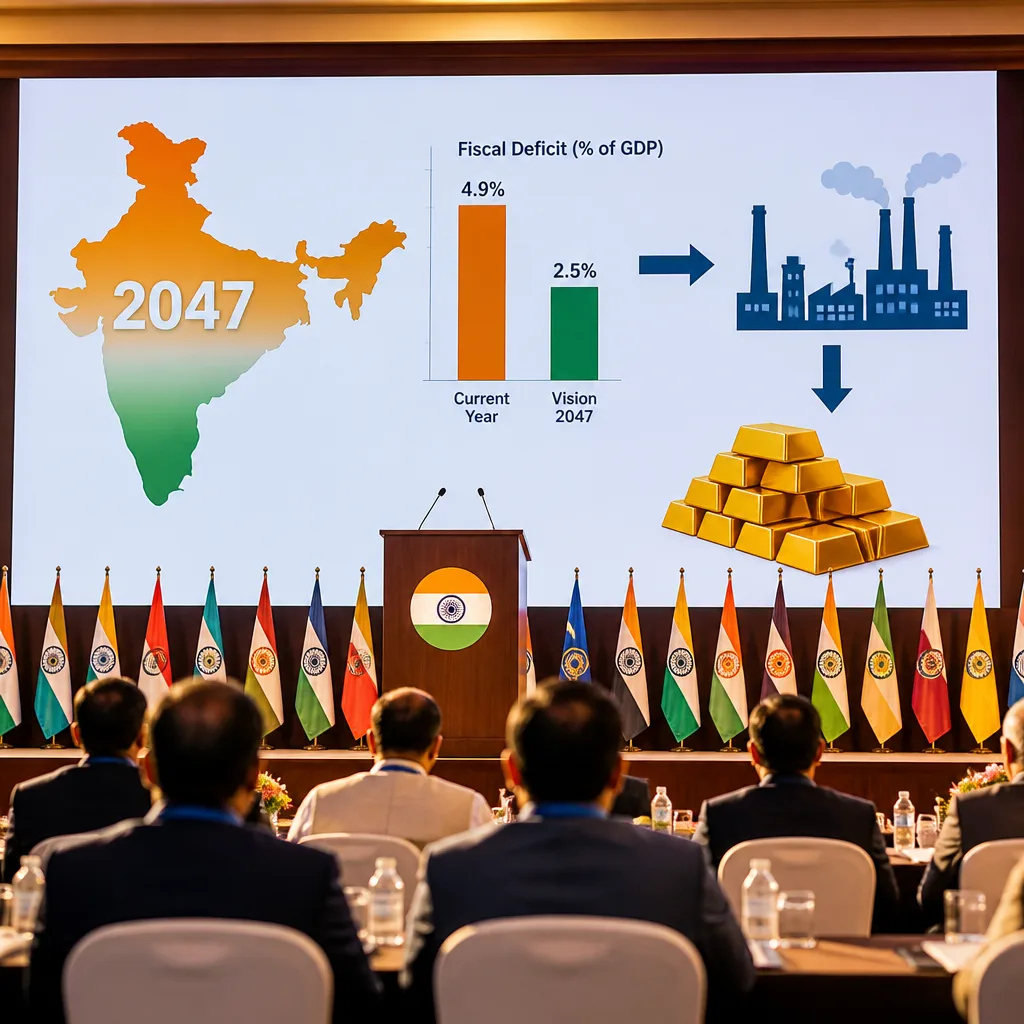
Veteran banker Uday Kotak on Friday urged the Centre and states to adopt stricter fiscal management, step up reforms to attract capital and strengthen manufacturing capability if India is to realise the goal of a developed nation by 2047. He made the remarks while addressing a conference of finance ministers and finance secretaries of states and Union Territories organised by the Union Finance Ministry.
Fiscal consolidation and macro priorities
Kotak stressed that India’s macroeconomic position is favourable but cautioned against complacency in the face of evolving global dynamics. He recommended moving towards tighter fiscal discipline, noting that the consolidated fiscal deficit for India is still above 7 per cent, compared with about 6 per cent in the United States. He described fiscal consolidation as a key prerequisite for longer-term stability and investor confidence.
Seven areas of focus
Outlining priorities to accelerate development, Kotak identified seven broad areas where India should concentrate its efforts. He argued these would help the country withstand global headwinds and build sustainable economic independence:
- Fiscal consolidation: tighter public finances to reduce vulnerability and crowd in investment.
- Stronger financial system: measures to bolster bank and market resilience.
- Policy reforms: leveraging crises to push through structural changes that attract capital.
- Boosting domestic production: enhancing manufacturing capabilities to reduce import dependence.
- Addressing gold imports: finding ways to channel household gold holdings into productive uses to ease current account pressures.
- Balanced regulation: calibrating oversight so it ensures stability without stifling growth.
- Encouraging creative destruction: allowing inefficient firms to exit so resources shift to more productive activities.
What this means for policy and business
Kotak warned that the changing contours of global power and large multinational technology firms pose challenges to national economic autonomy, drawing a historical parallel to earlier eras of foreign commercial influence. He said close coordination between the Centre and states will be essential to implement reforms and weather external shocks.
"India's position on the global stage is pretty good, but there is no room for complacency," Kotak said.
On trade and production, Kotak urged India to reduce reliance on imports and to develop goods and services with global demand. He suggested turning domestic strengths into exportable products, citing flowers as an example of an everyday sector with potential for better global market integration.
Balance between regulation and growth
Highlighting the need for a nuanced regulatory approach, Kotak said regulators should ensure financial stability while avoiding unnecessary constraints that impede development. He also warned against 'excessive financialisation' during a nation’s early development phase, arguing that excessive focus on financial deepening can distract from manufacturing and productive investment.
| Indicator | India | United States |
|---|---|---|
| Consolidated fiscal deficit | >7% | ~6% |
For businesses and households, the push for fiscal discipline and stronger manufacturing capacity implies potential changes in taxation, public spending priorities and industrial policy. Tighter fiscal management may slow some public investment growth in the near term but can create a more sustainable macro backdrop that encourages private investment. Efforts to convert household-held gold into productive capital could open new avenues for financing, albeit requiring careful policy design.
Kotak’s recommendations place emphasis on pragmatic, supply-side reforms and federal cooperation. If pursued, these could influence investment flows, manufacturing competitiveness and India’s external balances over the coming decade — core determinants of whether the country can meet its long-range development ambitions by 2047.