Ground-breaking rite at Sealdah to honour 1947 Partition victims
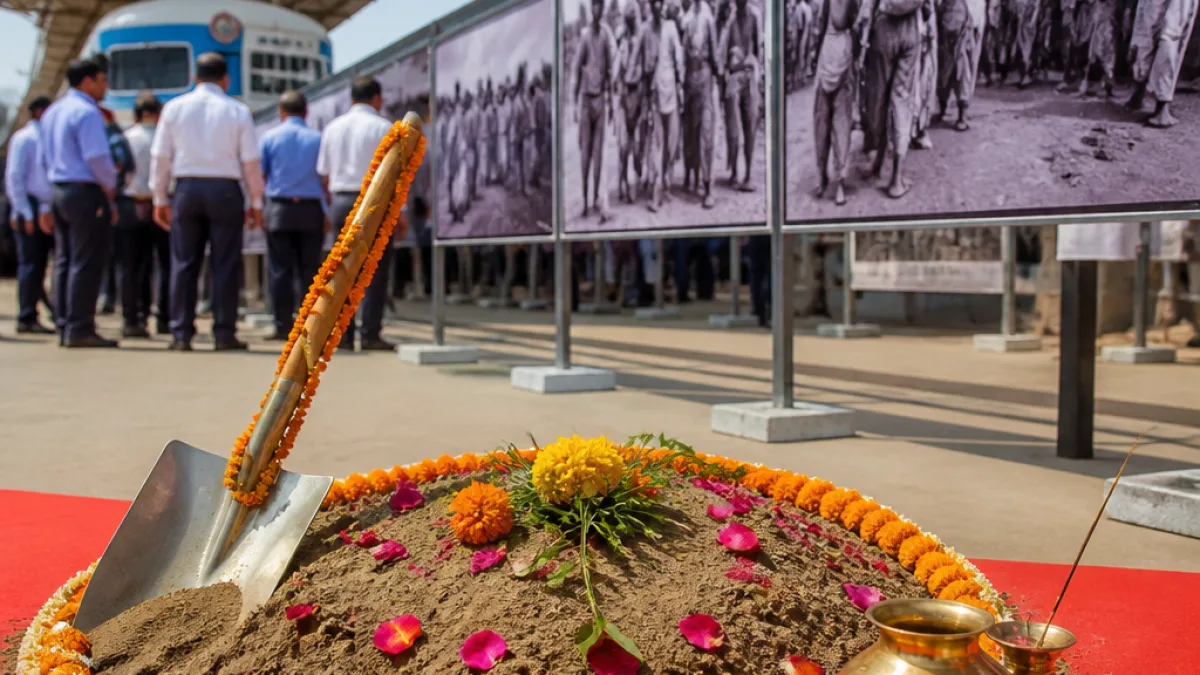
Kolkata — A bhoomi pujan was performed at Sealdah railway station on Friday to mark the beginning of work for a memorial and statue dedicated to victims of the 1947 Partition, organisers reported. The programme was held in coordination with the Union Ministry of Culture and the Indira Gandhi National Centre for the Arts (IGNCA), officials said.
The proposed memorial is intended to pay tribute to those who endured displacement, violence and loss during the Partition — one of the largest forced migrations in modern history. The ceremony at Sealdah, which played a prominent role in receiving refugees arriving by rail in 1947–50, brought together state ministers, senior railway officials and cultural administrators.
- West Bengal Urban Development Minister Agnimitra Paul attended the event.
- State Minister of Information and Cultural Affairs Purnima Chakraborty was present.
- Other participants included Tapas Roy, Eastern Railway General Manager Gitika Pandey and Sealdah Divisional Railway Manager Rajeev Saxena, and IGNCA department head K. Anil Kumar.
| Participant | Designation |
|---|---|
| Agnimitra Paul | West Bengal Urban Development Minister |
| Purnima Chakraborty | Minister of State for Information and Cultural Affairs |
| Tapas Roy | Minister of Public Enterprises and Industrial Reconstruction and Non-Conventional and Renewable Energy Sources |
| Gitika Pandey | Eastern Railway General Manager |
| Rajeev Saxena | Divisional Railway Manager (Sealdah Division) |
| K. Anil Kumar | IGNCA Head of Department |
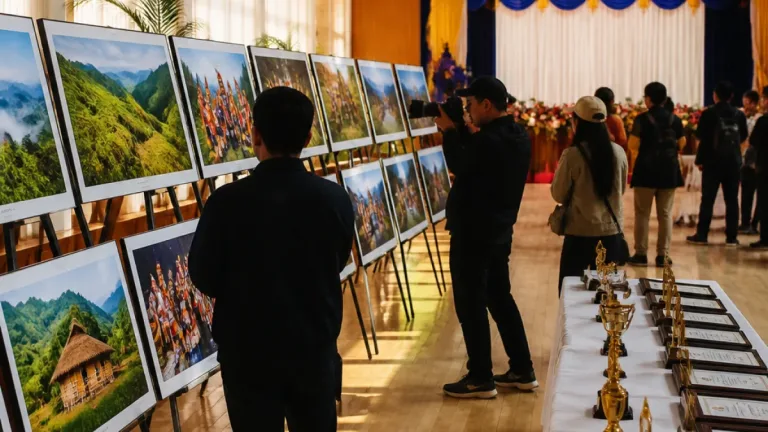
A special photo exhibition was also organised during the occasion, showcasing images related to the Partition, mass migration, the hardships faced by displaced families and their efforts to rebuild lives, according to the event report. An eyewitness of the Partition, Himangshu Gangopadhyay, attended the exhibition.
"The Sealdah station played a very important role during the Partition," organisers said, noting that millions of Bengali Hindu refugees from East Pakistan (now Bangladesh) arrived there in the late 1940s and early 1950s.
Reports cited at the ceremony recalled that at the peak between 1947 and 1950 there were often more than 20,000 refugees at Sealdah at any one time. Many were housed in refugee camps while others remained on station platforms for extended periods; the influx, organisers said, tapered off but continued into the late 1960s.
Local civic and cultural stakeholders framed the memorial as an effort to preserve memory in a public place that witnessed mass arrival and anguish. The involvement of the Union Ministry of Culture and IGNCA indicates the project will be part of a broader national commemoration, organisers reported.
The ceremony at Sealdah also underlined the station’s continuing role in Kolkata’s civic life. Situated at the heart of the city’s transport network, Sealdah is more than an interchange; for many families who arrived as refugees in 1947–50, it marked the first point of settlement in Bengal’s capital.
Officials present at the bhoomi pujan said documentation and visual material from the exhibition will form part of the narrative for the memorial. Details on design, timeline and funding for the statue and site works were not disclosed in the event briefing, and will be finalised through the coordinating agencies, organisers said.
The ceremony is likely to revive public discussion in Kolkata about urban memory, heritage in railway precincts and how the city commemorates episodes of displacement that shaped its post-Partition demography and social fabric.