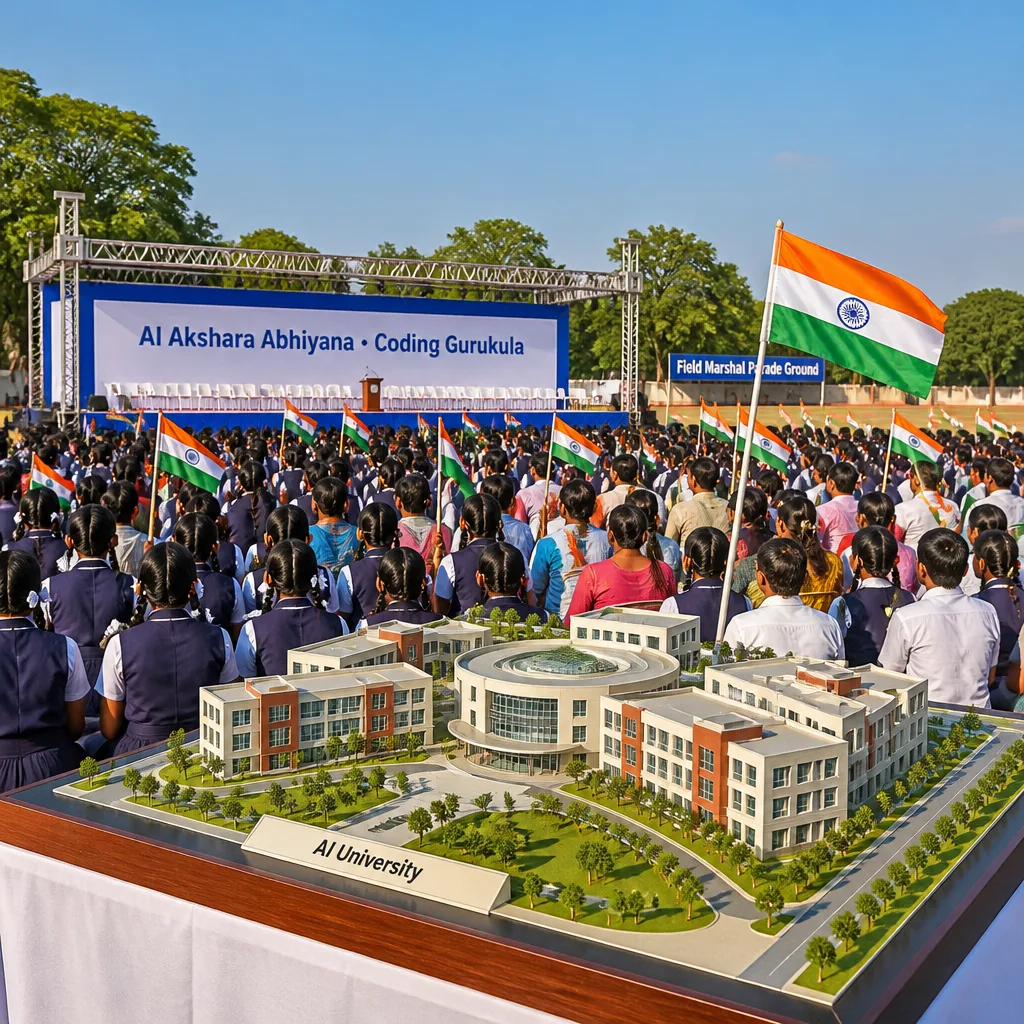
Bengaluru, Aug 15: Karnataka Chief Minister D K Shivakumar on Saturday unveiled a state-wide initiative to introduce artificial intelligence education in schools from Class 6 and announced plans to establish a government-owned AI university in Bengaluru. The education-focused measures were declared during his Independence Day address at the Field Marshal Sam Manekshaw Parade Ground.
Programme outline and classroom rollout
The Chief Minister named the school-level effort AI Akshara Abhiyana, accompanied by a Coding Gurukula scheme intended to familiarise students with programming and AI concepts at an early age. He said the curriculum change will begin at the middle-school level, with formal instruction from Class 6 onwards.
“We are now entering a new technological era. The AI campaign and Coding Gurukula — this is your era, a new era,”
The announcement did not include a detailed syllabus, timetable or phased rollout plan in the speech text made available publicly. Officials will need to publish curriculum frameworks, teacher training plans and assessment methods before schools can implement the new subject across government and aided institutions.
Higher education and examination reforms
In addition to school-level AI teaching, the state government is working to create what the Chief Minister described as India’s first government-owned AI university in Bengaluru. No timeline or statutory mechanism for establishing the university was provided during the address.
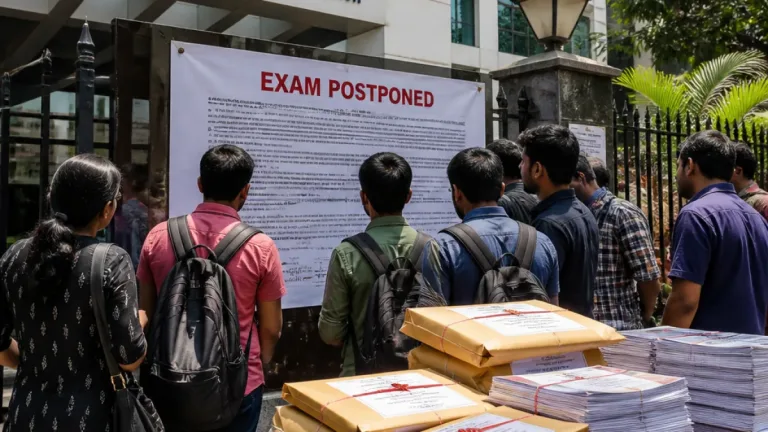
Shivakumar also said an expert committee tasked with reforming the state’s examination system will submit its recommendations within two months. The scope of the committee and whether its remit covers school or tertiary assessments was not specified in the speech.
Measures for youth employment and skilling
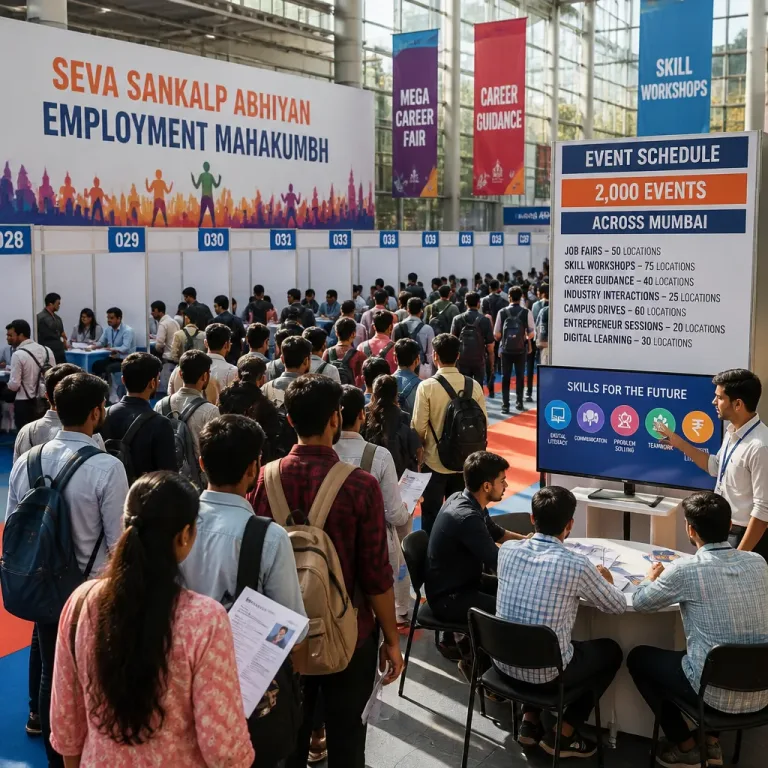
The Independence Day address packaged the education measures with a broader youth and employment agenda. Announcements included:
- Filling around 72,000 government vacancies within six months.
- An incentive of about ₹2,500 per job per month for two years for industries creating new jobs, applicable for up to 1 lakh jobs.
- Establishment of 10,000 Bharat Jodo Yuva Sangha across Karnataka, each to receive an annual grant of ₹10 lakh, with a total outlay of ₹1,000 crore.
- Announcement of an Advanced Manufacturing Cluster at Doddaballapur expected to attract about ₹20,000 crore in investment and create roughly 3 lakh jobs.
- New support for rural students under the Sahaya Hasta/Hosa Hasta scheme; the CM also announced a 7.5 per cent reservation for students of rural government schools (details to follow).
| Item | Figure |
|---|---|
| AI instruction start | From Class 6 |
| Government AI university | Bengaluru (planned) |
| Government vacancies to fill | ~72,000 |
| Job creation incentive | ₹2,500/month for 2 years (up to 1 lakh jobs) |
| Bharat Jodo Yuva Sangha | 10,000 units; ₹10 lakh each; ₹1,000 crore total |
| Manufacturing cluster investment | ₹20,000 crore; ~3 lakh jobs |
Context and implications for students and schools
The move to introduce AI at the upper-primary level aligns with broader national and global conversations on early digital and computational literacy. Introducing AI concepts from Class 6 could change teacher training needs, classroom resources and assessment methods. Implementation will require clear curriculum documents, teacher upskilling, classroom hardware and software, and robust policy on ethics and data privacy in school settings.
For parents and students anxious about the transition, the immediate questions are practical: when will the curriculum be released, how will teachers be trained, and will the new subject be part of board examinations? The Chief Minister’s statement that an expert committee on exam reform will submit a report within two months is the nearest timeline given; stakeholders will expect the committee’s terms of reference and findings to be published promptly.
The proposals also highlight a broader state ambition to scale Karnataka’s economy. Shivakumar set a long-term target of taking the state economy to USD 3 trillion (₹320 lakh crore) by 2047, and noted that Karnataka’s per capita income had reached ₹4.33 lakh, nearly double the national average. How school-level AI education feeds into the state’s workforce development and industrial strategy will be an area to watch.
Officials in the education department and school boards will need to release detailed implementation plans and schedules. Parents, school leaders and training providers should monitor official notifications for curriculum documents, teacher training programmes and assessment changes before making decisions on admissions or supplementary coaching.
Key follow-ups to expect:
- Publication of the AI curriculum framework and teaching-learning materials for Classes 6–12.
- Details on the timeline and legal steps for establishing the government AI university.
- Terms of reference and report from the exam-reform expert committee within two months.
The Chief Minister’s speech set out an ambitious agenda linking education, skilling and economic targets; the effectiveness of these measures will depend on the timely release of implementation details and adequate resourcing at the school level.