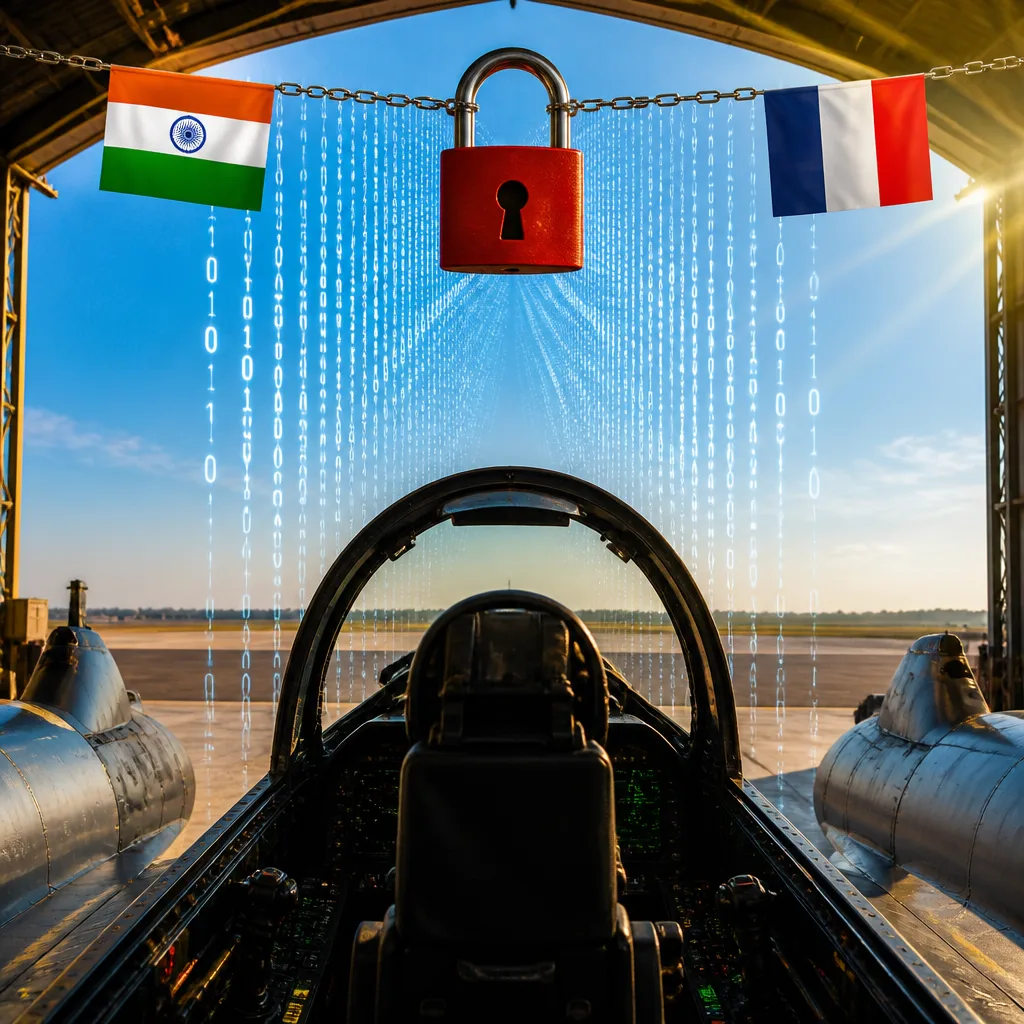
New Delhi, 11 August: France is reportedly prepared to permit local assembly and industrial cooperation on an expanded Rafale sale to India, but remains unwilling to provide access to the source code and key software that underpin the aircraft’s combat systems, according to recent reporting.
Core systems at issue
The dispute centres on three high‑value digital systems that together form the fighter’s operational brain: the RBE2 AESA radar (an active electronically scanned array radar responsible for target detection and tracking), the MDPU mission computer and the SPECTRA electronic‑warfare suite. Reports say France does not intend to hand over the underlying source code for these items to Indian authorities or industry partners.
“These are not secondary systems. Together, they form the central digital architecture responsible for sensor fusion, threat detection, survivability and electronic combat.”
That assessment, included in reporting on the matter, underscores why access to software and system internals is regarded by defence planners as central to achieving true operational sovereignty — not just ownership of airframes.
Why software matters for India
For India, the question goes beyond buying additional aircraft. Without access to source code and architecture details, the air force and indigenous industry could face limits when integrating domestic weapons, tuning electronic‑warfare parameters or installing future upgrades. The concern is that the aircraft could remain dependent on French approval for critical changes or for integrating munitions developed in India.
- Integration constraints: Weapon systems such as indigenously developed missiles may need deep software hooks into the mission computer and sensor data paths to function optimally. Lack of access could delay or prevent such integration.
- Upgrade dependency: Future capability enhancements typically require changes to radar processing, sensor fusion and countermeasure logic — all of which are software driven.
- Sovereignty risk: Retaining control over core software can leave the purchasing nation reliant on the original supplier for patches, modifications and operational tuning.
France’s position and wider implications
The reported French stance appears to reflect a desire to protect intellectual property and preserve control over advanced technologies developed domestically. That model can support export competitiveness, but it also can create friction with partner countries that seek deeper transfer to build local capabilities.
France has faced similar tensions in the past with other partners over technology transfer related to future Rafale variants. The current situation with India, as reported, is not an isolated negotiation but part of a broader global debate on how advanced defence platforms should be exported and how much control suppliers should retain.
Russia’s parallel offer
Reporting also notes that Russia has made contrasting promises to India regarding another platform: the Su‑57E. Moscow is said to have offered much broader access to source code and design documentation for that fighter. Whether Russia would fully deliver on such commitments is uncertain, but the offer strengthens India’s negotiating leverage and highlights different supplier approaches to technology transfer.
| System | Function | Reported French position |
|---|---|---|
| RBE2 AESA radar | Active radar for detection and tracking | Source code not to be shared |
| MDPU mission computer | Central processing for sensor fusion and weapons control | Source code not to be shared |
| SPECTRA EW suite | Electronic‑warfare and survivability systems | Source code not to be shared |
From New Delhi’s perspective, the debate may influence whether India treats additional Rafales as a straightforward procurement or as a strategic partnership negotiation that must secure fuller transfer and integration rights. The choice has operational and industrial consequences: without deeper access, even large numbers of aircraft can result in long‑term technological dependence for software‑defined capabilities.
As discussions continue, Indian defence planners will weigh the immediate benefits of additional platforms against the strategic need to control critical software layers that determine a jet’s true battlefield autonomy. The outcome will have implications for future procurement negotiations and for efforts to build domestic defence‑software expertise.