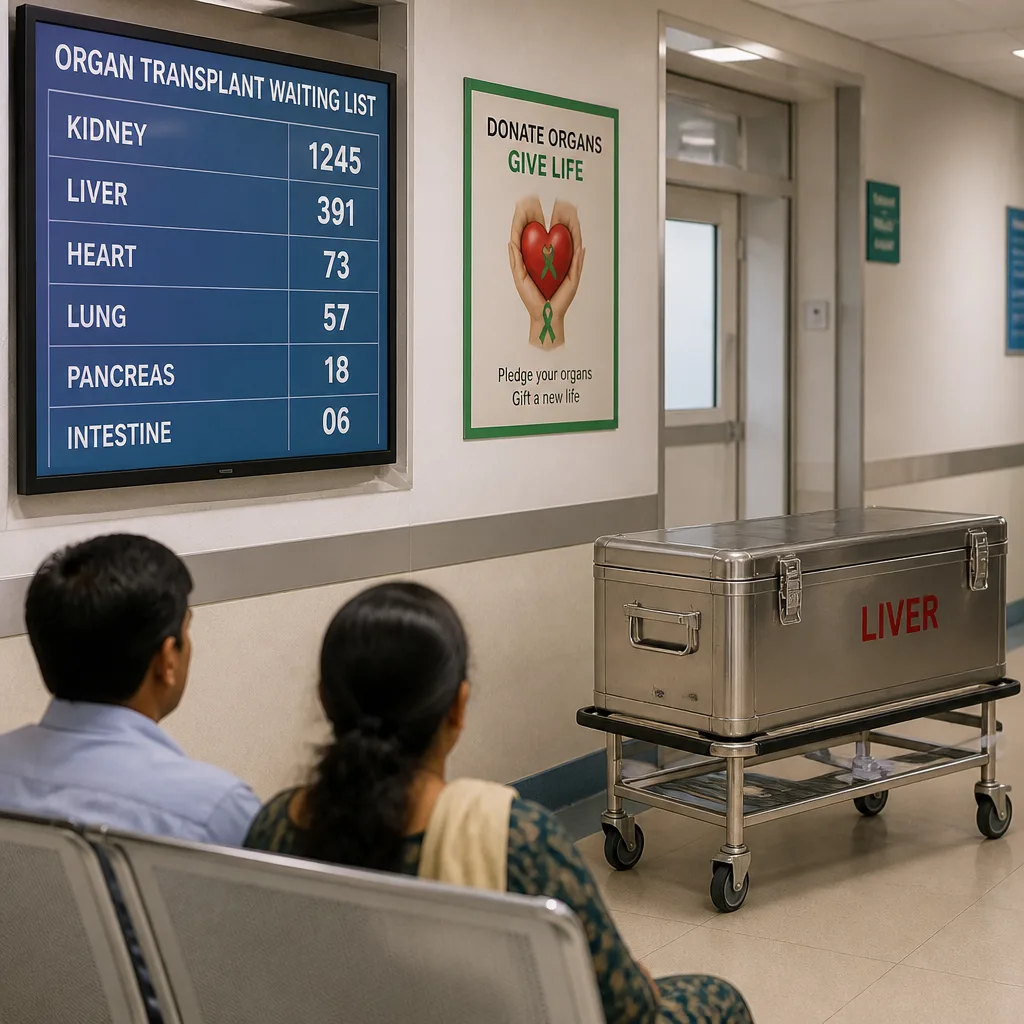
New Delhi: India’s transplant ecosystem has expanded rapidly over the past decade, with hospitals now performing more than 20,000 organ transplants a year, but experts warn the surge in procedures has not closed a persistent national shortfall that leaves thousands of patients waiting for life‑saving organs.
Capacity has grown, but need remains larger
Clinicians and transplant specialists say better infrastructure, the emergence of specialised centres and stronger regulatory frameworks have driven the rise in transplant numbers — from fewer than 5,000 a decade ago to more than 20,000 annually — but that the increase only highlights the much larger gap between patients who receive organs and those who remain on waiting lists.
“For every patient who receives a transplant, several more remain on the waiting list, and many will not survive the wait,” said Dr Saurabh Singhal, Senior Consultant & Director, Centre for Liver‑GI Diseases and Transplantation (CLDT), Aakash Healthcare.
Experts emphasise that the present challenge is not solely technical competence. While India has acquired the medical expertise to perform complex procedures, the central problem is whether adequate numbers of suitable organs reach patients in time.
Living donors, liver regeneration and safety concerns
The liver has been a key area where living donation has expanded access because of its unique regenerative capacity. When a healthy person donates a portion of their liver, the remaining tissue in both donor and recipient progressively regains the volume and function necessary for normal life — a biological basis for living‑donor liver transplantation.
“The liver is one of the few organs in the human body with the ability to restore its volume after a portion has been removed,” said Dr Rajanikanth Patcha V, Senior Consultant Liver Transplant, Gleneagles Hospital Chennai.
While living donation can shorten waiting times, clinicians and regulators stress donor safety as paramount. National guidelines and professional bodies advise comprehensive evaluation, counselling and long‑term follow up for donors to minimise risks and ensure informed consent.
- Infrastructure: Growth in specialised transplant centres has increased procedural capacity.
- Awareness and trust: Low public awareness and mistrust around organ donation hamper deceased‑donor rates.
- Donor safety: Protocols and guidelines focus on protecting living donors and ensuring informed decisions.
Policy, public engagement and clinical coordination
Specialists call for stronger public education campaigns, improved hospital coordination and trust‑building measures to raise deceased‑donor rates and reduce dependence on living donors. Enhanced registries, streamlined referral pathways and transparent allocation systems are also seen as essential to match available organs to needy patients efficiently.
Doctors emphasise that a multipronged approach is required: maintaining high clinical standards, ensuring donor protection, expanding deceased‑donor programmes and increasing community awareness so families are willing to consent to donation.
| Metric | Approximate figure |
|---|---|
| Annual transplants (recent) | 20,000+ |
| Annual transplants (a decade ago) | <5,000 |
Clinicians caution that while living‑donor liver transplantation demonstrates the possibilities of modern transplant medicine, it is not a complete substitute for a robust deceased‑donor programme. Equitable access remains a concern where supply cannot meet demand.
Patients and families seeking information on transplant options should consult qualified transplant teams and refer to Ministry of Health, ICMR and recognised professional society guidelines for detailed protocols. Medical decisions must be made in discussion with treating physicians; this report is not medical advice.