New Delhi: The Defence Ministry has initiated efforts to join France’s sixth‑generation fighter programme, the Future Combat Air System (FCAS), the ministry told Parliament this week, signalling India’s intent to secure a place in development of next‑generation combat aircraft and connected air warfare technologies.
What FCAS aims to deliver
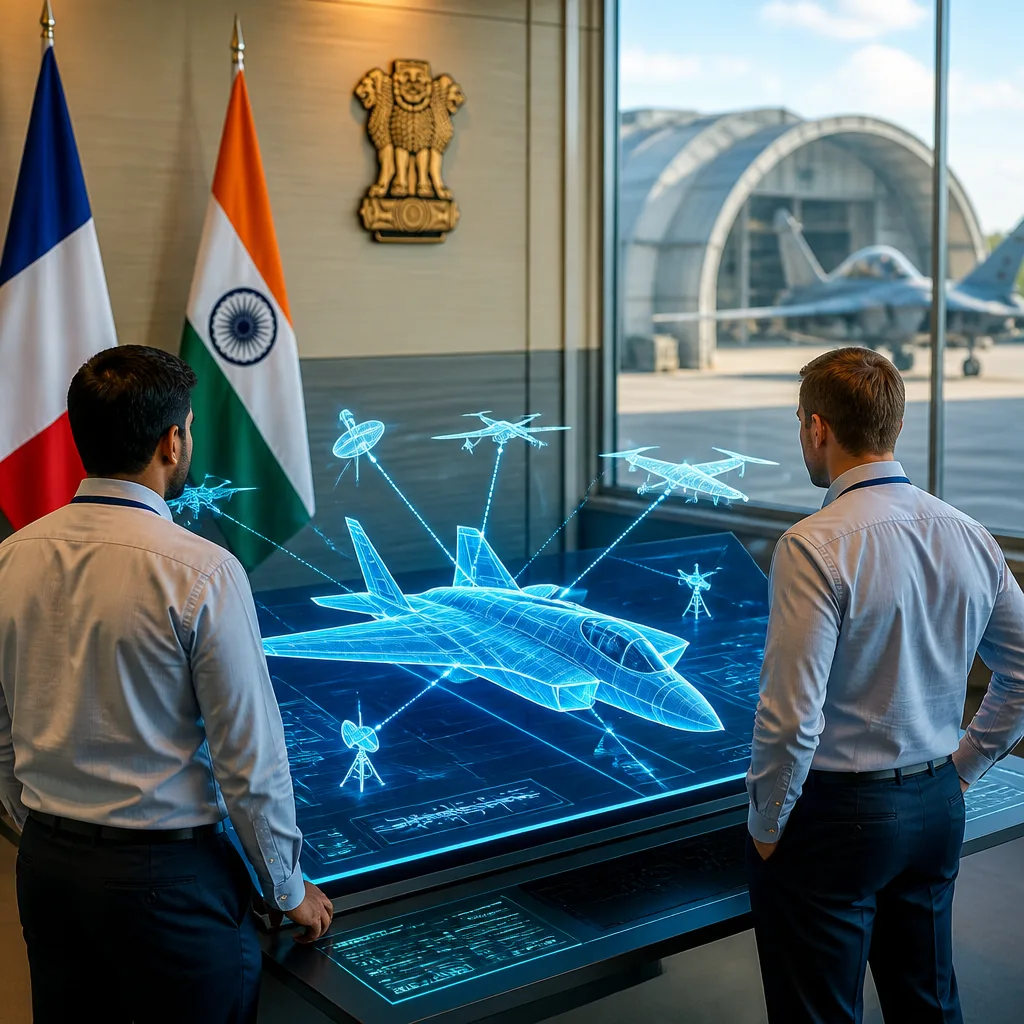
FCAS is a French‑led programme to develop a sixth‑generation combat system expected to combine manned fighters with unmanned platforms, sensors and networked systems. Such sixth‑generation platforms emphasise distributed sensing, secure data links and the ability to deploy or coordinate lethal and non‑lethal effects across a theatre rather than relying on a single aircraft.
Officials and analysts say FCAS will focus on integrating piloted fighters with drones, advanced sensors and data networks so aircraft can share information and coordinate strikes across the battlefield. The programme is therefore as much about software, communications and systems integration as it is about airframe or engine design.
“FCAS was a logical ‘next step and step‑change’ for France‑India strategic cooperation, but not a fix for the Indian Air Force’s current shortage,”
The observation was made by Antoine Levesques, senior fellow for South and Central Asian defence at the International Institute for Strategic Studies, who was cited in the reporting.
Strategic rationale and limitations
Joining FCAS would offer India long‑term access to advanced design work, sensor technology and industrial participation in a leading European combat‑air programme. For Indian aerospace firms and defence research establishments, participation would be an opportunity to gain experience in systems integration, secure communications, artificial intelligence‑enabled sensing and teaming of manned and unmanned platforms—areas increasingly central to modern air power.
However, analysts and officials note the programme is not a short‑term remedy for fighter shortages. India faces an immediate operational requirement for frontline combat aircraft, whereas FCAS is oriented to the next generation of systems whose development, testing and production timelines will span many years.
- Long‑term gain: Potential industrial involvement, technology transfer and systems‑integration experience.
- Short‑term constraint: FCAS will not address immediate gaps in the Indian Air Force’s combat fleet.
- Programme scope: Emphasis on manned‑unmanned teaming, sensors, networking and shared situational awareness.
Domestic context
The announcement comes as India continues to modernise its air arm with ongoing procurement and upgrade programmes. The Indian Air Force has in recent years inducted Rafale fighters and showcased them in displays such as the Vajraang formation featuring six Rafales during Republic Day celebrations, underscoring an ongoing effort to refresh front‑line capability while pursuing longer‑term technology partnerships.
Joining a complex multinational development such as FCAS will require diplomatic negotiation, industrial arrangements and decisions on intellectual property and workshare. It will also require alignment on technical standards, security protocols and timelines between India and the French partners.
As reported, the defence ministry informed lawmakers that it had begun efforts to join FCAS; this initiative represents a strategic move to position India within the architecture of future air warfare even as the country manages immediate procurement and operational challenges.
| Item | What it means |
|---|---|
| FCAS | French‑led sixth‑generation combat air system programme |
| India's action | Has initiated efforts to join the programme, per defence ministry |
| Expected features | Manned fighters teamed with drones, sensors and data networks |