NEW DELHI: Hindustan Computers Limited (HCL), now a global technology group, began in 1976 when six young professionals pooled resources, borrowed money and even sold a car to raise Rs 1.87 lakh and launch an audacious venture into computing, co-founder Ajai Chowdhry said in a post on X.
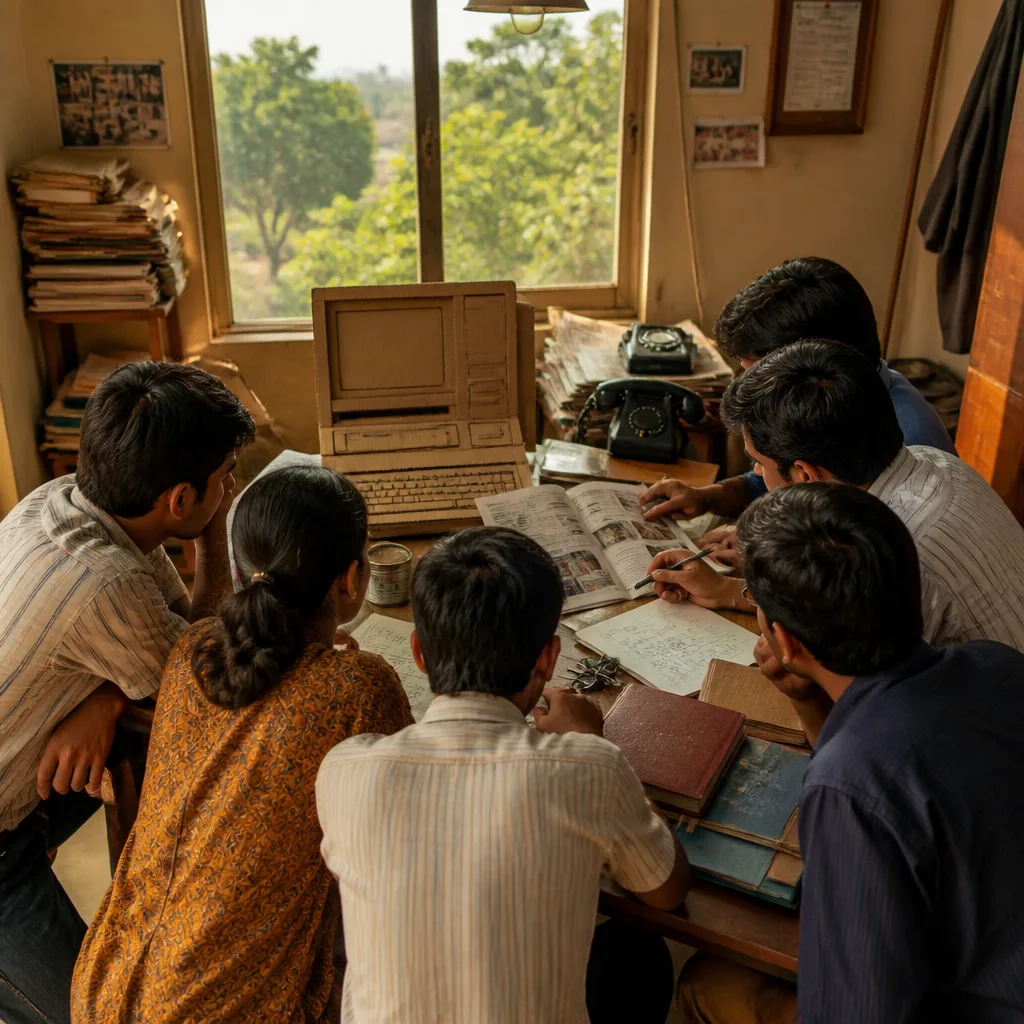
The founders—Shiv Nadar, Ajai Chowdhry, Arjun Malhotra, Yogesh Vaidya, Subhash Arora and D.S. Puri—quit their jobs and set up a tiny office in a barsati in Delhi’s Golf Links. They initially operated under the name Microcomp and believed the then-emerging microprocessor would reshape industry.
Early obstacles and a pragmatic partnership
The team’s ambition to build an Indian computer ran into a regulatory hurdle: they did not hold a manufacturing licence. Their solution was to partner with UP Electronics Corporation, which had the requisite licence; that collaboration led to the formal creation of Hindustan Computers Limited.
Rather than waiting for production to be fully in place, the founders adopted an aggressive sales-first approach. The company began marketing a machine that was still under design; sales teams carried only a brochure and a mock-up to persuade potential buyers.
“We quit our jobs. There were six of us — Shiv Nadar, Arjun Malhotra, Yogesh Vaidya, Subhash Arora, D.S. Puri and me. It was 1976,” Ajai Chowdhry wrote on X. He added: “We started selling a computer that was still being designed. We had a brochure and a mock-up of the machine. That was it.”
Sales push, early clients and competition
Chowdhry recalled that the fledgling sales teams travelled across India, often convincing businesses and institutions to purchase computing systems at a time when many had little exposure to such technology. The company’s early orders included installations at IIT Kharagpur and IIT Madras.
HCL also faced competition from more established firms. In Coimbatore, the startup competed directly with DCM DP; Chowdhry remembered presenting second in a sales pitch at Premier Mills but winning the order nonetheless.
What the origin story means for India’s tech narrative
The HCL account encapsulates several features of India’s technology journey in the 1970s and 1980s: the absence of formal startup funding, restrictive manufacturing licences for electronics, and the need for founders to combine personal savings with borrowing to finance ventures. The founders’ willingness to sell a product before it was fully built illustrates a pragmatic, market‑driven approach that many later Indian tech entrepreneurs would emulate.
For consumers and businesses today, the anecdote highlights how early Indian technology firms navigated regulatory and market constraints to create domestic capabilities in computing. It also underlines the risks founders took: pooling life savings, raising loans and selling personal assets to fund a nascent idea.
- Founding year: 1976
- Initial capital: Rs 1.87 lakh raised through pooled savings, borrowing and selling a car
- First office: a small barsati in Delhi’s Golf Links
- Early name: Microcomp
- Key partnership: UP Electronics Corporation (manufacturing licence)
- Notable early clients: IIT Kharagpur, IIT Madras
| Aspect | Detail |
|---|---|
| Founders | Shiv Nadar; Ajai Chowdhry; Arjun Malhotra; Yogesh Vaidya; Subhash Arora; D.S. Puri |
| Initial capital | Rs 1.87 lakh |
| Early strategy | Sell based on brochure and mock-up while design completed |
The recollection by Ajai Chowdhry was shared as HCL marked five decades since its founding. His post provides a primary account of the company’s grassroots beginning and the practical tactics employed to secure customers in an era when computing remained unfamiliar to much of India.
While the broad contours of HCL’s growth since then are well documented, the founders’ description of pooled sacrifice and on‑the‑road salesmanship offers a compact case study of how domestic IT capability began to take shape in India, driven by small teams willing to assume considerable financial and reputational risk.