Historic pond shows visible signs of ecological stress
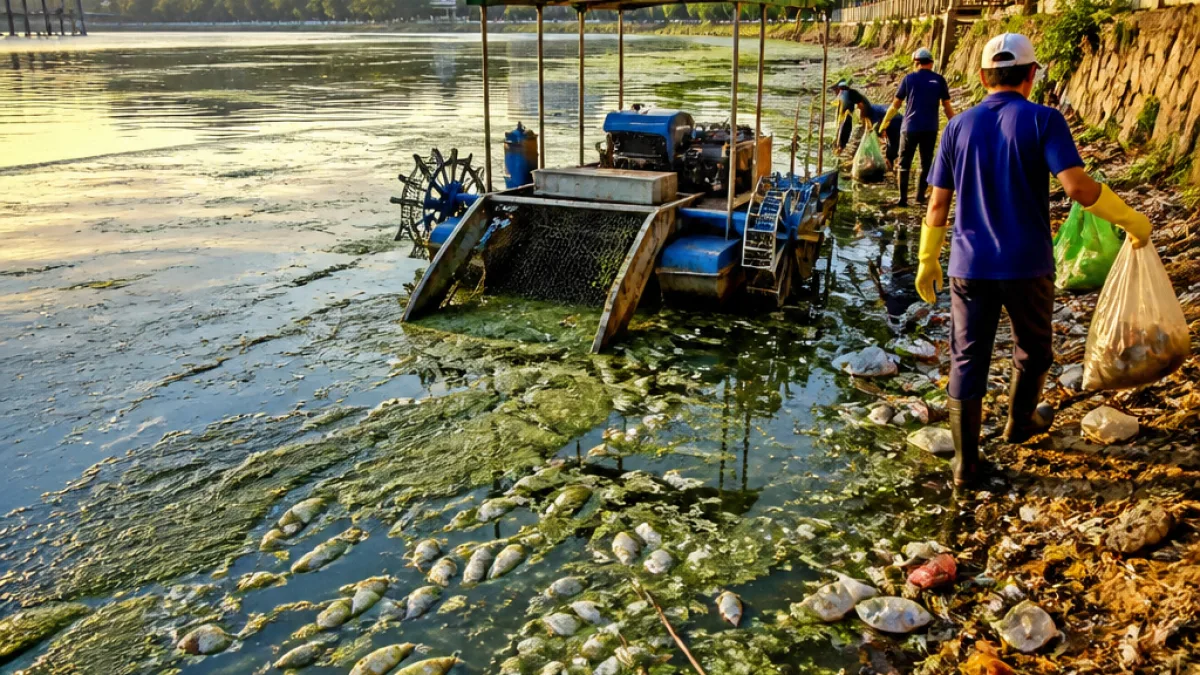
Dighalipukhuri, once a defining landmark in central Guwahati, has been confronted by a visible decline in water quality over the past weeks, residents and civic volunteers reported. For nearly three weeks, fish carcasses — including rohu, catla, silver carp, common carp and bighead carp — have been discovered floating in parts of the pond, and a persistent foul smell has driven concern about pollution and public health.
Local residents said the waterbody is showing multiple stress indicators: decomposing fish, thick algal cover, accumulated garbage, and fallen branches. Volunteers from the civic group Reclaim Guwahati, which has been undertaking voluntary cleaning drives at the pond, said the water treatment machines installed at Dighalipukhuri have been non-functional for several months.
“This has happened before. Fish die when the oxygen level falls. Besides, wastewater from the toilets and urinals of Prashanti Restaurant and the War Memorial near Dighalipukhuri enters the pond. These are also polluting the water,”
The comment above, from a long-time resident, highlighted two local concerns: reduced dissolved oxygen in the pond — a common cause of mass fish mortality — and inflow of wastewater from nearby facilities such as Prashanti Restaurant and the War Memorial. Residents urged the concerned authorities to stop direct discharges and restore the treatment system.
Past uses, current failures and civic efforts
Witnesses recalled that the pond had previously been better maintained and used for fish rearing. At one time, the Fisheries Department reportedly produced fish fingerlings at Dighalipukhuri, and fish were reared and sold. That active management contrasts sharply with the present condition, residents said.
The pond has also seen past private and public efforts at upkeep. One resident recalled that a few years earlier, the singer Zubeen Garg purchased turtles for ₹40,000 from Hajo and released them into Dighalipukhuri as a conservation gesture. Yet current observers said such isolated acts cannot substitute for systematic management and functional treatment systems.
- Visible problems: dead fish (multiple species), algal mats, foul odour, accumulating garbage.
- Reported causes: low oxygen, wastewater inflow from nearby toilets/urinals, non-functional treatment machines.
- Responsible authorities named: Tourism Corporation and Fisheries Department.
- Civic response: Reclaim Guwahati volunteers conduct regular cleaning drives, but report treatment plant failures.
Reclaim Guwahati members said they have been cleaning the pond every Sunday. During recent visits on July 19 and August 2, they found dead fish and deteriorating conditions. The volunteers and residents appealed to both the Tourism Corporation and the Fisheries Department to take immediate remedial steps to halt further fish mortality and restore the pond’s ecological balance.
| Observed issue | Details |
|---|---|
| Species affected | Rohu, catla, silver carp, common carp, bighead carp |
| Local pollution sources cited | Wastewater from toilets/urinals of Prashanti Restaurant and the War Memorial |
| Maintenance problems | Non-functional water treatment machines; garbage accumulation |
Implications for urban ecology and tourism
Dighalipukhuri occupies a central place in Guwahati’s urban landscape and is associated with civic pride, tourism and local recreation. Its degradation raises questions about routine maintenance, wastewater management in dense urban zones and coordination between municipal bodies, the Tourism Corporation and Fisheries Department. Decomposing fish and algal blooms also pose potential public health and nuisance issues for neighbouring residents and visitors.
Residents and volunteers urged authorities to inspect the pond, repair and reactivate the water treatment system, stem direct discharges, and undertake measures to improve dissolved oxygen levels. They said longer-term action should include regular monitoring, solid waste removal, and community engagement to protect the waterbody from further decline.
In the absence of immediate government action, civic groups continuing clean-up operations said they would maintain their regular schedules but made clear that voluntary drives cannot replace institutional responsibility for conserving a public waterbody in central Guwahati.