
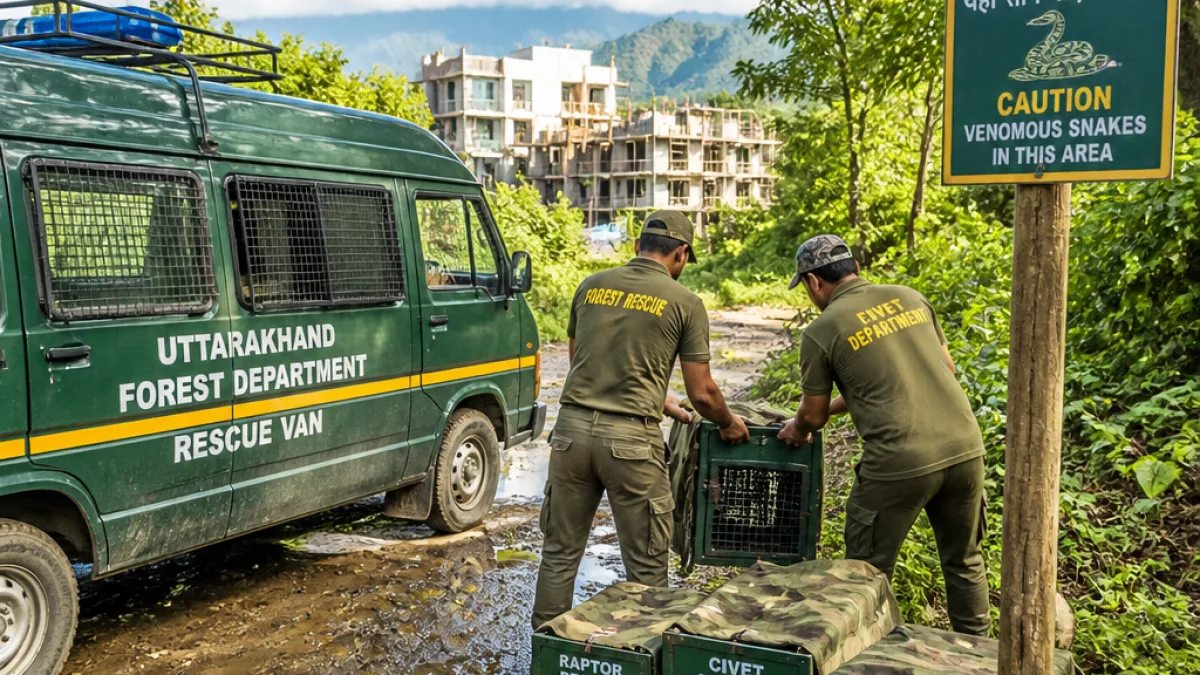
Forest records show rise in snake rescues on Dehradun periphery
Dehradun’s expanding outskirts have recorded 542 snake rescues between 1 January and 13 September 2026, the Uttarakhand Forest Department reported, highlighting a pattern of increased human-snake interaction in localities adjoining forested areas.
Of the total rescues, 112 (about 21%) involved venomous species, the departmental figures show. The venomous list includes 62 cobras, 41 common kraits, six Sind kraits, two Russell’s vipers and one king cobra. Non-venomous species accounted for the remaining 430 rescues.
| Species group | Number rescued |
|---|---|
| Rat snakes | 230 |
| Water snakes | 109 |
| Trinket snakes | 59 |
| Buff-striped keelbacks | 18 |
| Pythons | 8 |
| Cat snakes | 4 |
| Other / unidentified | 2 |
Divisional Forest Officer Vaibhav Kumar Singh said the data show a noteworthy distributional pattern: venomous snakes are being recorded more frequently at the city’s periphery while rescues in central urban localities largely involve non-venomous species.
"An interesting pattern has emerged from the rescue data. Venomous snakes are being found more frequently in the outer areas, while rescues in the main city largely involve non-venomous species," the officer said.
Monsoon and habitat change blamed for increased encounters
Forest officials pointed to the monsoon as a proximate factor, saying flooded burrows force snakes to seek dry shelter, bringing them into closer contact with people. The department also noted that the continuing expansion of housing and construction into natural habitats may be increasing such encounters, though it said a detailed examination would be required before drawing firm conclusions about any shift in snake populations.
Records indicate most incidents were reported during the monsoon period this year. While rat snakes formed the largest single group of rescues (230 cases, about 42% of the total), the presence of cobras and kraits on the outskirts has prompted concern because of the higher medical risk their bites pose.
What the figures mean for residents and planners
- Public safety: The recorded presence of 112 venomous snakes among rescues underlines the need for awareness about bite prevention and first-aid, and for timely access to medical care where required.
- Urban planning: The data suggest that construction and expansion into forest fringe areas can increase human-wildlife contact; planners and local bodies may need to factor wildlife movement corridors and buffer zones into development approvals.
- Forest response: The Forest Department’s rescue operations averaged more than two snakes removed per day in the recorded period, indicating significant operational demand on wildlife response teams.
Forest officials said they are studying the pattern further but cautioned against drawing immediate conclusions on long-term shifts in snake populations without detailed ecological assessment. The department did not provide data on human-snake bite incidents or outcomes in the period covered.
Local residents and housing societies in fringe areas are likely to face recurring interactions during the monsoon and should be advised on measures such as sealing house crevices, clearing debris where snakes may shelter, and avoiding leaving food or waste that attracts rodent prey. The department’s statement also underlines the value of prompt reporting so trained personnel can carry out rescues and relocations.
As development continues on Dehradun’s outskirts, the forest records for 2026 underscore the need for coordinated action between civic authorities, the Forest Department and communities to reduce conflict while protecting wildlife and human health.












