
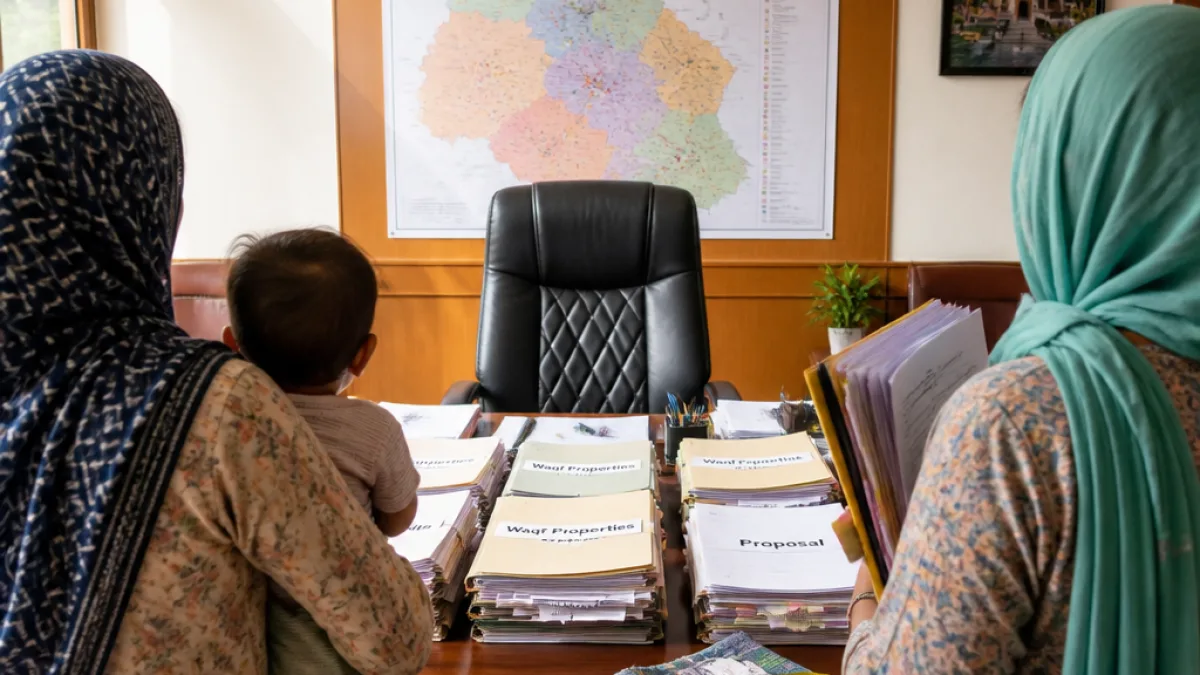
The Uttarakhand Waqf Board will propose using Waqf properties to provide housing and employment support to women abandoned after triple talaq and halala, Board chairman Shadab Shams said on Thursday. The plan, he added, will be placed before the Board at its next meeting and aims to offer shelter and empowerment to women left without a home.
Proposal aims to leverage Waqf resources for social support
Shams said the initiative is being framed in the context of the Waqf Amendment Act enacted by the central government and is intended to ensure that Waqf assets reserved for the needy are put to active social use. He linked the move to the state government’s stated commitment to strengthening women’s rights, citing the Uniform Civil Code debate as part of a broader policy environment prioritising women’s welfare.
“Taking this as an example, the Dhami government in Uttarakhand, through the Waqf Board, is going to bring a proposal in its next Board meeting to provide housing facilities to women who are victims of triple talaq or halala,” Shadab Shams said, according to ANI.
Shams said many of the women the Board hopes to help are involved in pending legal proceedings, have children — including orphaned or otherwise vulnerable minors — and often have no place to turn after being expelled from their matrimonial homes. He emphasised that some women cannot rely on extended family members for shelter when brothers have their own families.
Scope of assistance and intended impact
The Board has not yet released a detailed plan or a list of specific properties earmarked for the scheme. The stated components of the proposed intervention, as described by Shams, include:
- Provision of temporary or permanent housing on Waqf-managed land or in properties controlled by the Board;
- Employment arrangements to help beneficiaries achieve financial independence;
- Targeted support for women with children and those engaged in legal disputes stemming from divorce or abandonment.
A small table below summarises the Board's publicly stated objectives:
| Intervention | Purpose |
|---|---|
| Housing on Waqf properties | Shelter for women expelled after triple talaq/halala |
| Employment support | Economic empowerment and independence |
| Assistance for children | Protect vulnerable and orphaned children |
Legal and administrative considerations
Any re-purposing of Waqf properties will require formal approval by the Board and must comply with the provisions of the Waqf Act and recent amendments. Shams attributed the renewed emphasis on active use of Waqf resources to the Waqf Amendment Act, saying it creates scope to channel assets towards the needy. He said the Board hopes the proposal will be accepted at its next meeting.
Officials will need to determine the legal status of individual properties, resolve any encumbrances, and outline criteria for beneficiary selection. The Board has not yet specified administrative procedures, durations of stay, or details of how employment arrangements would be provided — whether through direct placement, skill training, or partnerships with other agencies.
Response and wider context
The move comes amid heightened public debate on the welfare of women affected by instant triple talaq and related practices. Across India, civil society groups, courts and governments have considered a range of legal and social remedies for women left vulnerable after marital breakdowns under personal law traditions.
Shams framed the Uttarakhand initiative as a message to women who have no support system: that the Waqf Board can be a point of recourse. He also framed the proposal as carrying forward the state government's focus on women's empowerment.
The proposal will now be subject to deliberation at the Board meeting. If approved, the next steps will include identification of suitable properties, policy guidelines for access, and an administrative mechanism for implementing housing and employment support. The Board has not provided a timeline for these steps.
As the proposal advances, stakeholders including legal aid organisations, women’s groups and Waqf administrators will be watching for details on eligibility, duration of assistance and safeguards to ensure the scheme reaches the most vulnerable.













