District health office asks schools to screen, isolate and report flu-like cases
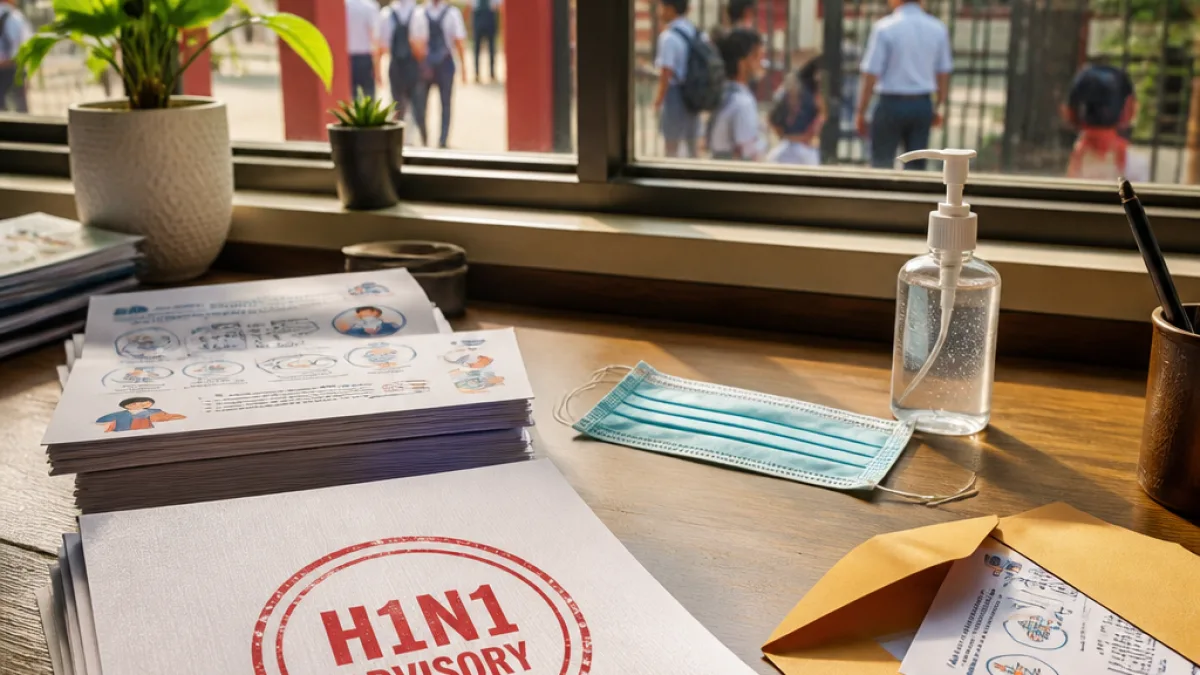
Dehradun — With seasonal conditions considered favourable for the spread of swine flu, Dehradun's chief medical officer (CMO) has issued a formal advisory to the district's chief education officer to ensure awareness and prevention measures against Influenza A (H1N1) across all government and non-government educational institutions.
The CMO, Dr Manoj Kumar Sharma, in a letter circulated on Friday, underlined the need for prompt action in schools and colleges after the district recorded 565 cases of H1N1 so far. The advisory asks educational institutions to adopt measures aimed at limiting transmission, protecting students and staff, and ensuring timely medical attention for symptomatic individuals.
"Medicines for control and treatment of H1N1 are available free of cost in all government hospitals," the letter said, emphasising early consultation and rest at home for those with symptoms.
The guidance, as set out by the CMO, highlights basic infection-control precautions and operational directives for school authorities. It stresses that students, teachers or employees displaying flu-like symptoms should either be kept away from attending classes or required to wear masks while at the institution. Unnecessary gatherings are to be avoided and immediate contact with the nearest hospital is to be made if H1N1 symptoms are detected in any member of the school community.
Practical dos and don'ts for institutions and parents
- Encourage symptomatic individuals to stay home and consult a doctor; rest at home is advised under normal circumstances.
- Ensure availability and use of masks when symptomatic persons must be present on campus.
- Promote hand hygiene — wash hands with soap and water frequently.
- Avoid large gatherings and unnecessary assemblies until the situation stabilises.
- Do not administer antibiotics or other medicines without a clinician's advice; avoid rumours about unnecessary tests or treatments.
The advisory lists additional personal precautions including covering mouth and nose while coughing or sneezing, avoiding touching eyes and nose, drinking plenty of fluids, and using paracetamol for fever and body ache as appropriate. It also warns against spitting in public places and shaking hands to reduce droplet transmission.
Health-system readiness and community responsibilities
The CMO's letter reiterates that medicines for H1N1 control and treatment are supplied free at government hospitals in the district, urging institutions to direct families to these facilities when required. Schools were asked to maintain liaison with local health authorities for prompt referral and reporting of suspected cases.
By instructing the chief education officer to disseminate the guidance across both government and private schools, the health office aims to standardise preventive actions and reduce the likelihood of clusters emerging in educational settings. The directive also seeks to limit disruption to academic activities by encouraging early identification and isolation of cases.
| Issue | Instruction |
|---|---|
| Symptomatic persons | Stay home; consult doctor; if on campus, wear mask or be sent home |
| Treatment availability | Medicines available free at government hospitals |
| Preventive steps | Handwashing, cover coughs/sneezes, avoid gatherings |
Health authorities in the district have emphasised that H1N1 spreads through respiratory droplets produced by coughing or sneezing. The CMO's communication reminded schools that the coming weeks are traditionally associated with higher incidence of respiratory viral infections and called for heightened vigilance to contain case numbers.
Parents and guardians were urged to monitor children for early signs of fever, cough, sore throat or body ache and to seek medical advice rather than resorting to self-medication. The advisory cautioned against following unverified information about testing or treatment and recommended relying on official health channels for updates.
The CMO's instructions mark a coordinated attempt to blend clinical management with public-health measures in educational environments, aiming to protect vulnerable groups and maintain normal functioning of schools while controlling the spread of H1N1 in Dehradun.