
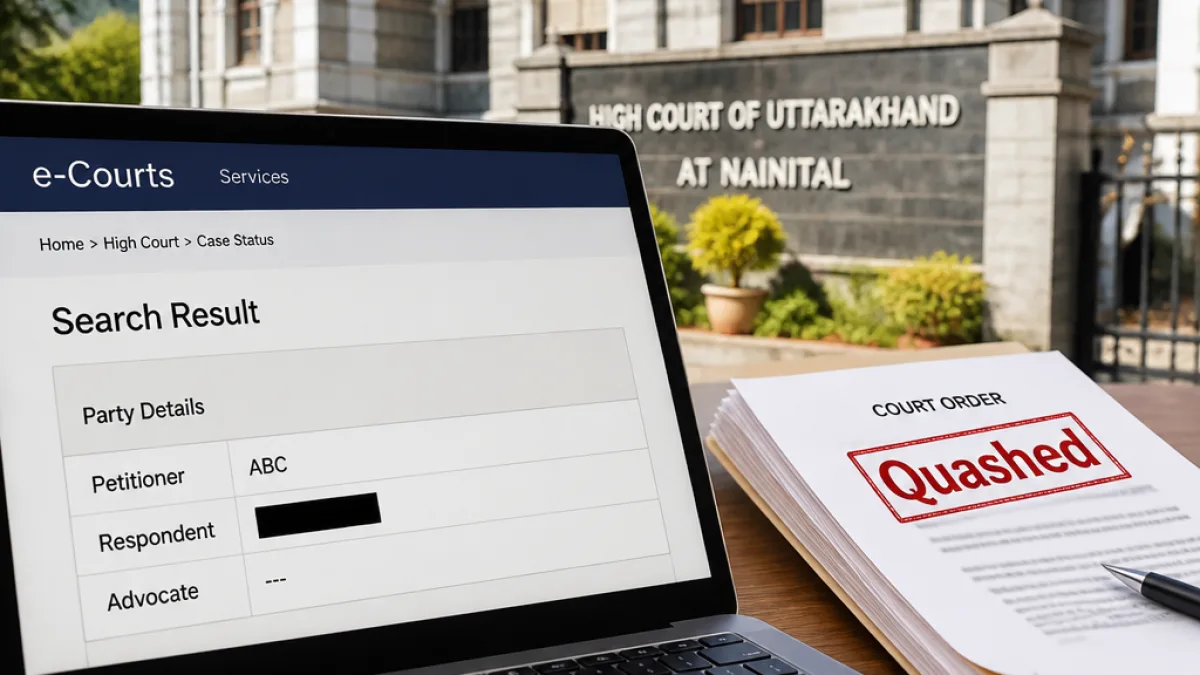
The Uttarakhand High Court has asked that the name of a software professional be replaced with a neutral reference such as “ABC” or “XYZ” on the publicly available e‑Courts website after criminal proceedings against him were quashed in 2024, saying that continued display of his identity online caused disproportionate harm to his privacy, dignity and reputation.
Bench cites constitutional right to informational privacy
Justice Alok Mahra heard the petitioner’s plea challenging the presence of his name as an accused in the online record of criminal proceedings in Udham Singh Nagar district despite the case having been quashed. The court held on September 17 that the entitlement to masking stems from the constitutional protection of informational privacy as a facet of Article 21.
“The entitlement to masking flows from the same constitutional foundation as the entitlement to de‑indexing, that is, the right to informational privacy as a facet of Article 21 …The continued association of an individual’s name with a judicial record in the public digital domain causes disproportionate harm to informational privacy, dignity and reputation that is not justified by any legitimate public interest in the eligible categories identified in this judgment,” the court said.
Background and timeline of the case
According to the petition filed before the high court, an FIR was lodged against the petitioner in 2023. After an investigation and filing of a chargesheet, the trial court took cognisance. A compounding application followed and the high court subsequently quashed the entire proceedings by an order dated June 6, 2024. Despite that order, the petitioner discovered that his name continued to be displayed as an accused on the e‑Courts portal.
| Event | Date |
|---|---|
| FIR lodged | 2023 |
| High Court quashes proceedings | 6 June 2024 |
| Masking order | 17 September (year reported in source) |
What the court said about 'masking'
In its explanation of the remedy, the bench clarified that masking means replacing a person’s name and other personal details such as address and identity information in the publicly available digital version of the record with a neutral reference. The full, unredacted judgment and records would remain part of the court’s internal records and available as required, while the public online version would protect the individual’s identity.
Implications for digital court records and privacy
Legal observers said the order underscores tensions between open justice and individual privacy in the age of searchable online records. By distinguishing between internal records and public digital access, the bench sought to balance transparency of the judicial process with protection against long‑lasting reputational harm where there is no continuing public interest.
Practical questions for e‑Courts and litigants
The ruling raises operational issues for court administration and the e‑Courts project, including how and when masking should be applied, who is eligible, and what technical processes will be used to implement redactions without disturbing the integrity of judgments. Petitioners seeking relief will now point to this judgment when asking for names to be masked after acquittal, quashing or other favourable dispositions.
- Remedy defined: Masking replaces identity details in the public online version while retaining full records internally.
- Constitutional basis: Court linked masking to the right to informational privacy under Article 21.
- Operational impact: e‑Courts administrators may need procedures to implement masking requests.
What the judgment did not do
The order, as reported, does not remove or shred court records; it provides for redaction in the public digital domain while keeping unredacted materials within the court’s records. The judgement also framed masking as applicable where there is no legitimate public interest in preserving the association between an individual’s name and a judicial record in the public domain.
The development is likely to inform future petitions across jurisdictions where individuals seek relief from the lasting effects of online records after cases have been disposed in their favour. The high court’s articulation of masking and its constitutional grounding provides litigants and courts with a reference point in balancing privacy and the principle of open justice.













