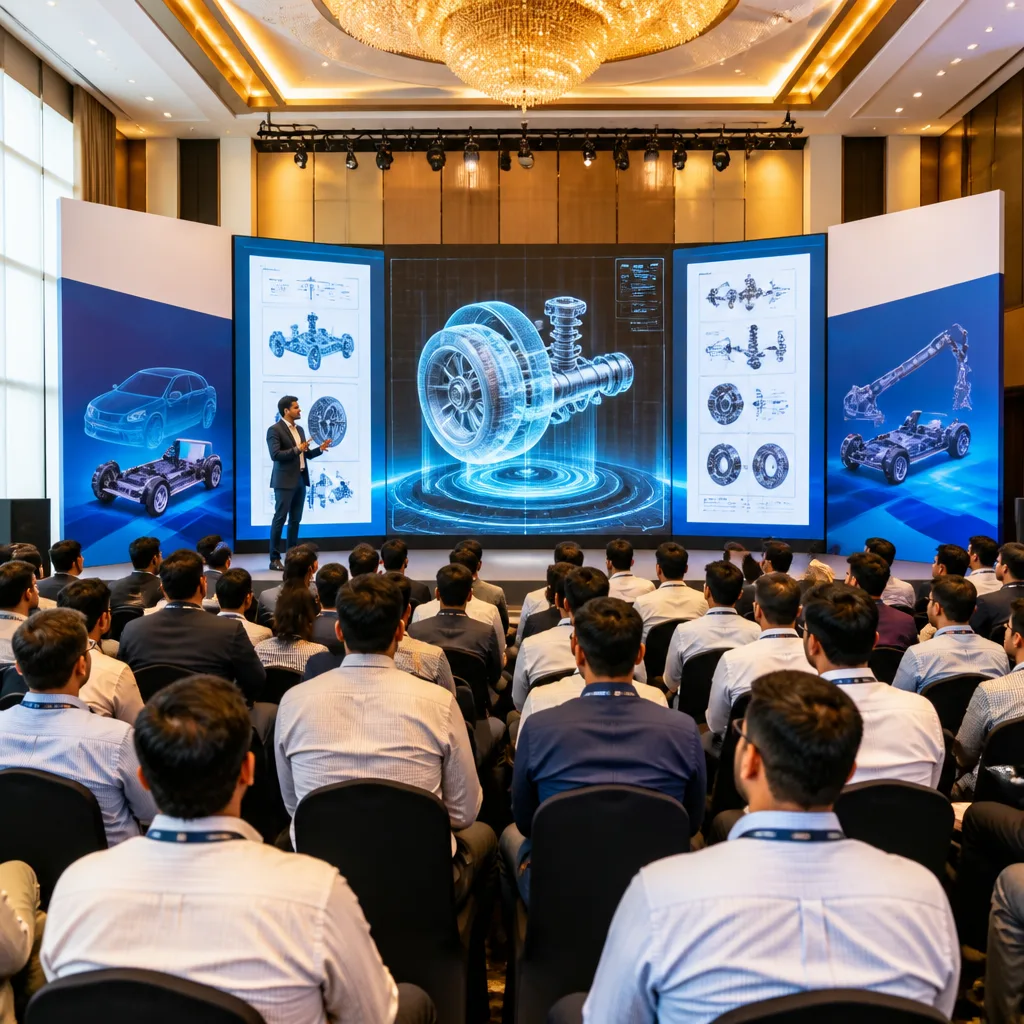
Dassault Systèmes is pressing Indian manufacturers to shift much of product development into software, arguing that virtual twins and integrated platforms can dramatically reduce physical prototyping and speed time-to-market as the company targets a US$1 billion business in India.
Software replaces prototypes
Speaking at SYNC 2026, the company’s first India-focused user conference in Pune, Deepak NG, Managing Director, Dassault Systèmes India, said components that once required 700–800 physical prototypes can now be developed with fewer than ten iterations by using virtual replicas — or virtual twins — to test material behaviour, crash performance and manufacturing defects before anything is built.
| Traditional process | With virtual twins |
|---|---|
| 700–800 physical prototypes | Fewer than 10 virtual/physical iterations |
The company, best known for three-dimensional design software since 1981, is positioning itself beyond classic computer-aided design (CAD). Its current strategic push in India centres on the 3DEXPERIENCE platform, which links design, simulation, supply-chain data, manufacturing and field feedback into a single workflow.
"The platform brings together an organisation's 'past, present and future' by consolidating legacy design data, ongoing programmes and future roadmaps," Deepak NG said.
What the platform does
Dassault Systèmes describes the 3DEXPERIENCE platform as a way to make engineering knowledge continuous across the product lifecycle. Defects or insights found in production or after deployment are fed back into design, shortening the loop between field experience and next-generation products. The company is also integrating AI trained on engineering data — not general text models — to improve design and simulation fidelity.
Shree Harsha, Senior Sales Director, Growth Industries at Dassault Systèmes India, pointed to long-standing industry relationships to underline the technology's maturity: Honda, he said, has used the company's design tools since 1982. Meanwhile, SOLIDWORKS remains a common entry point for many engineers, even as enterprise customers are being migrated toward the broader platform.
Implications for Indian manufacturing
- Cost and speed: Fewer physical prototypes means lower material and tooling costs and faster development cycles — a potential advantage for sectors such as automotive, aerospace and industrial equipment.
- Data integration: Bringing legacy CAD data, live projects and future roadmaps into one environment can help companies avoid knowledge loss and accelerate product improvements.
- Local adoption gap: Panellists at SYNC 2026 noted uncertainty over whether Indian manufacturers have reached the integration level required to fully exploit such platforms, signalling a potential market-development task for Dassault Systèmes.
Praveen Mysore, Industry Consultant Management Senior Director at Dassault Systèmes India, participated in a panel titled The Resilient Factory: Manufacturing in an Age of Disruption, which addressed these readiness challenges.
What it means for you
For Indian manufacturers and engineering teams, the shift implies investment in digital skills, data management and simulation tools. Organisations that adopt virtual-twin workflows may cut development costs and accelerate product launches, while suppliers and smaller firms could face pressure to upgrade capabilities to remain in supply chains. For tech and service providers, the move opens opportunities to offer integration, migration and training services around the 3DEXPERIENCE platform and engineering-specific AI.
Dassault Systèmes’ push to expand beyond CAD and its public ambition to grow to US$1 billion in India underscores the market potential the company sees in the country’s manufacturing and engineering ecosystem. The extent and speed of adoption will likely depend on how quickly Indian firms commit to data-centric engineering and platform-led collaboration.
Key players mentioned: Dassault Systèmes, Deepak NG, Shree Harsha, Praveen Mysore.