Plan aims to curb illegal off‑roading but raises conservation concerns
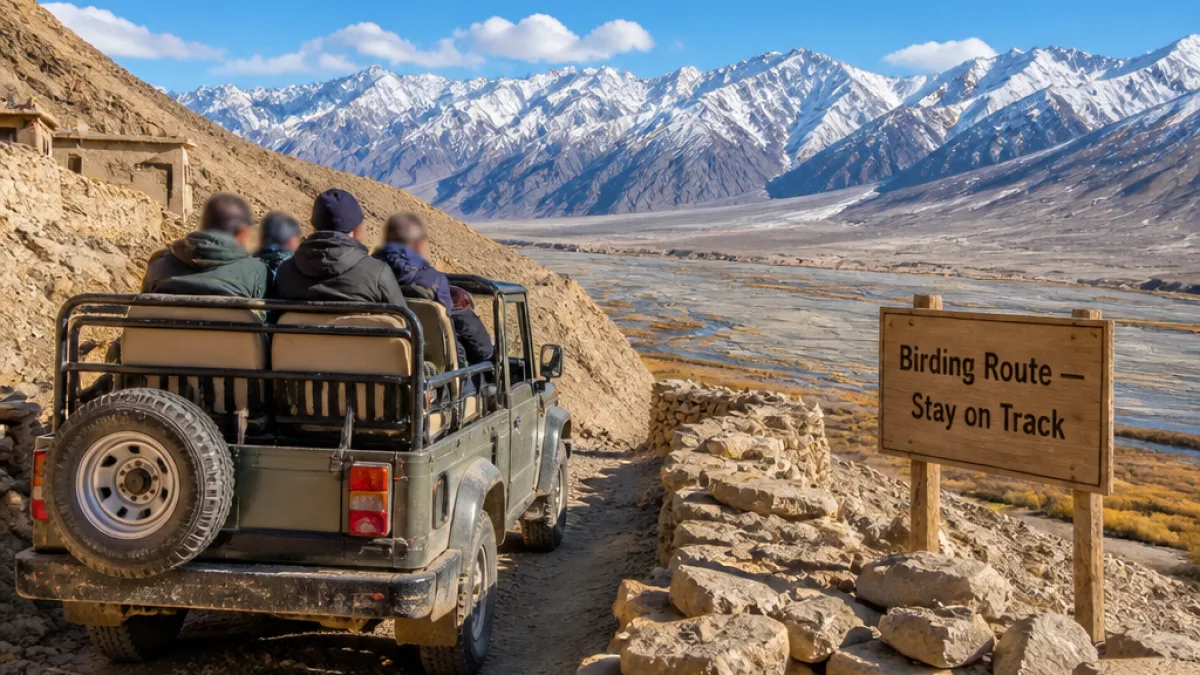
The Administration of Ladakh has directed its forest department to design and operate guided wildlife safaris on popular snow‑leopard and bird‑watching trails, using specially adapted open‑back vehicles driven by trained local guides and drivers, officials said. The move, intended to reduce illegal off‑roading and unmanaged disturbance, has prompted warnings from conservation experts who say the region’s ecology is fundamentally different from lowland national parks where safaris are common.
Authorities have framed the initiative as a means to balance tourism with protection by channelising visitors along managed routes. However, conservationists argue that the behaviour and habitat of species such as the snow leopard make them ill‑suited to vehicle‑based tourism.
“You cannot see a snow leopard from a jeep unless you do something illegal like placing bait or a sheep to lure it,” said Dr MK Ranjitsinh, emeritus member of Wildlife Trust of India, who helped shape conservation policy including the Wildlife (Protection) Act, 1972.
Experts stress that snow leopards rely on camouflage and remote, rugged terrain to survive. Vehicles are often visible from long distances in Ladakh’s open valleys, and vegetation tends to be concentrated along valley bottoms — the same areas that draw herbivores and their predators. Introducing regular motorised traffic into these corridors, they warn, risks altering animal movement patterns and increasing human‑wildlife encounters.
Why Ladakh is different from lowland parks
Conservationists underline that models from lowland national parks such as Kaziranga or Ranthambore do not translate directly to the Trans‑Himalayan environment. Those parks host species and landscapes in which vehicle‑based viewing is feasible; Ladakh’s high‑altitude conditions and the behaviour of its flagship species are unlike those settings.
Officials point to other objectives for the safari plan: preventing unregulated off‑road driving, providing livelihood options for local communities as trained guides and vehicle operators, and creating a formal mechanism for monitoring visitor behaviour. The administration says the safaris will be operated on designated routes with trained staff, though detailed operational guidelines and environmental impact assessments were not published at the time of reporting.
Biodiversity at stake
Ladakh is an important stronghold for snow leopards and other high‑altitude wildlife. Reported figures include:
- Snow leopards: 477 (of India’s estimated 718 individuals)
- Mammal species: more than 38
- Bird species: about 340
- Vascular plant species: roughly 1,800
| Taxon | Approx. number reported |
|---|---|
| Snow leopards | 477 |
| Mammal species | 38+ |
| Bird species | ~340 |
| Vascular plants | ~1,800 |
Because snow leopards are cryptic and occupy steep, inaccessible terrain, sightings are rare and unpredictable. Conservationists warn that attempts to increase sighting probability by concentrating tourists or converting wildlife viewing into a spectacle could harm the animals and their habitat.
Concerns about secondary impacts
Opponents of the plan have highlighted potential secondary consequences: the commercialisation of off‑road routes, pressure to build more roads and visitor facilities, and disturbance from noise and human presence. Such changes can fragment habitat and push species away from key foraging or breeding sites.
Proponents within the administration say that a regulated safari system — with restricted routes, trained local staff and oversight — would be preferable to a free‑for‑all that invites destructive off‑roading. They argue that managed tourism can provide incentives for local communities to protect wildlife and raise awareness among visitors.
What remains unclear is how officials will measure ecological impacts, what safeguards will be built into the scheme, and whether independent assessments will guide route selection and visitor limits. At present, the announcement sets the direction but lacks publicly available operational details and environmental clearances.
As debate continues, conservationists urge a cautious approach that privileges scientific assessment, strict visitor controls and community engagement to ensure that tourism does not compromise Ladakh’s unique high‑altitude biodiversity.