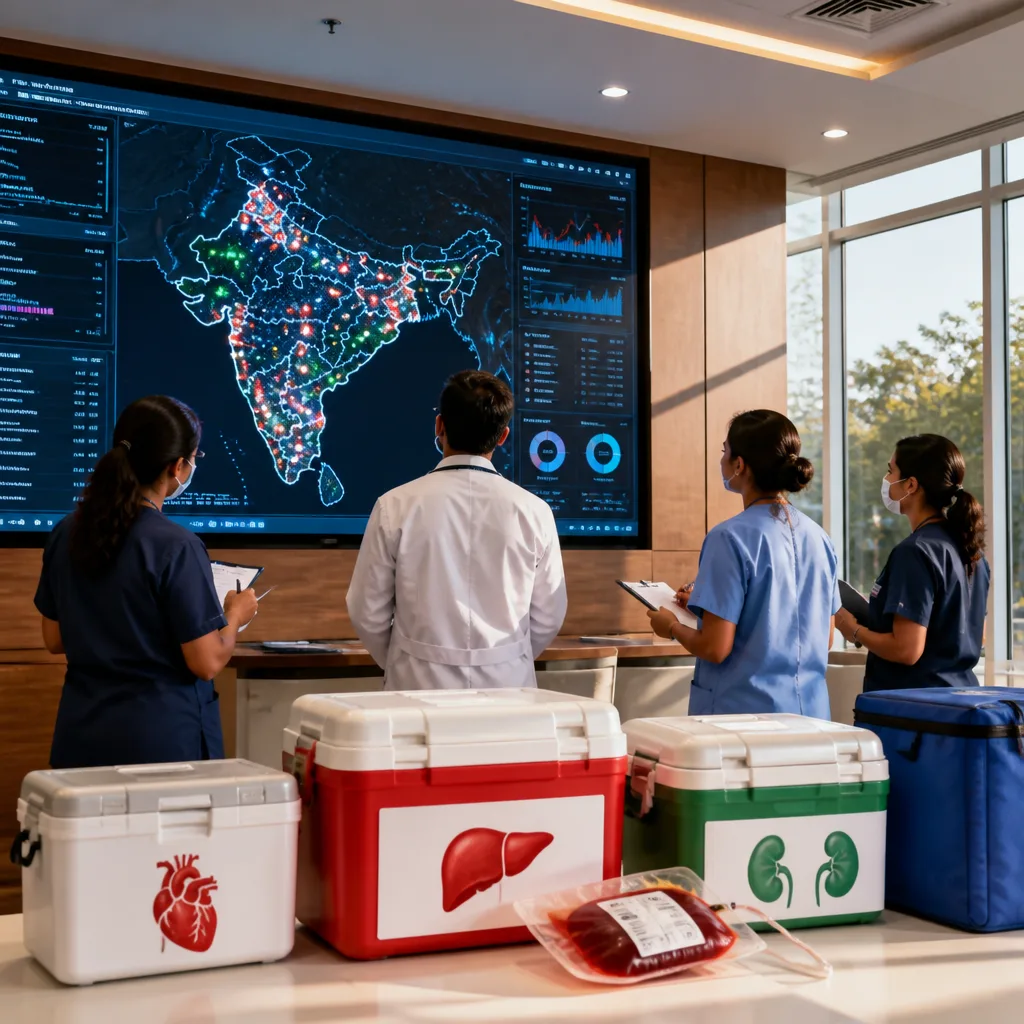
New Delhi: The central government has launched a national biovigilance programme aimed at improving safety and monitoring around organ transplantation, officials said, with plans to broaden adverse event surveillance across the health system.
Existing reporting network and planned expansion
Union Minister of State for Health and Family Welfare Anupriya Patel said the country currently has approximately 1,150 Adverse Drug Reaction (ADR) reporting centres functioning in public and private hospitals and medical colleges, alongside facilities for medical-device vigilance. The government intends to extend these capabilities down to the primary health-care level, she added.
"around 1,150 Adverse Drug Reaction reporting centers are currently operational across public and private hospitals and medical colleges in the country, along with medical-device vigilance facilities," the minister said.
The initiative seeks to integrate surveillance for biologicals used in transplantation with existing pharmacovigilance and device vigilance systems so that adverse events related to organs, tissues and cells are systematically captured, analysed and addressed.
Why biovigilance matters
Biovigilance is the process of detecting, assessing and preventing adverse events and reactions associated with biological materials, including donated organs and tissues. Robust surveillance helps identify risks such as infections, graft failure, or unexpected immune reactions, enabling timely corrective measures and policy responses.
Public health authorities and clinicians say better reporting can improve patient safety, inform clinical guidelines and strengthen regulatory oversight of transplantation practices. International agencies including the World Health Organization have long advocated integrated vigilance frameworks covering medicines, devices and biologicals.
Implementation priorities and challenges
Officials indicated that the immediate priorities include:
- Linking transplant centres with the ADR and device vigilance network.
- Training clinical and laboratory staff in recognising and reporting adverse events related to biologicals.
- Strengthening data collection and analysis to support timely action.
Experts caution that expanding surveillance to primary health centres will require sustained investment in workforce training, digital reporting systems and laboratory capacity. Seamless coordination between tertiary transplant units and peripheral health facilities will be critical to ensure follow-up of donors and recipients.
| Component | Current status | Planned action |
|---|---|---|
| ADR reporting centres | ~1,150 centres across hospitals and medical colleges | Broaden outreach and link with transplant surveillance |
| Medical-device vigilance | Facilities exist in several centres | Integrate with biologicals reporting |
Accurate and timely reporting is also essential to distinguish between complications inherent to transplantation and those arising from donor-derived infections, device malfunction or procedural lapses. Clear reporting pathways and feedback to clinicians can help reduce recurrence of avoidable adverse events.
Policy and patient implications
The biovigilance programme is expected to inform regulatory decisions, clinical best practices and training curricula for staff involved in organ retrieval, preservation and transplantation. For patients and families, strengthened surveillance should improve transparency around risks and enable better post-transplant follow-up.
Health authorities have previously emphasised the importance of integrating transplant oversight with national programmes on pharmacovigilance and device safety. The present announcement seeks to formalise that link and expand the reach of vigilance mechanisms into primary care.
Medical professionals and health administrators will need to work closely to operationalise reporting at scale. The programme’s success will depend on easy-to-use reporting tools, laboratory confirmation where required, and mechanisms to act on signals identified by the system.
Readers with medical concerns related to transplantation or adverse reactions are advised to consult a qualified clinician. The biovigilance framework complements clinical care and regulatory oversight, but it does not replace personalised medical advice.