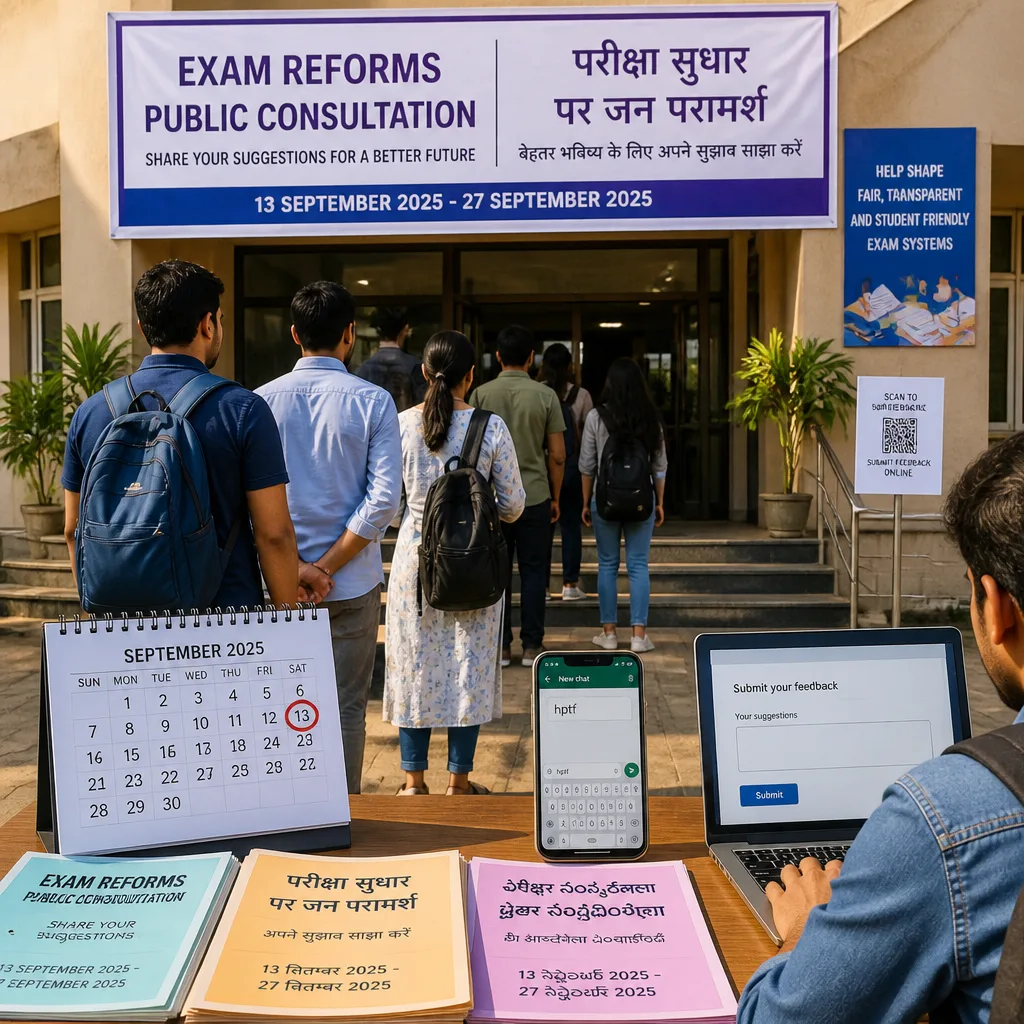
The central government has constituted a High-Powered Task Force (HPTF), chaired by entrepreneur and technocrat Nandan Nilekani, to examine and recommend broad reforms in the conduct, security, design and governance of public examinations, including those administered by the National Testing Agency (NTA), according to official announcements.
Public consultation launched; deadline and channels given
The task force has opened a public consultation and invited suggestions from all stakeholders. Submissions must reach the HPTF by 13 September 2026. The government has provided multiple channels to make it easy for students, parents, teachers and other interested parties to participate.
- Website: examreforms-taskforce.dopt.gov.in
- Phone: 1800-180-4747
- WhatsApp: Send the word "hptf" to +91 78270 42830
- Email: ExamReformsTaskforce@dopt.gov.in
Submissions may be made in English, Hindi and regional languages, the official guidance said, and will be used to help the task force formulate its recommendations.
"The High-Powered Task Force on Reforms in Public Examinations wants to hear from students, parents, teachers, every citizen," an official post shared by the NTA stated, according to the announcement.
Who may send suggestions
The government has explicitly invited a wide range of stakeholders to contribute. The call for inputs includes:
- Students and candidates
- Parents
- Teachers and academic institutions
- Examination-conducting and test-intending bodies
- Subject-matter experts and technology professionals
- Industry organisations and civil society groups
- Other interested stakeholders
The stated objective is to build a robust, secure, transparent, equitable and future-ready public examination system. The scope covers the full lifecycle of public tests — from design and conduct to security protocols and institutional governance.
What the consultation could mean for students and schools
The move to solicit broad-based feedback comes at a time when digital technologies, question-paper security and equitable access are high on the policy agenda. If the task force proposes changes, these may affect:
- Test formats and design (for example, use of objective vs descriptive assessments)
- Security and anti-cheating measures, including technology-enabled monitoring
- Governance arrangements for national testing agencies and other exam conductors
- Access provisions for candidates from different regions and socio-economic backgrounds
For anxious students and parents, the consultation offers a chance to raise practical concerns — such as exam scheduling, transparency around evaluation and safeguards for remote or computer-based testing. Teachers and institutions can highlight classroom-level impacts and feasibility of any proposed reforms.
How to prepare a submission
Officials have not prescribed a rigid template for inputs. Contributors are encouraged to provide clear, specific suggestions or evidence-based experiences that the task force can examine. Where possible, include practical recommendations and, if relevant, data or references to support the point being made.
| Channel | Details |
|---|---|
| Website | examreforms-taskforce.dopt.gov.in |
| Send "hptf" to +91 78270 42830 | |
| Phone | 1800-180-4747 |
| ExamReformsTaskforce@dopt.gov.in |
The task force will review inputs received through the consultation to help develop its recommendations, the official portal said. Stakeholders wishing to influence future policy on national examinations should note the 13 September 2026 cut-off and use the official channels listed above.
As the process unfolds, students, parents and educators should monitor the official portal for updates and any clarifications on formats or further consultations. Clear, timely submissions can make it easier for the HPTF to weigh operational realities alongside policy ambitions when proposing reforms.