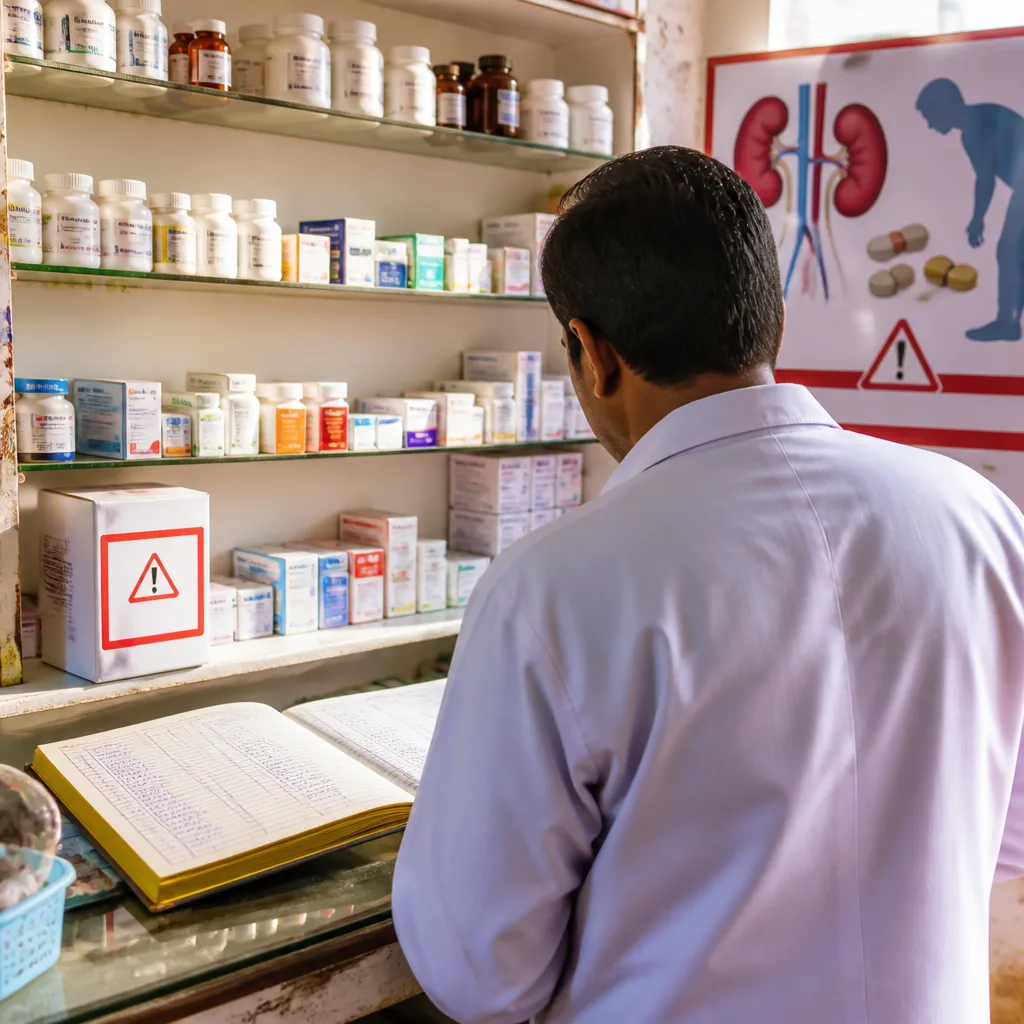
The Central Drugs Standard Control Organisation (CDSCO) has issued a circular cautioning healthcare professionals, pharmacists and the public against the indiscriminate use of painkillers and antibiotics, saying such practices can heighten the risk of chronic kidney disease (CKD).
Regulator emphasises prescription rules and stewardship
Drug Controller General of India (DCGI) Rajeev Raghuvanshi said in the circular that non-steroidal anti-inflammatory drugs (NSAIDs) and antibiotics should not be taken indiscriminately, repeatedly or for prolonged periods without medical advice. The CDSCO also warned against self-medication with antibiotics and their use for conditions where they are not clinically indicated, particularly viral infections, the common cold and uncomplicated fever.
“State and Union Territory (UT) drug control authorities are requested to create awareness among healthcare professionals, pharmacists, retailers and the general public regarding the risks associated with indiscriminate use of NSAIDs and antibiotics,” the circular said.
The circular reiterates obligations under the Drugs Rules, 1940: most antibiotics fall under Schedule H or the more tightly regulated Schedule H1. Medicines in these categories must carry appropriate warnings and are intended for sale only on medical prescription.
Pharmacy-level controls and record-keeping
According to the circular, medicines in Schedule H1 are subject to additional constraints. These include a mandatory red-bordered warning label with an Rx symbol and a requirement for pharmacists to maintain a register recording patient details, the prescribing doctor and the quantity sold. That register must be retained for at least three years. The CDSCO asked that pharmacists not sell Schedule H and H1 drugs at retail except in accordance with the applicable provisions of the Drugs Rules, 1940.
| Drug category | Regulation |
|---|---|
| Schedule H | Prescription-only; warning label required |
| Schedule H1 | Stricter subset; red-bordered warning, Rx symbol, register of sales (retain 3 years) |
Public health context: CKD burden and clinical caution
The warning comes amid growing concern about the burden of CKD in India. A study published in the Lancet estimated that about 138 million adults were living with chronic kidney disease in 2023. Nephrologists have long cautioned that repeated or prolonged exposure to certain NSAIDs and some antibiotics can contribute to kidney injury through several mechanisms.
Vikram Kalram, consultant nephrologist at Delhi’s CK Birla Hospital, was cited as saying that indiscriminate use of painkillers—particularly NSAIDs—and certain antibiotics can cause harm. NSAIDs may reduce protective prostaglandins in the kidneys, potentially impairing renal blood flow and function, while some antibiotics are known to be nephrotoxic in susceptible individuals.
- Consult a qualified doctor: Medicines, including over-the-counter painkillers and antibiotics, should be used as advised by a clinician.
- Pharmacists’ responsibilities: Adhere to the Drugs Rules, keep required registers for Schedule H1 sales and refuse to supply prescription-only drugs without valid prescriptions.
- Public awareness: Avoid self-medication for viral illnesses; antibiotics do not treat the common cold or uncomplicated fever caused by viruses.
The CDSCO has urged state and UT drug control authorities to undertake awareness activities aimed at healthcare providers, pharmacists, retailers and the general public to reduce inappropriate use of NSAIDs and antibiotics.
While regulatory steps and professional vigilance are important, clinicians and patients should also consider individual risk factors—such as existing kidney disease, hypertension, diabetes, age and concurrent medications—before use of potentially nephrotoxic drugs. Readers are advised to consult a qualified medical practitioner for personalised guidance; this report does not constitute medical advice.
Clearer enforcement of existing regulations, combined with education on antimicrobial stewardship and safe analgesic use, will be critical if India is to curb preventable medication-related kidney harm and slow the growth of CKD prevalence.