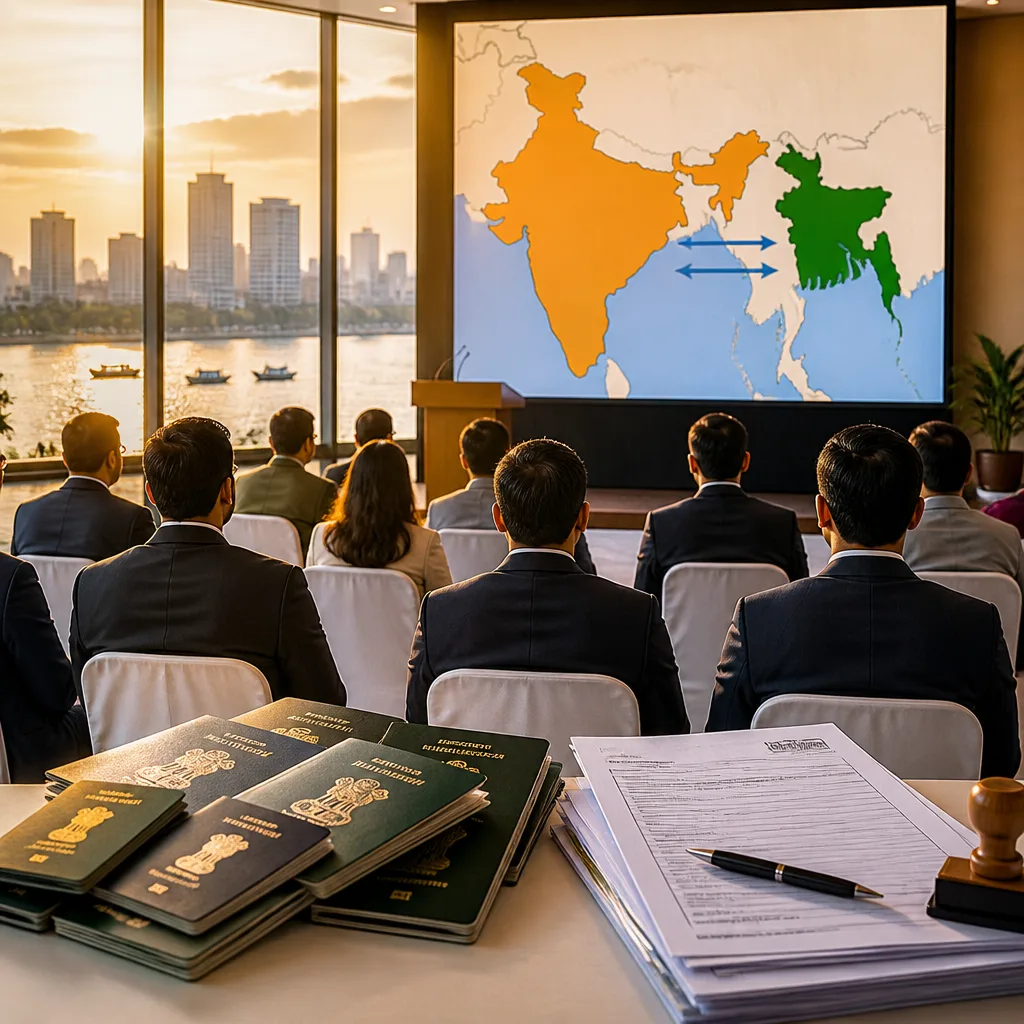
Dhaka has urged New Delhi to speed up issuance of business visas for Bangladeshi nationals and to tackle non-tariff and procedural barriers that constrain trade and investment, saying a more balanced economic partnership would expand commerce, create jobs and benefit businesses on both sides.
What Bangladesh asked for
Speaking at an event in the Bangladesh capital, the State Minister for Foreign Affairs, Shama Obaidul Islam, set out practical steps she said would strengthen private-sector ties between the two countries. The remarks were reported by the Dhaka Tribune.
Islam emphasised the need for faster visa processing so businesspeople could travel to India more frequently. She also flagged a range of supply-chain and regulatory frictions — from standards and testing-related difficulties to infrastructure constraints and procedural delays — that, in her view, impede the smooth movement of goods and services.
"Business visas for Bangladeshis should be issued more quickly so that businesspeople can travel to India more frequently," Islam was reported as saying.
Why it matters for India
The appeal comes against a backdrop of growing bilateral trade, which both sides acknowledge has expanded significantly but remains "structurally imbalanced" and below potential, according to the report. For India, easing visa and trade frictions with Bangladesh could deepen market access for manufacturers and service providers, while bolstering regional supply chains.
For Indian businesses, quicker visas mean lower transaction costs and faster project mobilisation. Greater predictability on standards and testing would reduce delays at borders and ports, potentially cutting inventory and working-capital needs for exporters and importers alike.
Key issues identified
- Visa delays: Faster issuance of business visas for Bangladeshi nationals to facilitate travel and deal-making.
- Non-tariff barriers: Standards, testing and regulatory requirements that complicate cross-border trade.
- Procedural delays and infrastructure: Port and customs bottlenecks, testing-related hold-ups and other logistical constraints.
The minister urged more frequent communication between private sectors of both countries and described the objective as an "equally beneficial" economic partnership that delivers tangible improvements for ordinary people, the report said.
Context and consequences
India is already a major trading partner for Bangladesh. Addressing the issues raised by Dhaka could help rebalance trade flows and encourage two-way investment. For exporters and service firms, resolving testing and standards misalignments is especially important: harmonised procedures reduce rejection rates and help predictable scheduling of shipments.
In practical terms, policymakers on both sides may consider measures such as streamlined visa categories for repeat business travellers, mutual recognition of testing laboratories or procedures, dedicated trade facilitation cells at ports, and time-bound dispute-resolution mechanisms for regulatory issues. Any such changes could ease costs for firms and improve cross-border collaboration in sectors ranging from textiles and pharmaceuticals to IT-enabled services.
However, trade liberalisation and visa facilitation are often balanced against domestic regulatory and security concerns. India will need to weigh the economic benefits of easier access for Bangladeshi businesspeople against migration-control and regulatory capacity considerations at its borders and customs points.
The Dhaka reception that hosted the minister also included leading Bangladeshi business figures and a visiting delegation from the Confederation of Indian Industry, underlining the role of industry bodies in shaping practical solutions, the report said.
What it means for you: Faster business visas and smoother standards-testing regimes could lower costs and processing times for firms that import from or export to Bangladesh. For businesses, this would likely translate into quicker contract execution, reduced inventory overhead and easier cross-border project collaboration. For workers, deeper trade and investment ties can support job creation over time, provided reforms focus on predictable market access and infrastructure upgrades.