Itanagar: The Arunachal Pradesh cabinet on Thursday approved a uniform set of eligibility conditions for direct recruitment to Group A, B and C posts across government departments, public sector undertakings and autonomous bodies, making knowledge of a notified indigenous tribal language mandatory for applicants.
New language requirement and basic eligibility
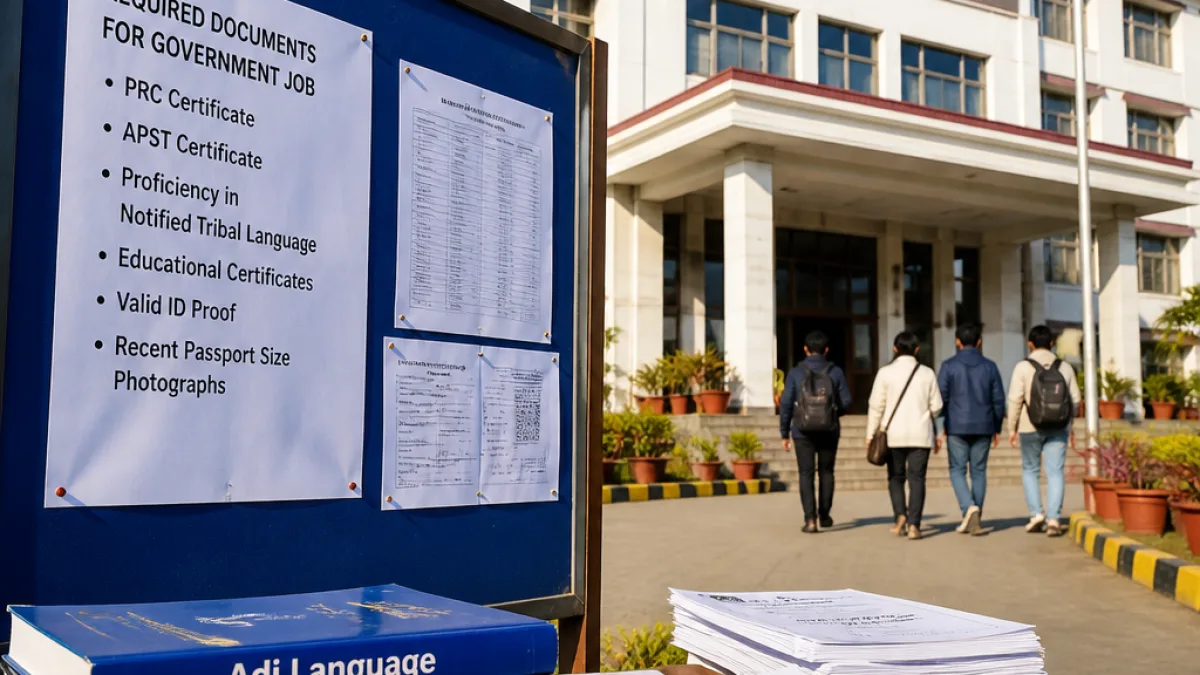
The cabinet, chaired by Chief Minister Pema Khandu, directed that candidates for direct recruitment must be Indian citizens, possess a valid Permanent Residence Certificate (PRC) and an Arunachal Pradesh Scheduled Tribe (APST) certificate. In addition, proficiency in any one of the state’s notified indigenous tribal languages will be required at the time of recruitment.
The state government has instructed the Arunachal Pradesh Public Service Commission (APPSC) and the Arunachal Pradesh Staff Selection Board (APSSB) to incorporate these eligibility conditions into recruitment rules and advertisements going forward. The departments have also been asked to set up post-joining language testing mechanisms for appointees.
How the rule will be implemented
- Recruiting agencies (APPSC and APSSB) to amend notices and service rules to include language proficiency.
- Successful candidates may face language tests after joining to verify continuing competence.
- PRC and APST certificates will be mandatory documentary requirements in application forms.
A simple table summarises the principal eligibility components announced by the cabinet:
| Eligibility element | Requirement |
|---|---|
| Citizenship | Indian citizen |
| Residence proof | Valid PRC (Permanent Residence Certificate) |
| Tribal status | APST (Arunachal Pradesh Scheduled Tribe) certificate |
| Language | Proficiency in any notified indigenous tribal language |
Education sector concession
The cabinet also granted a temporary, one-time relaxation in the education department. The qualifying service period required for promotion of headmasters, vice-principals and district adult education officers (DAEOs) to the posts of principals or deputy directors of school education (DDSEs) has been reduced from eight years to six years for a period of two years. This measure aims to expedite internal promotions in the school system.
Industrial development bill cleared
Separately, the cabinet cleared the draft Arunachal Pradesh Industrial Development Area Bill, 2026. The proposed legislation seeks to create a statutory framework for the planned development and upkeep of industrial zones in the State. The draft bill is intended to provide legal backing for establishing, managing and maintaining industrial areas, though the cabinet did not announce the timetable for its introduction in the Assembly.
Implications and administrative questions
Officials will need to detail which tribal languages are to be notified, how language proficiency will be assessed, and whether exemptions or transitional arrangements will apply to existing employees and aspirants. The directive to include post-joining language tests suggests verification will continue beyond the point of selection.
The combined movement on recruitment rules and industrial policy reflects a dual focus on protecting tribal identity markers in public employment while laying groundwork for economic infrastructure. How the new requirements affect applicant pools, particularly non-APST residents and migrants, will depend on the implementation guidelines yet to be issued by the concerned commissions and departments.
The cabinet’s decisions are now expected to be translated into detailed notifications and amendments to recruitment rules; recruiting bodies will have to publish revised advertisements that indicate the new eligibility criteria and testing mechanisms.