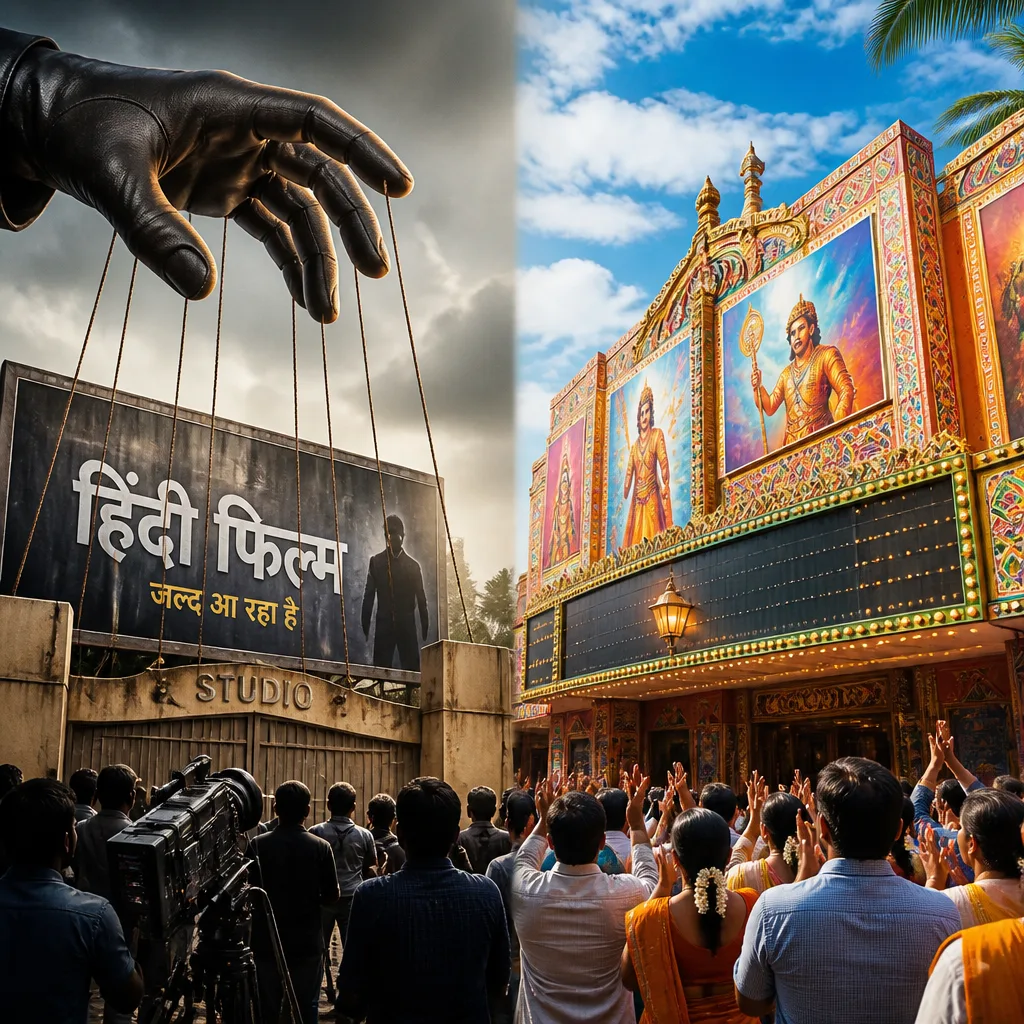
Filmmaker Anurag Kashyap on Sunday said the Hindi film industry often yields to demands from power centres, arguing that once a first compromise is made it opens the door to further concessions. He contrasted this with South Indian film industries, which he said are less likely to be compromised because they do not rely on the Hindi market.
First compromise leads to a widening door
In a conversation with Janice Sequeira, Kashyap asserted that people in Bollywood do not willingly compromise but are compelled by circumstances once a demand is accepted. He said the initial concession typically comes with benefits, and those benefits make it hard to reverse the decision later. According to him, this dynamic creates a cascade of further compromises.
Kashyap said the centre seeks to capture the Hindi‑speaking audience, and those who wish to make a dent in that market are more likely to bend. In his words:
“Other industries are very regionally strong, but they have a culture which is so very strong, which can’t be divided on the same lines. But the centre also wants to capture the Hindi‑speaking masses. So you will see only those people getting compromised who want to make a dent in the Hindi audience. It’s those kinds of people who bend, not the others. South doesn’t get compromised because they don’t depend on Hindi.”
Awareness, embarrassment and limited agency
Kashyap added that industry personnel are aware of the compromises they make and often experience embarrassment or shame, yet feel unable to act. He said people generally do not take voluntary steps until they are specifically and individually asked to comply.
The filmmaker has previously criticised the commercial pressures in the Hindi film industry. In an earlier interview referenced in the discussion, he described Bollywood’s chase for unrealistic box‑office targets — aiming for films that reach the ₹500 crore or ₹800 crore marks — and called out what he described as a lack of a creative atmosphere in the industry.
Implications for pan‑India cinema and creative autonomy
Kashyap’s remarks touch on wider debates about the consolidation of cultural power and the tensions between regional film industries and the national Hindi market. His point that the first compliance often brings tangible benefits highlights the economic drivers that can influence creative choices.
- Compromise cascade: Kashyap argued the initial concession makes subsequent compromises easier and more likely.
- Regional resilience: He credited South Indian industries with a stronger cultural cohesion that reduces dependency on Hindi audiences.
- Awareness but limited recourse: Industry professionals, he said, are often aware and ashamed but feel unable to resist individual requests.
The filmmaker’s observations reflect long‑standing conversations inside India’s film community about the balance between commercial imperatives and artistic independence. They also underline the complex relationship between language markets, distribution reach and cultural influence.
| Aspect | Bollywood (Hindi) | South Indian industries |
|---|---|---|
| Dependency on Hindi market | High (targets national Hindi‑speaking audience) | Lower (regional market strength, less dependent on Hindi) |
| Cultural cohesion | More susceptible to external pressures | Described by Kashyap as having stronger, indivisible culture |
Kashyap’s comments are part of ongoing industry critique and conversations among filmmakers, actors and producers about creative freedom, market power and the pressures of large‑scale commercial success. Whether his remarks lead to broader public debate or concrete changes inside studios and trade circles will depend on how industry stakeholders respond to the concerns he has articulated.