
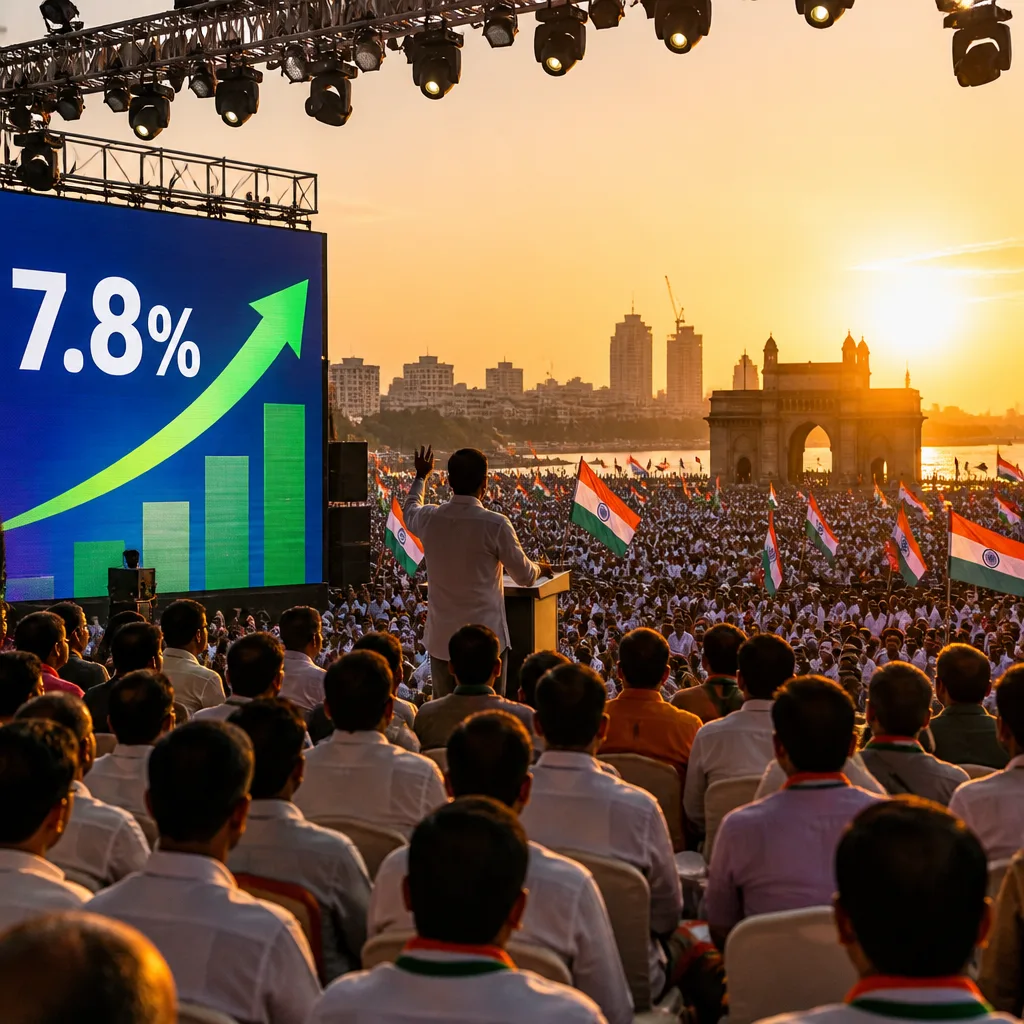
Union Home Minister Amit Shah on Sunday said India has undergone a decisive political transformation since 2014, replacing what he called an era of corruption, caste-based politics and dynastic dominance with a governance model focused on delivery and national interest, according to an address in Mumbai.
Claims on governance, economy and security
Speaking at a public event, the Union Minister contrasted the pre-2014 political landscape with the present, saying the country has shifted to a “politics of performance”. He pointed to recent economic data to underline his argument, citing a first-quarter gross domestic product growth rate of 7.8% as a marker of India’s rising economic resilience.
“Prior to 2014, our national politics was plagued by corruption, casteism, and dynastic politics. In the political era spanning 2014 to 2026, the nation has moved beyond these issues toward a politics of performance,” Shah said.
Shah also argued that India had moved from being identified among the so-called ‘Fragile Five’ economies to being one of the world’s leading markets, and stressed that economic strength has been accompanied by a firmer foreign and defence policy posture he summarised as “India First”.
Security measures and long-standing issues
The Home Minister highlighted national security gains, saying policy has matured to deliver prompt countermeasures against external threats. He told the audience that the government had addressed three prolonged internal-security and constitutional challenges — Article 370, left-wing extremism (Naxalism) and unrest in the Northeast — which, he asserted, had posed threats for decades.
- 7.8% — Quoted first-quarter GDP growth figure referenced by Amit Shah.
- ‘Fragile Five’ to top five — Shah’s description of India’s economic trajectory since 2014.
- Article 370, Naxalism, Northeast — Listed as long-standing issues the government has acted upon.
The minister framed these developments as part of a larger shift in priorities where national interest and outcomes guide policy choices. He said the foreign policy and defence strategies now reflect an assertive stance meant to protect Indian citizens and soldiers.
Context and implications
Shah’s remarks build on a broader narrative advanced by the ruling party that links political change since 2014 to improved governance outcomes. Economic figures such as quarterly GDP growth are commonly cited in political discourse to validate claims about policy success; independent verification requires reference to official releases from the Ministry of Statistics and Programme Implementation and other government data.
Analysts note that opposition parties and critics may contest the causal link between political change and economic performance, and point to a range of factors — global demand conditions, monetary and fiscal policy, structural reforms, and statistical methodologies — that influence growth figures.
| Claim | Detail |
|---|---|
| Quarterly growth quoted | 7.8% (first-quarter GDP, cited by Amit Shah) |
| Political shift described | From alleged corruption and dynastic politics to a results-oriented model (2014–2026) |
Shah’s address also reiterated the government's contention that its approach to defence and diplomacy has become more robust. Such claims carry implications for domestic political debates, particularly ahead of elections in various states, where narratives of governance and security play significant roles.
Neither the speech nor the report of it in the public domain supplied independent corroboration of every causal claim linking governance changes directly to the cited economic outcome. Opposition reactions and detailed economic appraisals will be relevant to assess the broader validity of the assertions made.
This report is based on the Union Home Minister’s remarks in Mumbai as reported at the event.













