Work has begun on Google’s proposed US$15 billion data centre hub in Andhra Pradesh, but mounting local opposition is creating hurdles for what the company and state officials describe as a transformational investment, according to Reuters reporting.
Project progress and local unease
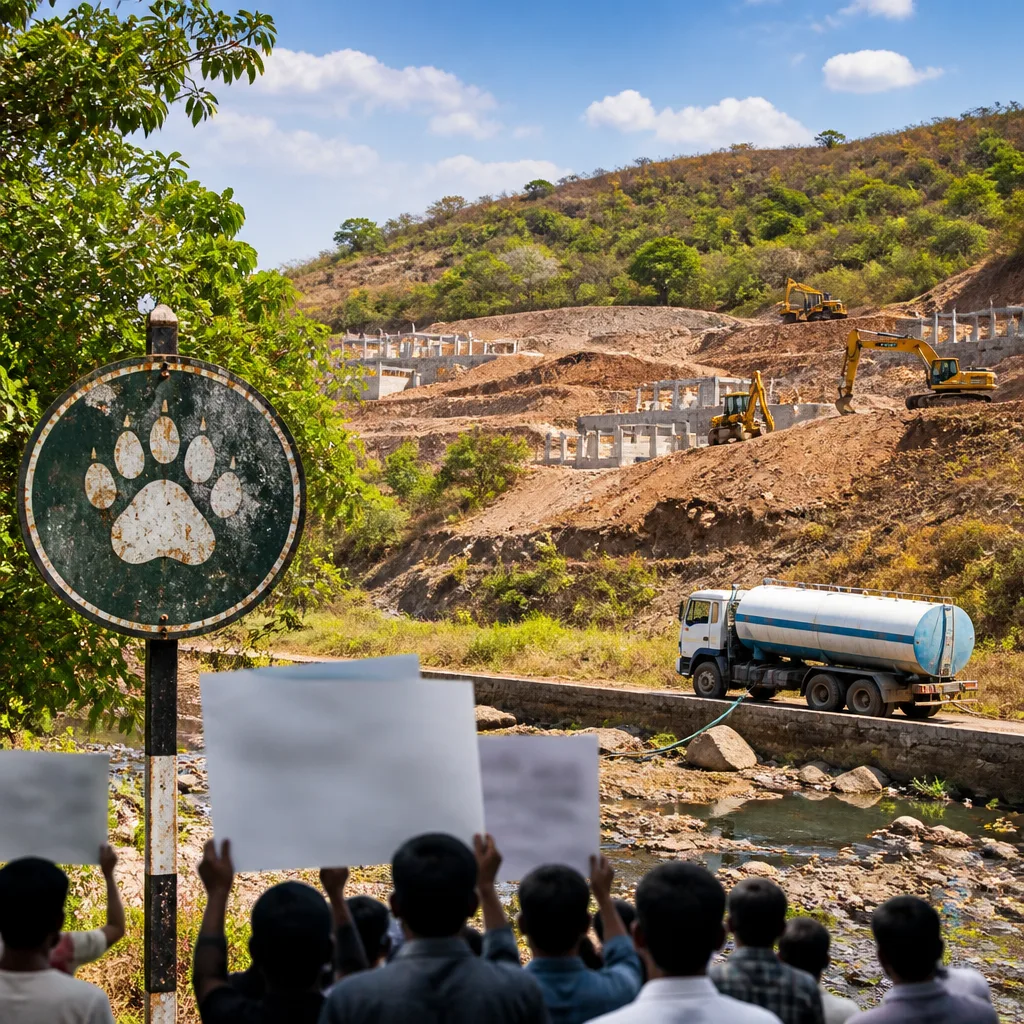
Construction activity is visible at the site near Visakhapatnam, where a hillside has been terraced and stripped, Reuters reported. The project — described by Google as its biggest investment in India — is backed by the Andhra Pradesh government, which has defended the clearances and rollout. However, environmentalists, local activists and some residents have voiced strong concerns about the impact on water supplies, wildlife and livelihoods.
Activists have mobilised in recent weeks, staging marches in Visakhapatnam and conducting public awareness drives. Slogans and imagery used in protests include banners reading “We cannot drink DATA” and the Google logo painted with handcuffs, Reuters reported. At a public gathering, organizer Raja Rama Mohan Roy said:
“Development should not be at the cost of livelihood of the people.”
Water stress and wildlife proximity
Campaigners warn that rapid data centre expansion worldwide consumes significant quantities of water for server cooling and requires large supplies of electricity. They say the Visakhapatnam region already faces stressed water resources.
Reuters cited government figures that the city receives 410 million litres of water a day from reservoirs and rivers against a requirement of 480 million litres. Frequent rationing is common in the city, which has a population of about 2.5 million.
Environmental groups have also highlighted the site’s proximity to a wildlife sanctuary home to species such as leopards and pangolins, raising concerns about habitat disruption and long-term ecological effects. The project has attracted several legal challenges questioning its potential environmental impact, according to Reuters.
Government and developer response
Andhra Pradesh authorities have rejected claims that the project was fast-tracked without adequate assessment of risks to water supplies and wildlife. The state government and project backers frame the investment as a major economic opportunity, promising jobs and infrastructure development.
Details of mitigation measures, water management plans or environmental impact assessments were not included in the Reuters summary. The growing public opposition presents an early test for the project, which is high-profile both for its scale and for being part of a wider trend of rapid data centre expansion in India.
Why this matters for India
- Scale of investment: At US$15 billion, the hub would be the largest foreign tech investment in India to date, with implications for local economies and employment.
- Resource competition: Data centres require substantial water and power; in water-stressed regions this can intensify competition with municipal and agricultural needs.
- Environmental and legal scrutiny: Proximity to protected areas increases the risk of litigation and public protests, which can delay or change project plans.
| Metric | Reported figure |
|---|---|
| Project investment | US$15 billion |
| City water supply | 410 million litres/day |
| Estimated city requirement | 480 million litres/day |
| City population (approx.) | 2.5 million |
For technology policy and planning, the case highlights the tensions that arise when global cloud and hyperscale infrastructure meet local environmental constraints. Data centres are critical to the digital economy — they host cloud services, search, AI workloads and enterprise systems — yet they can be resource-intense, especially for cooling and continuous power.
How the concerns in Visakhapatnam are resolved will be closely watched by industry, civil society and other states seeking similar investments. Project proponents argue that modern data centres implement efficiency measures and can be designed to limit local impacts, but campaigners and some residents remain unconvinced and have called for stronger safeguards, transparent impact assessments and meaningful local engagement before construction proceeds further.
Reuters reported that activists planned further door-to-door campaigns and beach protests as part of ongoing mobilisation. Legal challenges over environmental risk and proximity to protected habitat continue to be filed, signalling that the project could face delays or require adjustments in response to public and judicial scrutiny.