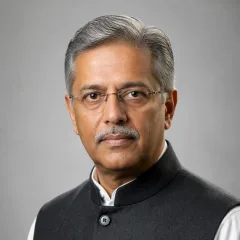
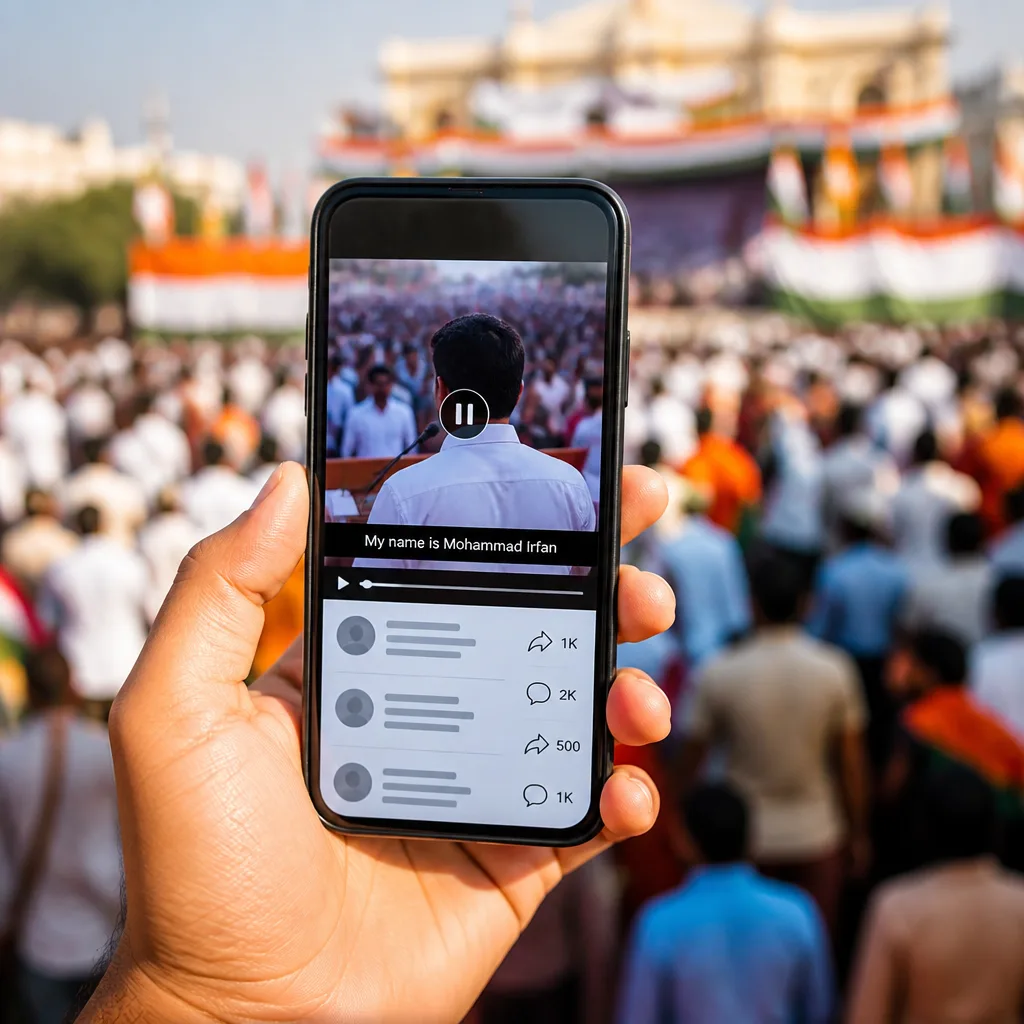
“My name is Mohammad Irfan.” A simple self‑introduction, now the centre of a national conversation that, according to the article, touches on questions of dignity, recognition and the public consequences of religious naming in contemporary India.
Viral moment and its resonance
The short video clip, which spread rapidly across social media platforms, prompted widespread sharing and commentary, the article said, turning a routine personal statement into a subject of heated public debate. The piece argues the clip resonated because it connected with broader feelings among many minorities who experience pressure to conceal or modify their identities.
Rather than a performance of rhetoric, the clip is framed as a quiet assertion of identity that many viewers interpreted as a demand for dignity. The article invokes a philosophical lens — referencing G.W.F. Hegel’s theory of recognition — to suggest that identity is not solely an internal matter but a social relationship that requires public acknowledgement for self‑respect.
Why a name becomes political
According to the article, the virality of the content is not merely an artefact of algorithms but a signal that the message touched a deep, collective nerve. In this interpretation, when a person with a Muslim name speaks their name openly in public, the act can be read as confronting prevailing stereotypes, prejudices and social expectations.
The article places the moment in a broader digital context: social media amplifies acts of identity and can convert personal gestures into symbols of wider struggles. Viewers and sharers, the piece notes, read the clip less as a private introduction and more as an emblem of the aspirations and anxieties of a larger community.
Implications for public discourse
Commentators, the article suggests, saw the clip as a reflection of unresolved tensions about belonging and civic status. By drawing attention to recognition as a social demand, the piece implies that instances such as this can become catalysts for renewed public discussion on inclusion, dignity and the boundaries of acceptable public behaviour.
- Recognition: The article frames the clip as a claim on social acknowledgement rather than a mere personal introduction.
- Virality: Social media transformed the private utterance into a public event that many engaged with emotionally and politically.
- Symbolism: The name became a shorthand for the broader experiences of minorities facing identity‑based pressures.
A small qualitative comparison in the article helps clarify the shift from private to public meaning:
| Act | Perceived Meaning |
|---|---|
| Personal self‑introduction | Routine identification |
| Viral public sharing | Claim for recognition; political symbol |
“My name is Mohammad Irfan.”
The article does not assert that the clip itself contained explicit political speech; instead, it describes how collective interpretation imparted public significance. It emphasises the emotional impact on audiences who perceived the statement as part of a larger struggle for respect and equal treatment.
What is confirmed and what remains interpretive
The reporting confirms that the clip circulated widely and prompted debate. What remains interpretive, the article cautions, is the precise set of motivations behind individual reactions and the broader political consequences that may follow from the video's circulation. The piece urges careful attention to how symbolic acts are read and deployed in public discourse rather than treating the moment as self‑explanatory.
By focussing on the interplay between a single utterance and a charged social context, the article invites reflection on how identity, recognition and digital amplification interact in India’s public sphere. It leaves open questions about how policymakers, civil society and media might respond to recurring episodes that turn personal identity into public controversy.
— End —