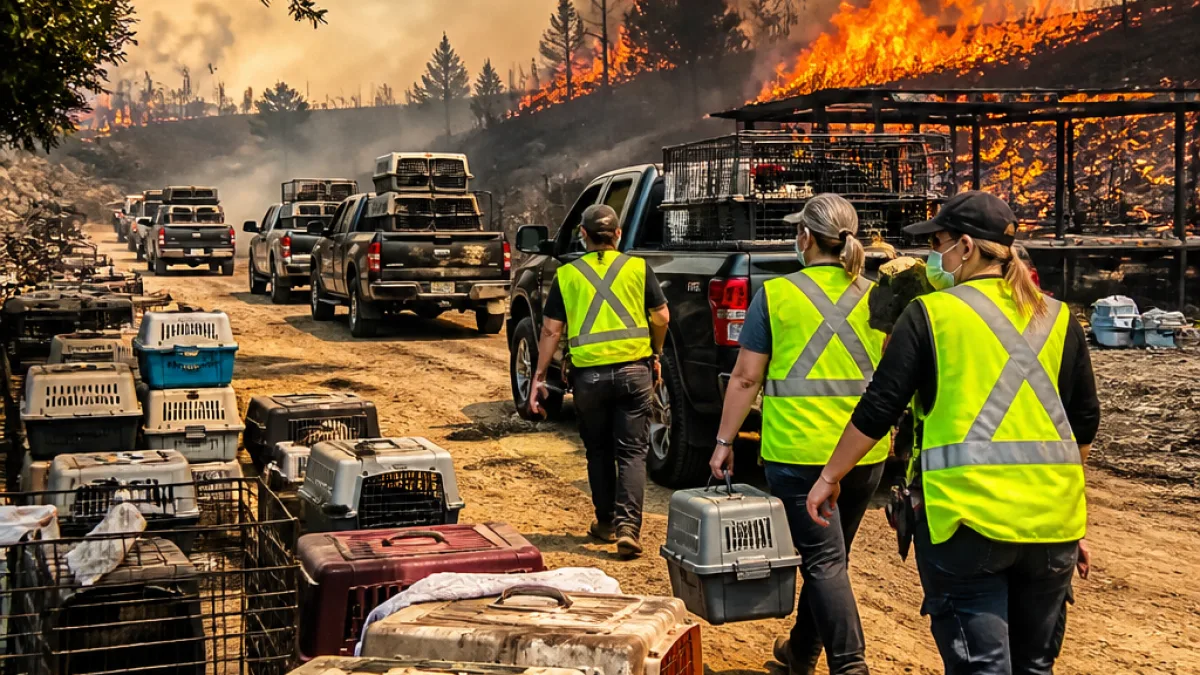
SUMMERLAND, B.C. — As flames pushed through the South Okanagan, staff at the Interior Wildlife Rehabilitation Society had barely an hour to gather animals and leave before the blaze tore through their Summerland property. The centre was later destroyed, but volunteers say nearly 30 animals were flown or driven to safety at a wildlife facility in Kamloops, about 220 kilometres away.
Chaos and a Noah’s Ark of wild patients
Ryan Cope, a volunteer with the society, described a frantic scene as staff corralled a menagerie into carriers and crates. The group’s evacuees included bats, skunks, a porcupine, a baby beaver named Poppy, two otters, 14 water birds and three turtles.
"So, it was a bit of a Noah's Ark menagerie getting them out, and they really only had an hour to get out before the fire blew through the property,"
Cope said the team had to act quickly to get each species into the correct enclosures — a process complicated by the fact many of the animals were stressed or injured. The society confirmed all the animals were relocated to a Kamloops wildlife centre after the Summerland facility was lost.
Wider impacts: people, farms and pets
The Bald Range fire, which has ravaged parts of the south Okanagan, has had a mounting human toll: one confirmed death and mandatory evacuations that displaced more than 20,000 people. The conflagration’s disruption extends beyond people to livestock and companion animals. Reports from across the region document thousands fleeing with dogs, cats and even goats; social media feeds filled with images of lost animals or owners trying to reclaim pets found within burned zones.
That ripple effect was clear at small farms and hobby operations. McKenna Robson, who owns a farm in the Garnet Valley northwest of Summerland, was in Vancouver when she began receiving photos of the smoke and flames. Friends and neighbours managed to rescue some of her animals, but her 14 pet alpacas — animals she referred to as her "babies" — were released rather than risk transporting them during the fast-moving emergency. The following day she crossed Okanagan Lake by boat from Kelowna and returned to the property with a friend to check on them.
What was saved, what was lost
The Interior Wildlife Rehabilitation Society’s centre did not survive the fire, volunteers confirmed. But thanks to quick action by staff and a network of volunteers and receiving facilities, the animals at the sanctuary were moved before the fire struck the property.
Local efforts to rescue and shelter animals operated alongside large-scale emergency responses for people, demonstrating how wildfire planning and response encompass both human and animal welfare in rural regions.
- Animals evacuated: roughly 30 from the Summerland sanctuary
- Destination: wildlife centre in Kamloops (about 220 km northeast)
- Fire impacts: one fatality and more than 20,000 people displaced in the South Okanagan
Species list and counts
| Species | Count |
|---|---|
| Bats | Several (exact count not specified) |
| Skunks | Several (exact count not specified) |
| Porcupine | 1 |
| Beaver (Poppy) | 1 |
| Otters | 2 |
| Water birds | 14 |
| Turtles | 3 |
Emergency animal welfare efforts during wildfires often rely on volunteers, local rescuers and cooperation among rehabilitation centres. In this instance, a Kamloops facility accepted the animals evacuated from Summerland, preventing further immediate harm despite the loss of the rehabilitation site.
Community response and next steps
Volunteers and neighbours who helped move animals across the Okanagan have become vital nodes in a larger recovery network. The destruction of the Summerland centre raises questions about how rehabilitation facilities in high-risk wildfire zones prepare for rapid evacuations and where animals can be taken when local infrastructure is compromised.
For residents across the South Okanagan, the wildfire has underscored the need for emergency plans that include livestock, farmed animals and wildlife patients as well as people. For now, volunteers say their immediate priority remains the care and rehousing of the animals that were rescued.
As the region moves from active response into recovery and assessment, the fate of the Summerland rehabilitation centre and how rescued animals will be rehomed or treated will be part of the broader story of rebuilding after the Bald Range fire.