The West Virginia Board of Education heard Wednesday that student achievement on the Statewide Summative Assessments has largely returned to levels seen before the COVID‑19 pandemic, but the most recent results show momentum slowing and signs of uneven recovery across subjects and grades.
Modest gains, participation steady
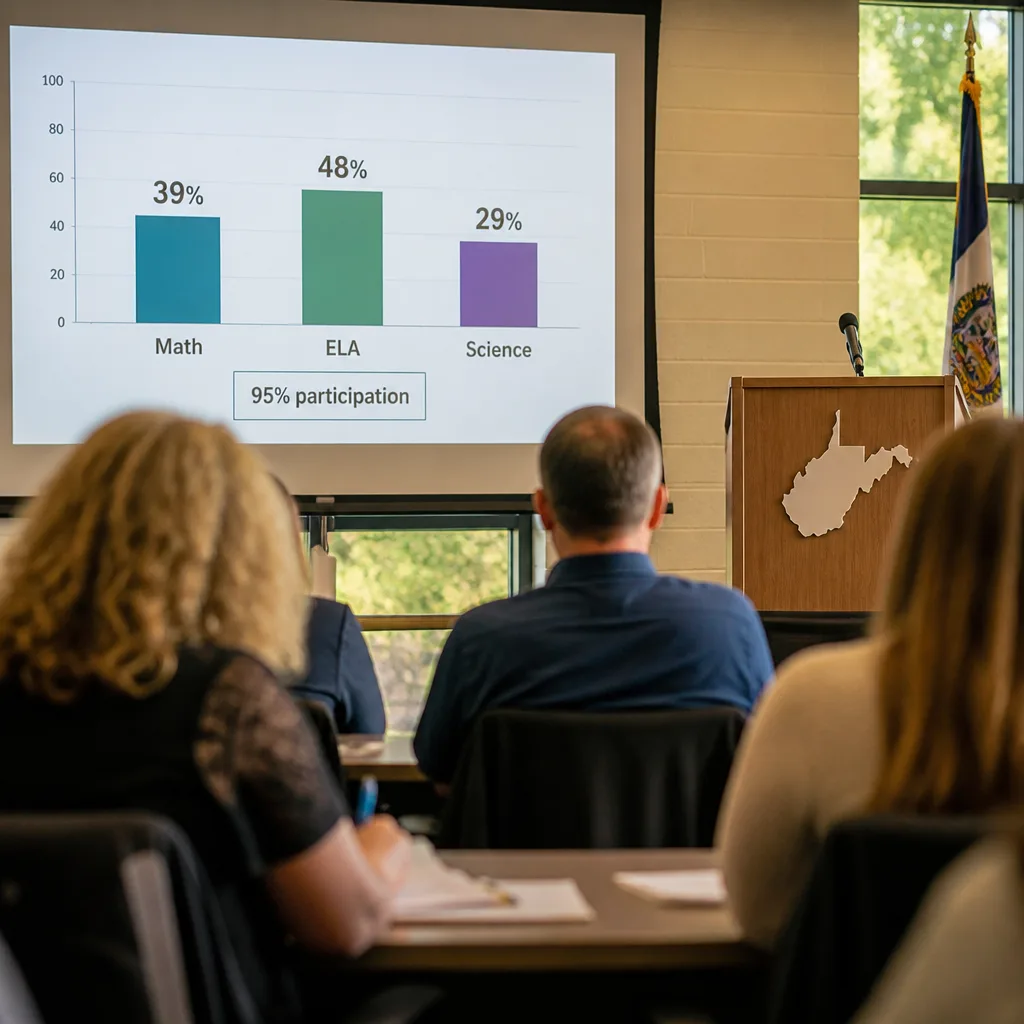
Department of Education officials reported a 95 per cent participation rate among tested grades for a third consecutive year on the assessments that measure proficiency in math, English Language Arts (ELA) and science. The assessments include the General Summative for grades 3–8, the SAT School Day for high school juniors and an Alternative Summative Assessment for certain students.
Overall, the latest consolidated results show:
- Math: 39 per cent proficiency, up from 38 per cent the previous year.
- ELA: 48 per cent proficiency, unchanged from the prior year.
- Science: 29 per cent proficiency, a one percentage point decline.
“This year, we saw a slight increase in math, ELA stayed the same, and we had a one percentage point drop in science,”
Vaughn Rhudy, director of assessment at the West Virginia Department of Education, delivered the summary to board members at the meeting in Charleston.
Context: recovery from pandemic lows
The results reflect a broader pattern of recovery following large declines during the 2020–21 school year when the pandemic interrupted in‑person instruction. Comparing the state’s recent results with pre‑pandemic performance provides a clearer picture of that recovery.
| Subject | 2018–19 (pre‑COVID) | 2020–21 (pandemic low) | 2024–25 | 2025–26 |
|---|---|---|---|---|
| Math | 39% | 28% | 38% | 39% |
| ELA | 46% | 40% | 48% | 48% |
| Science | 33% | 28% | 30% | 29% |
Math proficiency fell sharply from 39 per cent in 2018–19 to 28 per cent in 2020–21, but has crept upward to 39 per cent in the latest aggregate. ELA likewise declined during the pandemic and has rebounded to slightly exceed pre‑pandemic levels. Science shows more volatility, rising to 30 per cent in 2024–25 before slipping to 29 per cent this year.
Where officials plan to focus
The board discussed targeted strategies for the middle grades, where state officials have identified a need for focused interventions. Middle school performance often serves as an early indicator of high‑school readiness and longer‑term outcomes, and officials signalled that concentrated supports may be required to regain sustained growth.
Board members and department staff did not release detailed new program plans at the meeting, but the discussion highlighted priorities that typically accompany plateauing assessment trends: strengthening classroom instruction, expanding tutoring and remediation, and monitoring participation and subgroup performance to ensure gains are equitable.
Officials emphasised that the statewide figures are aggregates across grades and that local variation can be substantial. The department’s continued reporting will break results down by grade, district and student groups to help educators and communities direct resources where they are most needed.
As states and districts across North America continue to grapple with the pandemic’s learning impacts, West Virginia’s experience echoes a common pattern: recovery from steep declines followed by a period where incremental gains become harder to sustain. Educators and policymakers will watch whether focused efforts in middle grades can translate those small annual improvements into longer‑term, system‑wide progress.