Victoria voice on the water: a relay swim to spotlight the Fraser Rivershed
A Victoria-based climate activist is among three swimmers undertaking a month-long relay down the Fraser River to draw attention to the river’s ecological importance and a campaign to protect a substantial portion of its watershed.
Naomi Devine, who works as an advocate and campaign manager with the Fraser River Challenge, joined marine ecologist Dr. Isabelle Côté and forest disturbance ecologist Michelle Connolly for the expedition, which began Aug. 6 and is scheduled to finish by Sep. 4 at Garry Point Park in Steveston on the Salish Sea.
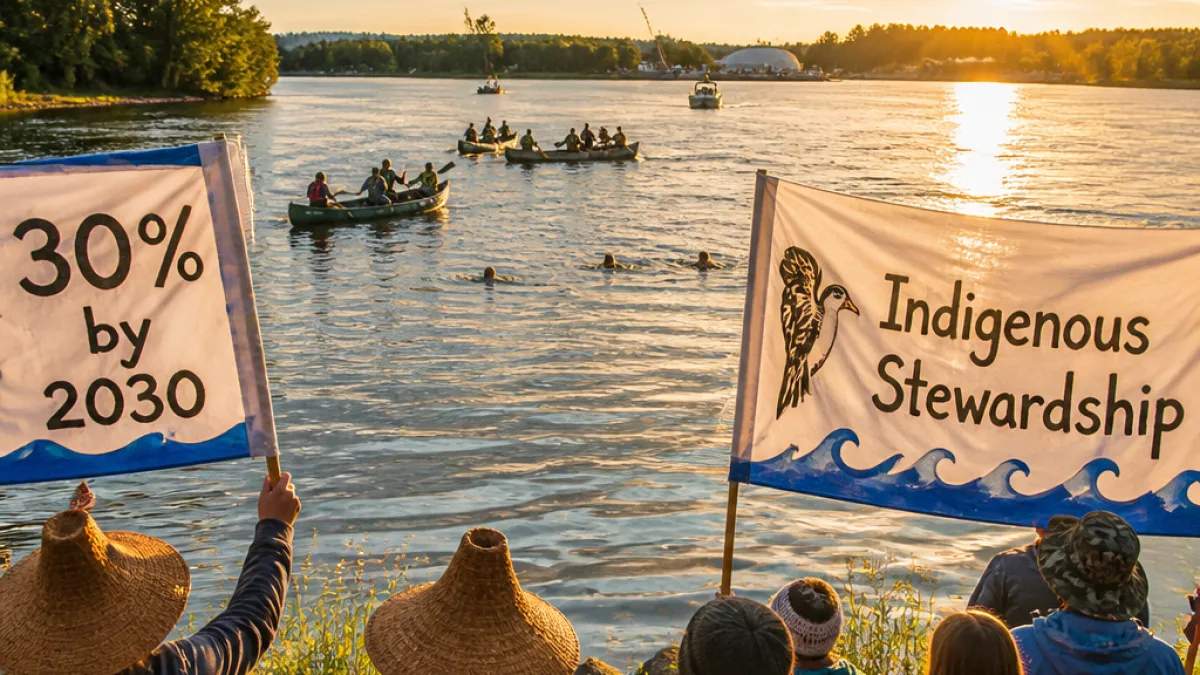
The swimmers are expected to cover 1,375 kilometres, beginning at the Rocky Mountain headwaters and travelling the full length of the Rivershed alongside businesses, non-profits, unions and community groups who are moving downriver by canoe and raft. Walkers, paddlers and supporters are joining parts of the route, creating a province-wide procession intended to build public backing for conservation goals.
“It will be cold. It will be difficult. It will be beautiful. And it will carry a clear purpose: to help build public support for protecting 30 per cent of the Fraser Rivershed by 2030,”
Devine wrote on Instagram that the undertaking is not only an endurance challenge but “an adventure of a lifetime in service of the Fraser River.”
Why the Fraser Rivershed matters
The Fraser River is widely regarded as one of the world’s premier wild salmon systems and supports all native Pacific salmon species. The campaign behind the swim aims to ensure the river and surrounding lands are safeguarded before irreversible changes occur.
The effort is part of a five-year campaign by Fraser Riverkeeper that seeks to secure 30 per cent protection of the Fraser Rivershed by 2030. The expedition is the campaign’s most visible act of advocacy this year and is being carried out in formal partnership with the Indigenous Stewardship Fund, the charitable arm of the First Nations Fisheries Council of BC.
Local roots and political work
Devine’s work in Victoria ranges across environmental advocacy, public engagement, political campaigns and strategic communications. The source material notes she helped lead municipal, provincial and federal campaigns, including efforts connected to Saanich Mayor Dean Murdock and Member of Parliament Will Greaves.
Those connections reflect how the campaign blends grassroots environmental organising with political outreach. The visible nature of a relay swim that threads communities and river users together is intended to broaden support among voters, stakeholders and Indigenous partners.
Expedition snapshot
- Distance: 1,375 kilometres
- Swimmers: Naomi Devine, Dr. Isabelle Côté, Michelle Connolly
- Dates: Aug. 6 to Sep. 4
- Finish: Garry Point Park, Steveston
- Campaign goal: Protect 30% of the Fraser Rivershed by 2030
| Element | Detail |
|---|---|
| Lead organisations | Fraser Riverkeeper; Indigenous Stewardship Fund (First Nations Fisheries Council of BC) |
| Public participation | Businesses, unions, non-profits, canoes, rafts, walkers and paddlers joining parts of the route |
For Victoria residents, the expedition underscores the interconnectedness of coastal communities with inland waters and salmon habitat. While the relay’s finish line is on the south arm of the Fraser at Steveston, the health of the river affects fisheries, food security and marine life across the Salish Sea, including Greater Victoria.
The campaign’s public-facing action aims to translate scientific and Indigenous stewardship priorities into wider civic support. By placing swimmers and community flotillas in public view, organisers are seeking to make the Rivershed’s future a visible topic for voters and decision-makers as conservation targets and land-use choices proceed in the coming years.
Donations and public support were being solicited by organisers to back the swim and the broader five-year effort to protect the Fraser Rivershed. The swim’s mixture of scientific expertise, Indigenous partnership and high-profile public action positions it as a notable example of regional conservation advocacy drawing on Victoria-based organisers and networks.