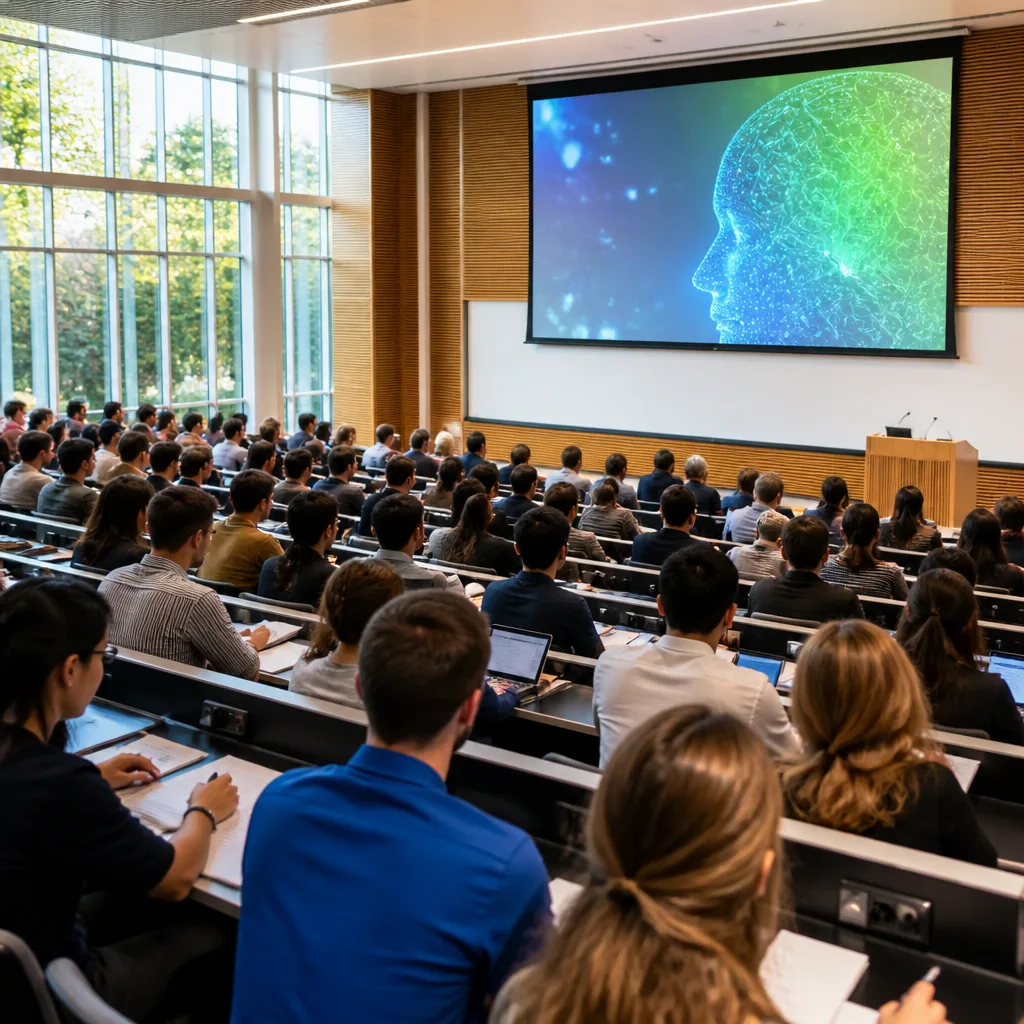
Generative artificial intelligence and its effects on education, government and law enforcement will be the focus of a free public lecture at The University of Western Australia on Monday, Aug. 17.
Expert speaker to connect technology, evidence and policy
Keynote speaker John Penn II, identified by UWA as a senior architect for law enforcement technologies at Adobe, will draw on more than 40 years in software development — including 25 years at Adobe and contributions to products such as Photoshop — to discuss digital forensics, content authenticity and child protection. UWA says Mr. Penn is a recognised leader in areas of digital trust and public safety.
The event, titled From Photoshop to Public Safety: Navigating AI's Opportunities and Risks, is presented by the Office of the Pro Vice-Chancellor (Academic) and the Institute of Advanced Studies at UWA, and will be held in the Woolnough Lecture Theatre on the Crawley campus. The lecture runs from 11 a.m. to 12:15 p.m.
Topics outlined by organisers
Amy Murray, senior advisor, Educational Initiatives for the Office of the Pro Vice-Chancellor (Academic), said the lecture will examine a range of timely issues, including:
- Generative AI and its adoption in education and public sectors
- Digital trust and content authenticity
- Misinformation and the role of digital evidence
- Governance frameworks and responsible AI use
“The session will explore how technologies developed to combat online exploitation and misinformation can inform responsible AI use in education and beyond, and what organisations can do today to prepare for an AI-enabled future,” Ms Murray said.
Why the talk matters for schools and public institutions
The organisers frame the lecture as relevant to a wide audience: students, educators, researchers, policy professionals and technologists. Drawing on Mr. Penn’s work with governments, educational institutions and initiatives such as Adobe's Content Authenticity Initiative, the talk promises a practical lens on how tools and standards used to verify digital content might be applied in classrooms, administrative settings and public safety operations.
Speakers with industry experience in content authentication and law enforcement technologies are increasingly being called upon to help translate technical advances into operational practice and policy. The UWA event highlights several intersecting challenges that institutions face as generative AI becomes more prevalent:
- How to maintain trust in digital materials used for teaching, assessment and public communication;
- How to assess and preserve digital evidence generated or manipulated by AI tools;
- What governance structures can support responsible adoption of AI without stifling legitimate educational innovation.
Those topics reflect broader conversations among educators and policymakers about integrating AI tools while safeguarding student welfare and academic integrity. The emphasis on content authenticity and digital forensics also underlines the practical needs of law enforcement and child-protection efforts as altered or synthetic media become harder to distinguish from original content.
Event details
| Item | Details |
|---|---|
| Date | Monday, Aug. 17 |
| Time | 11 a.m.–12:15 p.m. |
| Location | Woolnough Lecture Theatre, UWA Crawley campus |
| Host | Office of the Pro Vice-Chancellor (Academic) and the Institute of Advanced Studies, UWA |
| Keynote | John Penn II, senior architect for law enforcement technologies, Adobe |
The university has encouraged members of the public to register for the free lecture; further registration information was provided by UWA.
For educators, students and policy professionals in Canada and elsewhere, events like this offer a chance to hear directly from people working at the intersection of industry, technology and public safety. As institutions weigh the benefits and hazards of AI, conversations that link technical capability with governance and ethical practice will remain central to how schools and governments proceed.