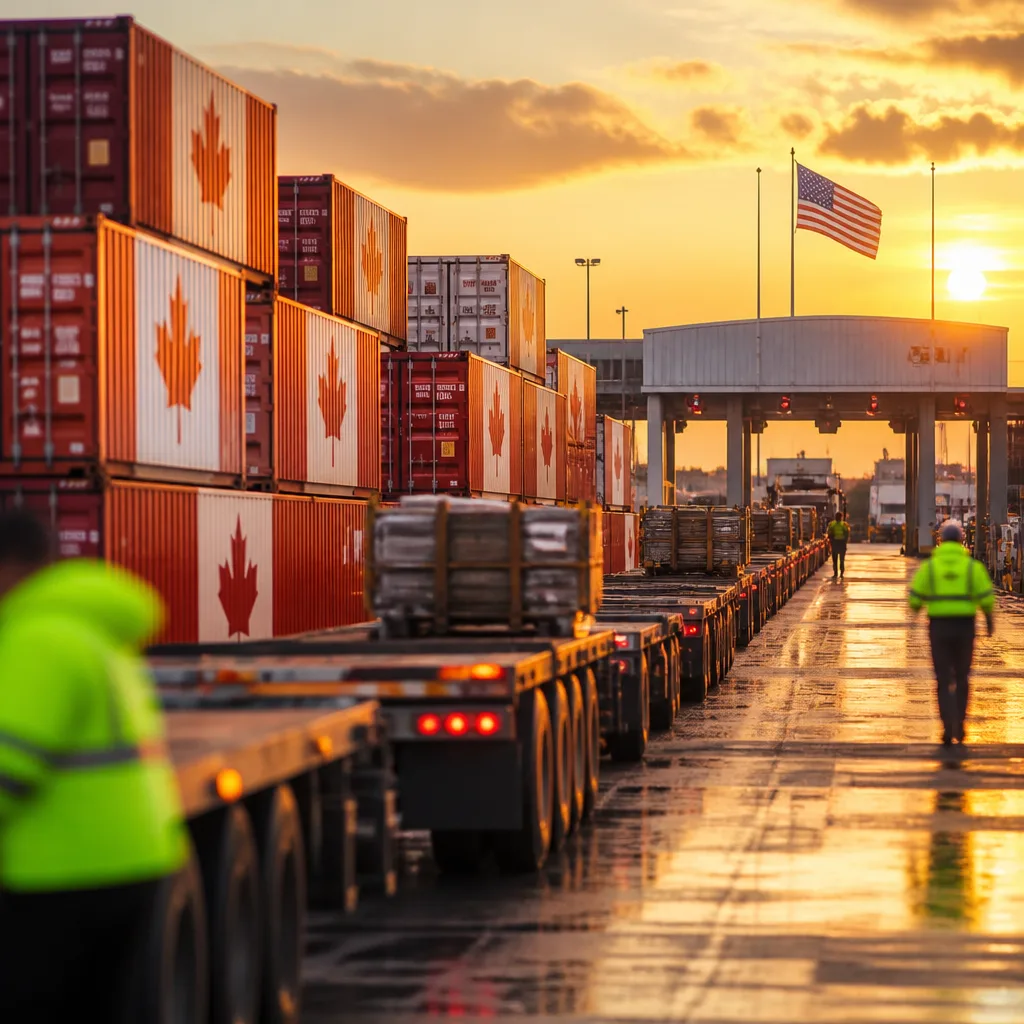
The United States on Saturday imposed 50 per cent tariffs on a broad list of Canadian exports valued at roughly $28 billion after negotiators failed to reach a new trade deal before an extended deadline set by U.S. President Donald Trump.
According to Canadian officials, Prime Minister Mark Carney directed negotiators to return to Ottawa and announced that Canada will impose matching, dollar-for-dollar retaliatory tariffs. He said supports for Canadian businesses and workers affected by the measures would be announced in the coming days.
Industry and labour react to steep duties
The tariffs prompted swift criticism and concern across labour and business groups. Unifor president Lana Payne, also a member of Carney’s advisory committee, said Canadian negotiators made the right call by walking away from the talks, arguing that the United States had been seeking "untenable concessions."
"We can't trade good jobs for a bad deal. And it was clear the U.S. was continuing to push for untenable concessions," said Unifor president Lana Payne.
Dan Kelly, president and CEO of the Canadian Federation of Independent Business, warned the tariffs are "deeply troubling for thousands of small Canadian exporters." He noted that about 40 per cent of small exporters sell items included on what he described as a "10+ page list" that now faces the 50 per cent duty. Kelly said many CFIB members expect the levies will end their U.S. sales and could force some firms to close.
Bea Bruske, president of the Canadian Labour Congress, supported the decision to walk away from a deal she characterised as bad for Canada and urged collective action to protect workers and communities hit by what she called a "trade war."
On the U.S. side, sector groups raised longtime trade grievances. Chris Swonger, president and CEO of the Distilled Spirits Council of the United States, pointed to provincial rules in Canada that he said had already "caused significant harm" to U.S. spirits exporters and called for a negotiated solution to restore market access and return to zero-for-zero tariff treatment.
What the measures mean for exporters and the economy
The immediate economic effect will vary by sector and firm size. The tariffs apply to a wide array of goods; small and medium-sized exporters that depend on cross-border sales to U.S. buyers are particularly exposed. With duties at 50 per cent on affected lines, price competitiveness in the U.S. market will be sharply reduced unless exporters absorb costs or find new markets.
Ottawa’s pledge of equivalent retaliatory tariffs signals a rapid escalation, which could lead to higher consumer prices, supply-chain disruptions and further retaliation if either side expands measures. The federal government’s announcement that it will unveil supports suggests Ottawa intends to cushion the blow, but details and timelines were not provided.
- Tariff rate: 50 per cent on the new list.
- Estimated value affected: $28 billion in Canadian exports.
- Small exporters impacted: About 40 per cent sell items on the list, according to CFIB.
| Item | Reported figure |
|---|---|
| Tariff rate | 50% |
| Value of Canadian exports targeted | $28 billion |
| Share of small exporters affected | 40% |
Business groups warned of immediate cash-flow and market-access challenges. For small exporters that lack diversified customer bases, sudden loss of U.S. orders could force layoffs or closures. Larger manufacturers with integrated supply chains may be able to absorb short-term disruption but could face reduced margins and investment headwinds if trade uncertainty persists.
Analysts and trade lawyers will be watching for the exact tariff schedule and whether exclusions or mitigation measures are offered. The mention of a "10+ page" list implies a detailed tariff classification that will determine which industries—and which firms within them—are most exposed.
Next steps and implications
Officials in Ottawa have returned negotiators from the U.S. talks and say further supports for affected workers and businesses are coming. The effectiveness of those supports will be a key factor in how deeply the measures affect employment and regional economies.
Absent a rapid negotiated settlement, the escalation could reshape trade patterns, spur legal challenges at the World Trade Organization or trigger broader policy responses by Canadian and provincial governments. For now, exporters face a sudden and significant cost shock that will test firms, trade negotiators and policymakers alike.
Expect further announcements from Ottawa in the days ahead as officials lay out compensation plans and outline their next moves in a high-stakes dispute with the United States.